
2020 Charger Hellcat Widebody Proves that Horsepower Is King
Dodge Charger Hellcat goes into 2020 showing its age, but it also shows that 707 horsepower can smooth out a lot of wrinkles.
Some things never go out of style. A pair of Levis looks as cool now as it did back in the ’60s. After mowing the lawn, there’s still nothing quite as refreshing as an ice-cold glass of lemonade (or a frosty beer). It’s the same with horsepower. The current version of the Dodge Charger dates back to the 2011 model year so it’s long in the tooth, but as YouTuber Doug DeMuro‘s recent review of the 2020 Charger SRT Hellcat Widebody shows, its outrageous amount of power never gets old.
Over the past several years, the Charger has grown more and more powerful. There was once a time when the most potent version of it topped out at 425 horsepower. Those days are long gone. Now the Scat Pack outguns that with a 485-horsepower 6.4-liter Hemi V8.
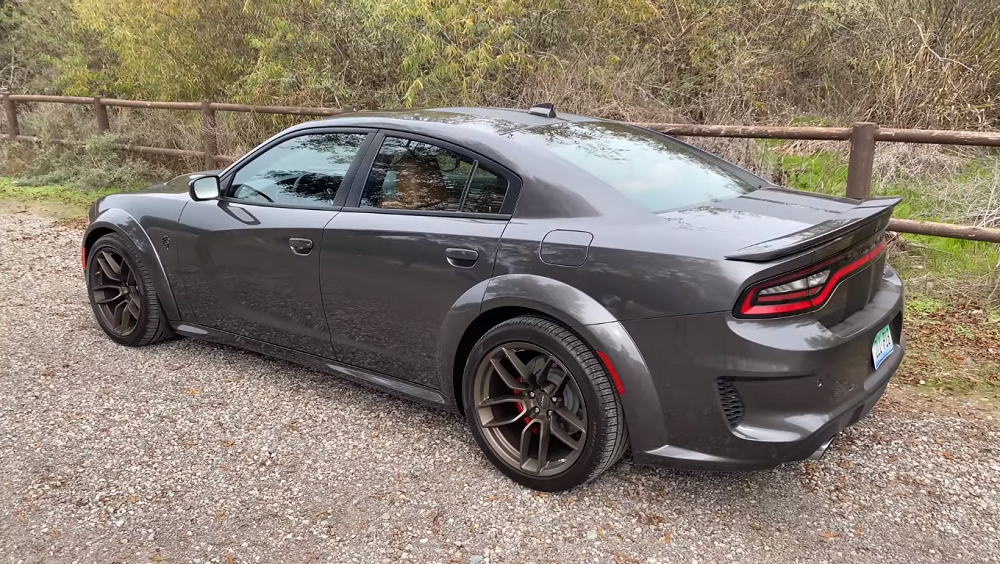
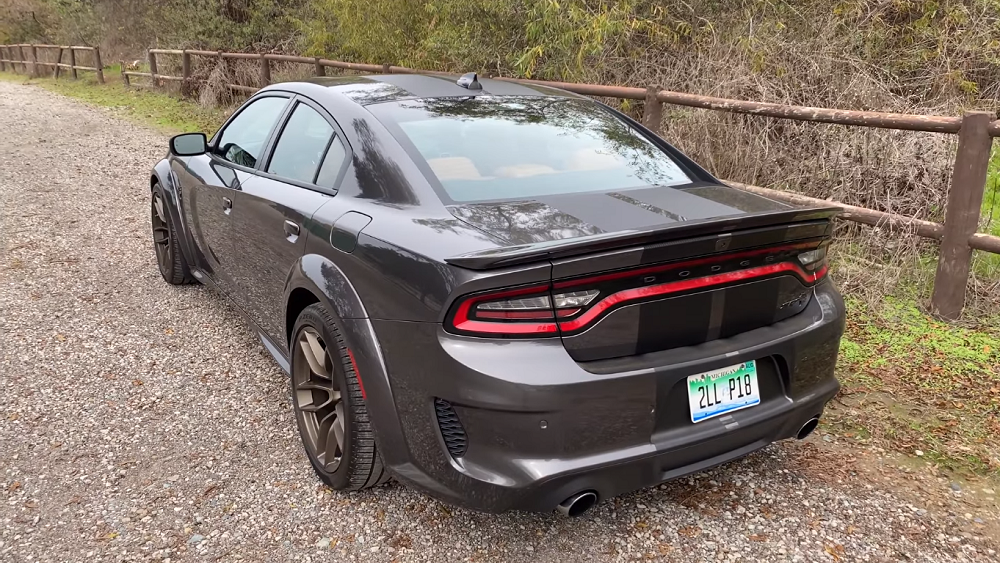
A few years ago, Dodge introduced the most bestial Charger ever: the 707-horsepower, 650-lb-ft Charger SRT Hellcat. For 2020, Dodge one-upped itself by combining that face-flattening grunt with a widebody package. That adds muscular flared fenders at the front and back that broaden the muscle sedan by 3.5 inches. Dodge fills that extra space with some serious rubber: 305s – in the back and front. As DeMuro says, “Take my word for it. These are insanely, massively, ridiculously wide.” (Don’t worry, Doug. We do.)
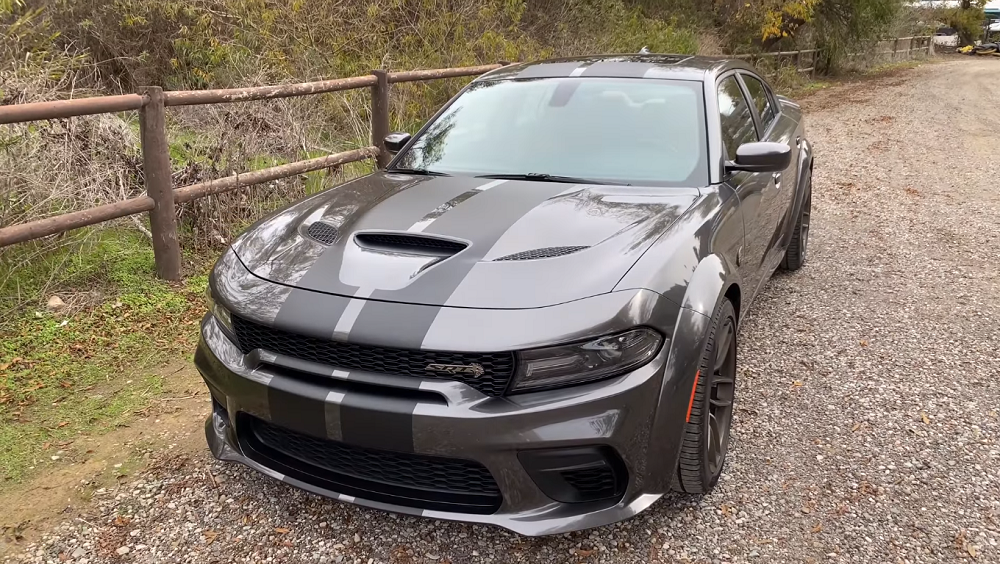
Those steamrollers are also helpful. They make the Hellcat Widebody less aerodynamic than the outgoing regular-width Charger Hellcat, but they allow it to grip and corner more ferociously. According to FCA, the broader-shouldered car “runs 2.1 seconds faster than the vehicle it replaces on a 2.1-mile road course, equal to 13 car lengths after one lap.”
Dodge couples that power and traction with go-fast tech such as readouts for acceleration, lap times and power consumption, line lock for bringing the rear tires up to ideal operating temperature and texture, and the ability to use the Hellcat Widebody’s cooling system to chill the engine and blower and prep them for another full-throttle launch. If you insert an SD card and hit the camera icon on the center touchscreen, “you can record laps or drag racing runs that you do so you can watch them later and look at pointers about how you could’ve done a little better.”
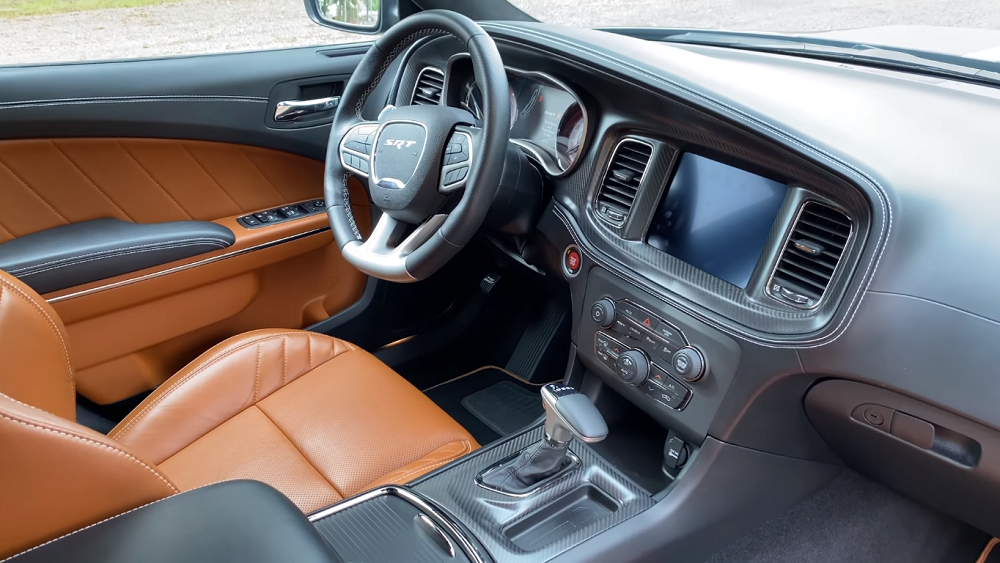
There’s no getting around the Charger’s age, though. DeMuro goes right at it. He points out the dated shape of the lift-up door handles. The conspicuous placement of the backup camera doesn’t escape his attention. Inside, the foot-activated emergency brake draws his eye – and not in a good way. The absence of adaptive cruise control buttons on the steering wheel is impossible for DeMuro to ignore, especially considering his test car has a BMW- and Mercedes-ish sticker price of $82,000.
But the Hellcat Widebody’s still-bonkers amount of power has a way of making those shortcomings seem less significant. Demuro says, “I absolutely understand why people pick this over those luxury BMWs and Mercedes – ’cause this car has the power.”

Once DeMuro takes the Hellcat Widebody out on the road, he makes sure to unleash some of that power. Even though the Charger has had Hellcat power for a few years now, it still packs a punch that puts a smile on his face. “I drive my [last-generation] Ford GT and it also feels really fast, but somehow this feels faster.” The Hellcat Widebody sounds better to him, too. That’s great for a family car “whose base model is mainly known for being the default upgrade when the airport Enterprise rent-a-car runs out of Kia Optimas.”
Join the Dodge Forum now!

You must be logged in to post a comment.