


another 4x4 problem


Thread Starter
|
Registered User
Joined: Aug 2010
Posts: 4
Likes: 0
 another 4x4 problem
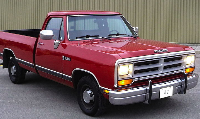
I got a 90 w150, from what I have seen on here it is a vacuum since there are no bolts on the end of the axle. It will engage in 4x4 but it seems like it wont fully disengage, when you shift back to 2wd. Feels like it goes in and out while driving. Anyone have this problem before, how do you fix? Also what do you have to do to put manual hub on it?

Champion
Joined: Mar 2009
Posts: 2,639
Likes: 4
From: Bent Mountain Va
Why anyone would want to go to manual hubs is beyond me. You may have a bad diaphragm in the vacuum motor or a bad actuator vacuum switch on the transfer case. These problems are easy to troubleshoot.
If you don't like automatic systems you can make the vacuum axle engagement system you have into a manual system with the following kit (PN 450). It would be about the same price as manual hubs, more user friendly (you don't have to leave the truck cab when you need 4wd), and less work to install.
http://www.4x4posi-lok.com/app_dodge.html
If you don't like automatic systems you can make the vacuum axle engagement system you have into a manual system with the following kit (PN 450). It would be about the same price as manual hubs, more user friendly (you don't have to leave the truck cab when you need 4wd), and less work to install.
http://www.4x4posi-lok.com/app_dodge.html

Registered User
Joined: Jul 2010
Posts: 30
Likes: 0
sounds like the exact same problem my '90 4x4 w150 had. to be sure, crawl under the truck right behind the driver side front wheel. heres what my truck looked like.
http://picasaweb.google.com/lh/photo...eat=directlink
the rusted out thing with the two vacuum lines? thats the 4x4 actuator. pretty easy to replace, its held into the front axle with 4 bolts.
http://picasaweb.google.com/lh/photo...eat=directlink
the part is $74.89 from rock auto, DORMAN part 600202. i thought about going to manual hubs, or the conversion kit that SEAL posted, but i wanted to keep the truck as much as stock as possible. (im just trying to get everything working well, without spending too much time or money.)
after i replaced it, i took it to my friends farm property, and it went in and out of 4x4 all weekend long.
if you decicde to replace it, let me know and ill post some tips of things i learned while i did it.
http://picasaweb.google.com/lh/photo...eat=directlink
the rusted out thing with the two vacuum lines? thats the 4x4 actuator. pretty easy to replace, its held into the front axle with 4 bolts.
http://picasaweb.google.com/lh/photo...eat=directlink
the part is $74.89 from rock auto, DORMAN part 600202. i thought about going to manual hubs, or the conversion kit that SEAL posted, but i wanted to keep the truck as much as stock as possible. (im just trying to get everything working well, without spending too much time or money.)
after i replaced it, i took it to my friends farm property, and it went in and out of 4x4 all weekend long.
if you decicde to replace it, let me know and ill post some tips of things i learned while i did it.
Champion
Joined: Mar 2009
Posts: 2,639
Likes: 4
From: Bent Mountain Va
Switch check.
With the truck running in 2wd you should have vacuum at the drivers side vacuum hose on the vacuum motor. In 4wd you should have vacuum on the passenger side hose on the vacuum motor. If you have both of these the switch is operating properly.
Vacuum motor check.
1. Jack the front left wheel off the ground. With the the truck running mark and pull both vacuum lines at the motor. Using which ever hose has vacuum, plug that hose onto the passenger side nipple and try to turn the raised tire. It should be locked in 4wd and should not turn. Switch the hose to the drivers side nipple and turn the tire. It should now turn. If it works like this the motor is working OK.
2. To test the vacuum motor for leaks you need a hand held vacuum pump. Both sides should hold vacuum when tested.
With the truck running in 2wd you should have vacuum at the drivers side vacuum hose on the vacuum motor. In 4wd you should have vacuum on the passenger side hose on the vacuum motor. If you have both of these the switch is operating properly.
Vacuum motor check.
1. Jack the front left wheel off the ground. With the the truck running mark and pull both vacuum lines at the motor. Using which ever hose has vacuum, plug that hose onto the passenger side nipple and try to turn the raised tire. It should be locked in 4wd and should not turn. Switch the hose to the drivers side nipple and turn the tire. It should now turn. If it works like this the motor is working OK.
2. To test the vacuum motor for leaks you need a hand held vacuum pump. Both sides should hold vacuum when tested.
Registered User
Joined: Jul 2010
Posts: 30
Likes: 0
A couple of things I learned when I changed my vacuum actuator. Some of them are pretty obvious, but still worth stating.
-The actuator is held in by 4 bolts. The front bolts also hold on a stone shield and a metal clip for the vacuum lines. When you take it all apart, make sure to keep track of these and reinstall them.
The reason is, I didnt keep track of the little metal clip, and when i took off the actuator, it fell down into the hole in the axle. I didnt realize it at the time, and this could have been very bad for my front axle.
- Before you take the actuator off, wipe the area clean of any mud/rust. This will help to prevent all that garbage from falling into your axle when you take off the actuator.
- Also before you take it off, mark the vacuum lines. On mine, the vacuum lines were rusted to the actuator, and part of the actuator came off with the lines (see pics). I had to cut the vacuum lines back a bit so I was working with "fresh" hose. I believe there is some sort of connector on there so the lines only go on one way, but i wouldnt count on it.
Its not fatal if you hook the lines up backwards, your 4WD will engage when you dont expect it to.
- After you take the actuator off, put a rag or paper towel over the opening, this will again help to reduce the crap that falls in there.
- There are 3 "e clips" that hold the assembly together. I dont have any pics of the assembly taken apart, but basically, there is 1 big e clip and two smaller ones. The two smaller ones hold the actuator shaft to the shift fork, and the large one holds the actuator to the housing. Take the big one out last.
After you take the 3 e clips out, there is nothing holding the actuator into the housing. On mine, it was rusted in there pretty good, and i had to hammer it out. Careful here that you dont damage anything else.
- When you put it back together, make sure you install the shift fork the right way. It has a slight bend to it, and only works when installed in the proper direction. It will fit either way. I have some pics of my actuator, taken apart if you want them.
- After I put the actuator assembly back together, its time to install it onto the truck. I was lucky here, and decided to feel around inside my axle (mostly because i was curious) before i put the actuator back on the axle. This is when I found the metal clip I described above. You dont need to do this, but its good to get a feel for the shift collar that the shift fork will fit over.
- To that point, make sure the shift fork is fitted over the shift collar, or your 4WD wont work. Youll just have to feel around for the shift collar, as everything is underneath the gear oil (atleast it should be).
- Installation is pretty straight forward, just make sure to use the new gasket, and install the stone shield.
-The actuator is held in by 4 bolts. The front bolts also hold on a stone shield and a metal clip for the vacuum lines. When you take it all apart, make sure to keep track of these and reinstall them.
The reason is, I didnt keep track of the little metal clip, and when i took off the actuator, it fell down into the hole in the axle. I didnt realize it at the time, and this could have been very bad for my front axle.
- Before you take the actuator off, wipe the area clean of any mud/rust. This will help to prevent all that garbage from falling into your axle when you take off the actuator.
- Also before you take it off, mark the vacuum lines. On mine, the vacuum lines were rusted to the actuator, and part of the actuator came off with the lines (see pics). I had to cut the vacuum lines back a bit so I was working with "fresh" hose. I believe there is some sort of connector on there so the lines only go on one way, but i wouldnt count on it.
Its not fatal if you hook the lines up backwards, your 4WD will engage when you dont expect it to.
- After you take the actuator off, put a rag or paper towel over the opening, this will again help to reduce the crap that falls in there.
- There are 3 "e clips" that hold the assembly together. I dont have any pics of the assembly taken apart, but basically, there is 1 big e clip and two smaller ones. The two smaller ones hold the actuator shaft to the shift fork, and the large one holds the actuator to the housing. Take the big one out last.
After you take the 3 e clips out, there is nothing holding the actuator into the housing. On mine, it was rusted in there pretty good, and i had to hammer it out. Careful here that you dont damage anything else.
- When you put it back together, make sure you install the shift fork the right way. It has a slight bend to it, and only works when installed in the proper direction. It will fit either way. I have some pics of my actuator, taken apart if you want them.
- After I put the actuator assembly back together, its time to install it onto the truck. I was lucky here, and decided to feel around inside my axle (mostly because i was curious) before i put the actuator back on the axle. This is when I found the metal clip I described above. You dont need to do this, but its good to get a feel for the shift collar that the shift fork will fit over.
- To that point, make sure the shift fork is fitted over the shift collar, or your 4WD wont work. Youll just have to feel around for the shift collar, as everything is underneath the gear oil (atleast it should be).
- Installation is pretty straight forward, just make sure to use the new gasket, and install the stone shield.