


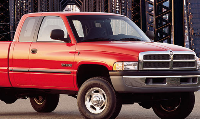
Running Hot, UPDATED: Solved!


Captain
Joined: May 2007
Posts: 601
Likes: 3
From: Clearwater, FL
 RE: Overheating
Two things keep coming back time and again.
1 temp. fluctuation
2 air in system
I have never had or heard of such a problem with air in a cooling system as yours. When I flush/refill my engine, I use one of those $5 Prestone flush kits. I take out the heater valve from the heater hose and install the flush tee and follow the directions. And here's the twist... I have ALWAYS done this with the truck (front) facing DOWNHILL on my driveway. I fill the radiator (per instructions) through the rad. cap till it starts to come out of the flush tee, then cap it off, turn on the heater (full) and the truck and just add juice when the level drops (stat opens). DONE!
Temp. fluctuation: I don't remember and am too lazy to go back and read upteen pages, but did you ever try running without the t-stat just to get a temp. reading? Just curious. And was the radiator flow tested?
Refresh my failing mind.
WC
1 temp. fluctuation
2 air in system
I have never had or heard of such a problem with air in a cooling system as yours. When I flush/refill my engine, I use one of those $5 Prestone flush kits. I take out the heater valve from the heater hose and install the flush tee and follow the directions. And here's the twist... I have ALWAYS done this with the truck (front) facing DOWNHILL on my driveway. I fill the radiator (per instructions) through the rad. cap till it starts to come out of the flush tee, then cap it off, turn on the heater (full) and the truck and just add juice when the level drops (stat opens). DONE!
Temp. fluctuation: I don't remember and am too lazy to go back and read upteen pages, but did you ever try running without the t-stat just to get a temp. reading? Just curious. And was the radiator flow tested?
Refresh my failing mind.
WC

Thread Starter
|
Legend


Joined: May 2005
Posts: 8,663
Likes: 8
From: Central Oklahoma
RE: Overheating
Yes, "Smarts, not parts", yet I'm afraid I am losing the former. Interesting note on the Benz cap. I may just check that out tomorrow or else PM Hank and see what he says.
It could be a flakey cap. As noted earlier, I drove all the way home with the older waterpump (from work), and when I popped the hood, the cap had let loose rather than blowing out of the coolant bottle.
My temp sensor is in the intake, if that helps. I also tested the current t-stat as well as grabbing the hoses with the engine running. I can feel a terrific temperature difference in each, which is the way it should be.
It could be a flakey cap. As noted earlier, I drove all the way home with the older waterpump (from work), and when I popped the hood, the cap had let loose rather than blowing out of the coolant bottle.
My temp sensor is in the intake, if that helps. I also tested the current t-stat as well as grabbing the hoses with the engine running. I can feel a terrific temperature difference in each, which is the way it should be.

Legend
Joined: Jul 2007
Posts: 7,843
Likes: 13
From: DFW, Texas
RE: Overheating
Here's that post from Hank (7th post down):
https://dodgeforum.com/m_915682/tm.htm
Wish I knew more to help you.
https://dodgeforum.com/m_915682/tm.htm
Wish I knew more to help you.
Captain
Joined: May 2007
Posts: 601
Likes: 3
From: Clearwater, FL
RE: Overheating
Late thoughts...
Come to think of it, the cap may well be the culprit. Think about it. IF the system isn't leaking anywhere under pressure, and the temp. isn't climbing high enough to boil over (which would put coolant back into the overflow bottle), then at 200ish the only way you could lose coolant is if the cap was weak and letting the coolant escape to the overflow bottle. Likewise, when the system cools down, which would let the coolant back into the system under vacuum, you may also be drawing air back with it through a bad connection in the recovery system hose, bottle, etc.
WC
Come to think of it, the cap may well be the culprit. Think about it. IF the system isn't leaking anywhere under pressure, and the temp. isn't climbing high enough to boil over (which would put coolant back into the overflow bottle), then at 200ish the only way you could lose coolant is if the cap was weak and letting the coolant escape to the overflow bottle. Likewise, when the system cools down, which would let the coolant back into the system under vacuum, you may also be drawing air back with it through a bad connection in the recovery system hose, bottle, etc.
WC
Thread Starter
|
Legend
Joined: May 2005
Posts: 8,663
Likes: 8
From: Central Oklahoma
RE: Overheating
I talked with my dad last night about this.
First, some background on dad. He's 84 years old and a retired engineer, the last 20 were in the automotive industry. He used to design the Ford truck parking brakes in the 1970's, spring loaded seat mechanisms (think 1984/1985 Bronco II), and other neat stuff (like a pop-up headlight system that uses a one-way gas charged motor rather than electric motors).
He was having similar problems with the 1973 Imperial he and my mom bought from an auction a few years ago (that car is SWEET). The Imperial has a 440 in it and every time he would come to a stop in city driving, the needle on the temp gauge would climb. If he were driving along things would be OK. He put a 175º t-stat in it, but no go. He changed all of the core plugs in the block with sealed copper, flushed the block, and had the guy at the radiator do everything imaginable to the radiator. No problems. But still, the car ran hot.
Finally, the radiator shop owner gets an idea. They check the part number stamped on the radiator to the book. Well, the part number matches; HOWEVER, the book lists different configurations of fins-per-inch and core sizes for each application. The radiator was the culprit as it was not providing enough surface for coolant to dissipate the heat. The radiator in the Imperial had 10 fins-per-inch, but the minimum should have been 14 with a maximum of 18. Both my dad and the radiator shop agreed that 18 fins would run the engine too cool, so they settled for 15-fins-per-inch and ran larger cores. With the radiator installed in the car, my dad couldn't get the engine to move above the 'C' mark on the temp gauge while sitting at a stoplight. So, he changed out the t-stat to a 185º, and *BINGO*, she moves. He is waiting for the day to install a 195º (the proper t-stat) and the car will be at the correct operating temperature.
So, I'm going to take my truck to a radiator shop and have the radiator inspected. The other culprit we are thinking is that something is cause air to get sucked back into the system. That could be the heater core, the hose from the overflow to the radiator, or the cap.
It may not be until next week when I can get that done, but I'll let you all know.
First, some background on dad. He's 84 years old and a retired engineer, the last 20 were in the automotive industry. He used to design the Ford truck parking brakes in the 1970's, spring loaded seat mechanisms (think 1984/1985 Bronco II), and other neat stuff (like a pop-up headlight system that uses a one-way gas charged motor rather than electric motors).
He was having similar problems with the 1973 Imperial he and my mom bought from an auction a few years ago (that car is SWEET). The Imperial has a 440 in it and every time he would come to a stop in city driving, the needle on the temp gauge would climb. If he were driving along things would be OK. He put a 175º t-stat in it, but no go. He changed all of the core plugs in the block with sealed copper, flushed the block, and had the guy at the radiator do everything imaginable to the radiator. No problems. But still, the car ran hot.
Finally, the radiator shop owner gets an idea. They check the part number stamped on the radiator to the book. Well, the part number matches; HOWEVER, the book lists different configurations of fins-per-inch and core sizes for each application. The radiator was the culprit as it was not providing enough surface for coolant to dissipate the heat. The radiator in the Imperial had 10 fins-per-inch, but the minimum should have been 14 with a maximum of 18. Both my dad and the radiator shop agreed that 18 fins would run the engine too cool, so they settled for 15-fins-per-inch and ran larger cores. With the radiator installed in the car, my dad couldn't get the engine to move above the 'C' mark on the temp gauge while sitting at a stoplight. So, he changed out the t-stat to a 185º, and *BINGO*, she moves. He is waiting for the day to install a 195º (the proper t-stat) and the car will be at the correct operating temperature.
So, I'm going to take my truck to a radiator shop and have the radiator inspected. The other culprit we are thinking is that something is cause air to get sucked back into the system. That could be the heater core, the hose from the overflow to the radiator, or the cap.
It may not be until next week when I can get that done, but I'll let you all know.
Captain
Joined: May 2007
Posts: 601
Likes: 3
From: Clearwater, FL
RE: Overheating
You think your dad could come out of retirement and design system that does NOT use a steering wheel? A center console mounted joystick type deal would be the nuts! Possibly an electric/hydraulic combo.Kinda like they use on elec. wheel chair guys. It could be designed like Capt. Kirks command chair somewhere in the arm rest. Think of all the room that would leave in front of the driver. For, ehr, cupholders! Oh, different thread. I do go off sometimes.
Well, good luck on the cooling system. You know I'm with ya.
Speaking of which, two thoughts occurred to me regarding the heater core. 1) Why do you suspect a problem there? Smell...leakage? Or just the sound of gurgling within? The latter could just be the air that gets into the system. Which I believe is most likely through the overflow system/cap.
2) could the heater hoses be reversed? I don't know...just throwing out thoughts. AKA babbling!
WC
Well, good luck on the cooling system. You know I'm with ya.
Speaking of which, two thoughts occurred to me regarding the heater core. 1) Why do you suspect a problem there? Smell...leakage? Or just the sound of gurgling within? The latter could just be the air that gets into the system. Which I believe is most likely through the overflow system/cap.
2) could the heater hoses be reversed? I don't know...just throwing out thoughts. AKA babbling!
WC
Thread Starter
|
Legend
Joined: May 2005
Posts: 8,663
Likes: 8
From: Central Oklahoma
RE: Overheating
I think I finally found it, and it turned out to be the STUPID ****.
The radiator cap.
Yesterday morning, I embarked on the 135 mile drive to Tulsa, Oklahoma, to sell parts at the VW Show. I left the house at 5am, and once I was on the turnpike the truck (fully loaded with parts sans the trailer) was hot. It was hot the entire way up with the needle between the two 0's on the temp gauge, even though the outside temperature was 64º most of the way up. I met a friend at Cracker Barrel for breakfast, and in doing so checked under the hood before going inside. Sure enough, there was coolant sprayed inside of the engine bay and the overflow filled to capacity.
So, all during the show, it's nagging at me what is causing this thing to run hot. Late in the afternoon, when much of the festivities started to slow, I popped the hood on the truck, removed the overflow bottle, and started to transfer the coolant from the overflow back into the radiator. Then, I closed everything. About 20 minutes later, I popped the hood again and just started playing with the cap. Last week, while messing with the cap after a test drive, I thought I had twisted too far while tightening, causing the cap to losen again. I didn't stop to consider that the spout on the radiator is designed for the cap to completely STOP when installed properly. Sure enough, while playing with the cap yesterday, I tightened it down only to have it partially pop right off. I removed the cap, reinstalled, and then put my eyes at the level with the cap and turned.
The cap appeared to be 1/16" too large. The small tabs on each side of the cap were not fully riding against the radiator neck, and while one tab would make full contact, the other would barely touch the neck.
This was my *Eureka* moment.
Now it made sense. The cap was not 100% tight, so while under pressure, it would allow the coolant to blow out, and then when stopped, that's where the air would suck back into the system.
So, I used a screwdriver handle as a hammer and pounded in the sides of both tabs to prevent either from losing it's grip on the neck. On the return trip, the truck ran hot unless I was travelling downhill.
Today, I went to O'Reilly's and examined different radiator caps. The two that were presented to me (different part numbers) looked too similar to the old one. The clerk looked up the info for the truck (and I even informed him the radiator replaced the original, but I did not buy it through O'Reilly's) and he brought me a locking cap. Strange, but aside from the locking lever, the cap looked different than the other caps, including the old one. I took it to the truck and screwed it into place. With my eyes at the level of the cap, I watched as this new cap appeared to be the correct diameter and BOTH tabs grabbed the neck sufficiently enough to make it a snug fit. I locked it into place and was satisfied.
For the rest of the afternoon, I watched the gauge. Since I could not bleed the air from the system, the temp gauge would sit around 199º and 201º. I have the truck ready to have the air bled as soon as I finish this post.
Keep your fingers crossed. Since I'm low on gas, I may not refuel the truck until the weekend; however, I will post my findings.
The radiator cap.
Yesterday morning, I embarked on the 135 mile drive to Tulsa, Oklahoma, to sell parts at the VW Show. I left the house at 5am, and once I was on the turnpike the truck (fully loaded with parts sans the trailer) was hot. It was hot the entire way up with the needle between the two 0's on the temp gauge, even though the outside temperature was 64º most of the way up. I met a friend at Cracker Barrel for breakfast, and in doing so checked under the hood before going inside. Sure enough, there was coolant sprayed inside of the engine bay and the overflow filled to capacity.
So, all during the show, it's nagging at me what is causing this thing to run hot. Late in the afternoon, when much of the festivities started to slow, I popped the hood on the truck, removed the overflow bottle, and started to transfer the coolant from the overflow back into the radiator. Then, I closed everything. About 20 minutes later, I popped the hood again and just started playing with the cap. Last week, while messing with the cap after a test drive, I thought I had twisted too far while tightening, causing the cap to losen again. I didn't stop to consider that the spout on the radiator is designed for the cap to completely STOP when installed properly. Sure enough, while playing with the cap yesterday, I tightened it down only to have it partially pop right off. I removed the cap, reinstalled, and then put my eyes at the level with the cap and turned.
The cap appeared to be 1/16" too large. The small tabs on each side of the cap were not fully riding against the radiator neck, and while one tab would make full contact, the other would barely touch the neck.
This was my *Eureka* moment.
Now it made sense. The cap was not 100% tight, so while under pressure, it would allow the coolant to blow out, and then when stopped, that's where the air would suck back into the system.
So, I used a screwdriver handle as a hammer and pounded in the sides of both tabs to prevent either from losing it's grip on the neck. On the return trip, the truck ran hot unless I was travelling downhill.
Today, I went to O'Reilly's and examined different radiator caps. The two that were presented to me (different part numbers) looked too similar to the old one. The clerk looked up the info for the truck (and I even informed him the radiator replaced the original, but I did not buy it through O'Reilly's) and he brought me a locking cap. Strange, but aside from the locking lever, the cap looked different than the other caps, including the old one. I took it to the truck and screwed it into place. With my eyes at the level of the cap, I watched as this new cap appeared to be the correct diameter and BOTH tabs grabbed the neck sufficiently enough to make it a snug fit. I locked it into place and was satisfied.
For the rest of the afternoon, I watched the gauge. Since I could not bleed the air from the system, the temp gauge would sit around 199º and 201º. I have the truck ready to have the air bled as soon as I finish this post.
Keep your fingers crossed. Since I'm low on gas, I may not refuel the truck until the weekend; however, I will post my findings.
