


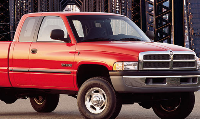
FUEL`S


Thread Starter
|
Registered User

Joined: Sep 2007
Posts: 21
Likes: 0
From: Millersville pa
 FUEL`S
I Have a 97 1500 slt 4x4 318 eng 8 cyclinder
MY QUESTION IS :CAN I BURN ETHANOL ?IF SO, WHAT PERCENTAGE IS SAFE
SECOND :IF I HAVE TO MODIFY TO USE ETHANOLWHAT DO I HAVE TO DO?
AND CAN I DO IT MYSELF?
THANKS
MY QUESTION IS :CAN I BURN ETHANOL ?IF SO, WHAT PERCENTAGE IS SAFE
SECOND :IF I HAVE TO MODIFY TO USE ETHANOLWHAT DO I HAVE TO DO?
AND CAN I DO IT MYSELF?
THANKS


All Star
Joined: Mar 2007
Posts: 890
Likes: 0
From: South Carolina
RE: FUEL`S
You should be able to run upto about 20% ethonal and thats it. Do not run E-85 for long periods of time. Manufacures are required to build their vehicles so that they can run the 20% so that gas stations can add 10% to the gas. Why do you want to run Ethanol anyways? It's more expensive, you get less mpg,and less power. It is cleaner however.

Champion
Joined: Aug 2005
Posts: 3,313
Likes: 8
RE: FUEL`S
http://www.abcesso.com/
makes a E85 conversion kit.
If you plan to run E85 in your older Dodge
you probably want to change the fuel line from tank to engine
to one similar to that used today on the Dodge 'flex fuel' 4.7V8
which is a fuel line with a liner of teflon-like plastic
called ptfe that will resist the alcohol better over the long term.
With your 1997 model 5.2
you also have the option of finding in a junkyard
the parts from a 1996 to 1998 model year
5.2 V8 Chrysler factory CNG (compressed natural gas) setup.
Dodge built over 14,000 of these natural gas fueled
Magnum 5.2 V8s in 15 passenger vans
that were sold to mostly US Government agencies.
At the present moment
natural gas is the cheapest fuel by far,
costing about $8 for a 1,000,000 btu (about 80 cents per gallon equivalent)
while gasoline costs $3 or more for 107,000 to 120,000 btu per gallon
100% ethanol or its close cousin E85
sells in bulk for about $2.20 to $2.75 for 80,000 btu to 89,000 btu per gallon.
=======
Consumer's Reports did some testing on a Chevy Tahoe and found this:
----
This chart shows how our 2007 Chevrolet Tahoe performed while running on E85
and gasoline in three fuel-economy tests and overall, in four acceleration
tests, and in three emissions tests for gasoline vehicles.
E85 GASOLINE*
Fuel economy, mpg
City 7 9
Highway 15 21
150-mile trip 13 18
Overall 10 14
Acceleration
0-30 mph, sec. 3.4 3.5
0-60 mph, sec. 8.9 9.1
45-65 mph, sec. 5.7 5.8
Quarter-mile, sec./mph 16.8/84.6 16.9/84.5
Emissions, parts per million
Nitrogen oxide 1 9
Hydrocarbons 1 1
Carbon monoxide 0 0
*Blended with 10 percent ethanol.
CONSUMER REPORTS TESTS SHOW THAT E85 ETHANOL OFFERS CLEANER EMISSIONS-BUT
POORER FUEL ECONOMY
E85 fuel is unlikely to fill more than a small percentage of U.S. energy needs
October 2006 issue cover
October 2006 Issue
YONKERS, NY - Tests and an investigation by Consumer Reports conclude that E85
ethanol will cost consumers more money than gasoline and that there are
concerns about whether the government's support of flexible fuel vehicles is
really helping the U.S. achieve energy independence.
Findings from CR's special report include:
* E85, which is 85 percent ethanol, emits less smog-producing pollutants
than gasoline, but provides fewer miles per gallon, costs more, and is hard to
find outside the Midwest.
* Government support for flexible-fuel vehicles, which can run on either
E85 or gasoline, is indirectly causing more gasoline consumption rather than
less.
* Blended with gasoline, ethanol has the potential to fill a significant
minority of future U.S. transportation fuel needs.
To see how E85 ethanol stacks up against gasoline, Consumer Reports put one of
its test vehicles, a 2007 Chevrolet Tahoe Flexible-Fuel Vehicle (FFV) through
an array of fuel economy, acceleration, and emissions tests.
Overall fuel economy on the Tahoe dropped from an already low 14 mpg overall
to 10. In highway driving, gas mileage decreased from 21 to 15 mpg; in city
driving, it dropped from 9 mpg to 7. You could expect a similar decrease in
gas mileage in any current flex fuel vehicle because ethanol has a lower
energy content than gasoline-75,670 British thermal units (BTUs) per gallon
instead of 115,400 for gasoline, according to the National Highway Traffic
Safety Administration. As a result, you have to burn more fuel to generate the
same amount of energy.
With the retail pump price of E85 averaging $2.91 per gallon in August,
according to the Oil Price Information Service, a 27 percent fuel-economy
penalty means drivers would have paid an average of $3.99 for the energy
equivalent of a gallon of gasoline.
When Consumer Reports calculated the Tahoe's driving range, it found that it
decreased to about 300 miles on a full tank of E85 compared with about 440 on
gasoline. So, motorists using E85 would have to fill up more often.
Most drivers in the country have no access to E85, even if they want it,
because it is primarily sold in the upper Midwest; most of the ethanol in the
U.S. is made from corn, and that's where the cornfields and ethanol production
facilities are located. There are only about 800 gas stations-out of 176,000
nationwide-that sell E85 to the public.
When Consumer Reports took its Tahoe to a state-certified emissions-test
facility in Connecticut and had a standard emissions test performed, it found
a significant decrease in smog-forming oxides of nitrogen when using E85.
Despite the scarcity of E85, the Big Three domestic auto manufacturers have
built more than 5 million FFVs since the late '90s, and that number will
increase by about 1 million this year.
A strong motivation for that is that the government credits FFVs that burn E85
with about two-thirds more fuel economy than they actually get using gasoline,
even though the vast majority may never run on E85. This allows automakers to
build more large, gas-guzzling vehicles than they otherwise could under
Corporate Average Fuel Economy rules. As a result, these credits have
increased annual U.S. gasoline consumption by about 1 percent, or 1.2 billion
gallons, according to a 2005 study by the Union for Concerned Scientists.
From an alternative-energy perspective, it doesn't matter whether ethanol is
blended as E85 or in lower mixes such as E10 (a 10/90 ethanol/gasoline
mixture) that all cars can burn; a given amount of ethanol still goes just as
far in reducing demand for gasoline. Experts agree that the maximum amount of
ethanol you can get from corn in the U.S. is about 15 billion gallons. But
scientists are working on producing ethanol from other plant material, called
cellulose, which could increase this capacity by as much as 45 billion
gallons. (For comparison's sake, the U.S. burned 140 billion gallons of
gasoline in 2005.)
The important backdrop to the ethanol debate, of course, is that petroleum is
a finite resource that's rapidly being depleted. Government scientists are
planning for a day when world oil production peaks and begins to slow. They
say the country must begin planning for alternatives 20 years before that
peak. Today ethanol is receiving their attention because it requires fewer
technological breakthroughs and less infrastructure development than batteries
or fuel cells, and by including cellulose, its capacity can exceed that of
biodiesel.
makes a E85 conversion kit.
If you plan to run E85 in your older Dodge
you probably want to change the fuel line from tank to engine
to one similar to that used today on the Dodge 'flex fuel' 4.7V8
which is a fuel line with a liner of teflon-like plastic
called ptfe that will resist the alcohol better over the long term.
With your 1997 model 5.2
you also have the option of finding in a junkyard
the parts from a 1996 to 1998 model year
5.2 V8 Chrysler factory CNG (compressed natural gas) setup.
Dodge built over 14,000 of these natural gas fueled
Magnum 5.2 V8s in 15 passenger vans
that were sold to mostly US Government agencies.
At the present moment
natural gas is the cheapest fuel by far,
costing about $8 for a 1,000,000 btu (about 80 cents per gallon equivalent)
while gasoline costs $3 or more for 107,000 to 120,000 btu per gallon
100% ethanol or its close cousin E85
sells in bulk for about $2.20 to $2.75 for 80,000 btu to 89,000 btu per gallon.
=======
Consumer's Reports did some testing on a Chevy Tahoe and found this:
----
This chart shows how our 2007 Chevrolet Tahoe performed while running on E85
and gasoline in three fuel-economy tests and overall, in four acceleration
tests, and in three emissions tests for gasoline vehicles.
E85 GASOLINE*
Fuel economy, mpg
City 7 9
Highway 15 21
150-mile trip 13 18
Overall 10 14
Acceleration
0-30 mph, sec. 3.4 3.5
0-60 mph, sec. 8.9 9.1
45-65 mph, sec. 5.7 5.8
Quarter-mile, sec./mph 16.8/84.6 16.9/84.5
Emissions, parts per million
Nitrogen oxide 1 9
Hydrocarbons 1 1
Carbon monoxide 0 0
*Blended with 10 percent ethanol.
CONSUMER REPORTS TESTS SHOW THAT E85 ETHANOL OFFERS CLEANER EMISSIONS-BUT
POORER FUEL ECONOMY
E85 fuel is unlikely to fill more than a small percentage of U.S. energy needs
October 2006 issue cover
October 2006 Issue
YONKERS, NY - Tests and an investigation by Consumer Reports conclude that E85
ethanol will cost consumers more money than gasoline and that there are
concerns about whether the government's support of flexible fuel vehicles is
really helping the U.S. achieve energy independence.
Findings from CR's special report include:
* E85, which is 85 percent ethanol, emits less smog-producing pollutants
than gasoline, but provides fewer miles per gallon, costs more, and is hard to
find outside the Midwest.
* Government support for flexible-fuel vehicles, which can run on either
E85 or gasoline, is indirectly causing more gasoline consumption rather than
less.
* Blended with gasoline, ethanol has the potential to fill a significant
minority of future U.S. transportation fuel needs.
To see how E85 ethanol stacks up against gasoline, Consumer Reports put one of
its test vehicles, a 2007 Chevrolet Tahoe Flexible-Fuel Vehicle (FFV) through
an array of fuel economy, acceleration, and emissions tests.
Overall fuel economy on the Tahoe dropped from an already low 14 mpg overall
to 10. In highway driving, gas mileage decreased from 21 to 15 mpg; in city
driving, it dropped from 9 mpg to 7. You could expect a similar decrease in
gas mileage in any current flex fuel vehicle because ethanol has a lower
energy content than gasoline-75,670 British thermal units (BTUs) per gallon
instead of 115,400 for gasoline, according to the National Highway Traffic
Safety Administration. As a result, you have to burn more fuel to generate the
same amount of energy.
With the retail pump price of E85 averaging $2.91 per gallon in August,
according to the Oil Price Information Service, a 27 percent fuel-economy
penalty means drivers would have paid an average of $3.99 for the energy
equivalent of a gallon of gasoline.
When Consumer Reports calculated the Tahoe's driving range, it found that it
decreased to about 300 miles on a full tank of E85 compared with about 440 on
gasoline. So, motorists using E85 would have to fill up more often.
Most drivers in the country have no access to E85, even if they want it,
because it is primarily sold in the upper Midwest; most of the ethanol in the
U.S. is made from corn, and that's where the cornfields and ethanol production
facilities are located. There are only about 800 gas stations-out of 176,000
nationwide-that sell E85 to the public.
When Consumer Reports took its Tahoe to a state-certified emissions-test
facility in Connecticut and had a standard emissions test performed, it found
a significant decrease in smog-forming oxides of nitrogen when using E85.
Despite the scarcity of E85, the Big Three domestic auto manufacturers have
built more than 5 million FFVs since the late '90s, and that number will
increase by about 1 million this year.
A strong motivation for that is that the government credits FFVs that burn E85
with about two-thirds more fuel economy than they actually get using gasoline,
even though the vast majority may never run on E85. This allows automakers to
build more large, gas-guzzling vehicles than they otherwise could under
Corporate Average Fuel Economy rules. As a result, these credits have
increased annual U.S. gasoline consumption by about 1 percent, or 1.2 billion
gallons, according to a 2005 study by the Union for Concerned Scientists.
From an alternative-energy perspective, it doesn't matter whether ethanol is
blended as E85 or in lower mixes such as E10 (a 10/90 ethanol/gasoline
mixture) that all cars can burn; a given amount of ethanol still goes just as
far in reducing demand for gasoline. Experts agree that the maximum amount of
ethanol you can get from corn in the U.S. is about 15 billion gallons. But
scientists are working on producing ethanol from other plant material, called
cellulose, which could increase this capacity by as much as 45 billion
gallons. (For comparison's sake, the U.S. burned 140 billion gallons of
gasoline in 2005.)
The important backdrop to the ethanol debate, of course, is that petroleum is
a finite resource that's rapidly being depleted. Government scientists are
planning for a day when world oil production peaks and begins to slow. They
say the country must begin planning for alternatives 20 years before that
peak. Today ethanol is receiving their attention because it requires fewer
technological breakthroughs and less infrastructure development than batteries
or fuel cells, and by including cellulose, its capacity can exceed that of
biodiesel.
Champion
Joined: Aug 2005
Posts: 3,313
Likes: 8
RE: FUEL`S
The one thing I have heard from mechanics who have worked on the Dodge CNG 5.2 Magnum V8 is that the problem of the plenum plate at the bottom of the beer barrel intake manifold becomes doubly bad...because if there is a backfire in intake side of the engine the pressure pulse blows out the plenum gasket.
I have been told that the MPI intake manifold from Mopar Performance solves this problem.
I have been told that the MPI intake manifold from Mopar Performance solves this problem.
Thread Starter
|
Registered User
Joined: Sep 2007
Posts: 21
Likes: 0
From: Millersville pa
RE: FUEL`S
thanks 4 the info on ethonal
should i install the complete k & n air filter system [ minus the throttle mod ]or just the stock replacement for the 5.2 engine
should i install the complete k & n air filter system [ minus the throttle mod ]or just the stock replacement for the 5.2 engine

