


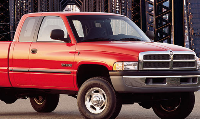
Allignment not Satisfying


Record Breaker
Joined: Jul 2007
Posts: 1,771
Likes: 0
From: Georgia
 RE: Allignment not Satisfying
i love when they say "We cant guarentee this" that means they dont know the real answer, they are just blowin smoke up your ***. ive heard that from a few shops when dealin with this mysterious misfire problem. funny how the dealership cant find the misfire but the transmission shop could.

Thread Starter
|
Banned
Joined: Apr 2007
Posts: 3,865
Likes: 0
From: Maine
RE: Allignment not Satisfying
ORIGINAL: 95ramdan
See if they will give you a printout of your alignment. Also swap the front two tires with eachother and see if it changes the direction of pull.
See if they will give you a printout of your alignment. Also swap the front two tires with eachother and see if it changes the direction of pull.
On another note, I really couldn't see the body damage the guy at the dealer was talking about. It can't hurt to bring it in though, I'm sure I'll find it tomorrow morning when its lighter outside. They are taking it in monday for the bodyshop.

Record Breaker
Joined: Jul 2007
Posts: 1,488
Likes: 3
From:
RE: Allignment not Satisfying
A slight pull to the right is prettycommon on a solid axle truck. They are way more sensitive to road crown than a vehicle with an independent suspension.
A slight pull to the right isn't nesicerally a bad thing. If you ever fall asleep at the wheel better to end up in the ditch than oncoming traffic [sm=outcold.gif]
A slight pull to the right isn't nesicerally a bad thing. If you ever fall asleep at the wheel better to end up in the ditch than oncoming traffic [sm=outcold.gif]

Champion
Joined: Aug 2005
Posts: 3,313
Likes: 8
RE: Allignment not Satisfying
here's a few archived posts with info
that might be of interest:
=====
Alignment programs (and service manuals I believe), give a wide
acceptable range for front caster on the 4x4 Rams. I believe the range
is 2 degrees to 5 degrees (if that's not correct, it's pretty close).
The problem occurs when the alignment tech (independent or dealer)
tells you that the measurements "checked out fine", just because they
were in this broad range of acceptance.
Caster readings that fall on either end of the scale are subject to
caster shimmy, even though they are "acceptable". I had to align some
30 trucks and attend a 9 hour "Dodge Ram Chassis Dynamics Diagnostics"
training session (fancy name, ehh?), before finding out that 3 degrees
to 4 degrees is the optimal caster setting for 4x4 Rams that eliminates
caster shimmy.
Below I will post what specifications I set Ram trucks to. First
I want to give a little more info on correct Ram alignments so you can
see if you had a job well done,
The eccentrics on the lower control arms ARE NOT for individual
wheel caster adjustments (even though our alignment machine says they
are). The eccentric sleeves in the upper ball joints are for adjusting
individual camber and total cross caster (difference in caster between
two front wheels). This is why replacement eccentrics are positionable
in eight different ways.
Once camber and cross caster are attained with the eccentrics, the
lower control arm eccentrics are then used to swing the caster readings
into specifications. The two eccentrics must be swung in the SAME
direction in EQUAL amounts. If they are not, it will create a setback
condition (one front wheel further forward than the other).
FYI - Comparing between the two front wheels, caster will cause a
pull to the smaller value and camber will cause a pull to the larger
value. A truck set up with caster pulling in one direction and camber
pulling in the other direction, can lead to a wandering truck; even
though it is "in specifications"!!!!!!
If the eccentrics on the lower control arms of your truck are not
pointing the same direction, the alignment was done incorrectly and the
axle was "twisted" or "forced" into position to attain the acceptable
values (seen them from the factory this way, go figure).
A correct alignment will set the truck up with a slight negative
cross caster (truck has slight pull to left) to compensate for right
hand road crown. Camber will be equal side to side slightly on the
negative side. This will help maintain acceptable camber when hauling
heavy loads, as the truck tends to lift in the front when towing.
Camber will then fall slightly positive when towing.
Just because the alignment shop says "it's in specifications", that
does not mean it is set up for proper performance and handling!!!!!!!!!
Specifications (my personal settings for every Ram I align): all specs
below are in degrees.
Left Wheel Right Wheel
-------------- ----------------
Caster 3.2 3.5
Cross Caster -.3
Camber -.10 -.10
Cross Camber 0.0
Toe - standard specs, (maybe a little out if you tow a lot, they will
pull in as the front end lifts up).
Brent
ASE Certified
Gold Certified Chrysler tech"
=================
kpzbee
He is 100% correct & don't let anyone tell you different. The only thing I
will add is that you will likely see the camber closer to 0 degrees on a 4X4.
That's where it's supposed to be. One other thing that most people check is
the rear axle alignment. To much of a thrust angle will also cause a pull
(push) in the front end. if it is out to far, the axle location will need to
be fixed since there are no adjustments. This is the kind of things I was
looking for with Intense's truck
========
92 Dak
I'm an auto tech that specializes in alignments and maybe I can help you out.
If the truck is pulling to the right the most probable causes are, the camber
is out, you have a tire problem or the caster is out. On the 4X4 there is only
one adjustment sleeve on the left side. This sleeve adjusts the toe in and
out. You can't have one side out and have it pull that direction. The caster
and camber are set first then the toe and then the wheel is staightened out
using an adjustment sleeve next to the pitman arm. There is no adjustment for
camber or caster on stock trucks. Moog now offers a caster-camber adjustment
sleeve the moves the stud of the upper ball joint to make corrections. Alot of
the Rams (4X4) have a tire wear problem on the outside edge of the right tire.
This is caused by to much camber and can be corrected by the Moog adjustment
sleeves. This positive caster will also cause the truck to pull to the right.
A vehicle has to be set up so that it offset roadcrown so it drives straight
in the right lane. The caster is always set to have more postive on the left
(usually 1 degree) and camber is set the same on both sides (caster won't wear
tires but camber will). Find out what the specs are and look at the camber
readings, they should be the same for left and right. Check your left tire to
see if it is wearing on the outside edge. If all the numbers seem to make
sense swap the tires from left to right and see if that help. If it pulls to
the left after the swap it's a tire problem, if continues to pull to the right
it's an alignment problem. Remember the old saying "keep it simple, stupid".
Rear axle problems are rare.
that might be of interest:
=====
Alignment programs (and service manuals I believe), give a wide
acceptable range for front caster on the 4x4 Rams. I believe the range
is 2 degrees to 5 degrees (if that's not correct, it's pretty close).
The problem occurs when the alignment tech (independent or dealer)
tells you that the measurements "checked out fine", just because they
were in this broad range of acceptance.
Caster readings that fall on either end of the scale are subject to
caster shimmy, even though they are "acceptable". I had to align some
30 trucks and attend a 9 hour "Dodge Ram Chassis Dynamics Diagnostics"
training session (fancy name, ehh?), before finding out that 3 degrees
to 4 degrees is the optimal caster setting for 4x4 Rams that eliminates
caster shimmy.
Below I will post what specifications I set Ram trucks to. First
I want to give a little more info on correct Ram alignments so you can
see if you had a job well done,
The eccentrics on the lower control arms ARE NOT for individual
wheel caster adjustments (even though our alignment machine says they
are). The eccentric sleeves in the upper ball joints are for adjusting
individual camber and total cross caster (difference in caster between
two front wheels). This is why replacement eccentrics are positionable
in eight different ways.
Once camber and cross caster are attained with the eccentrics, the
lower control arm eccentrics are then used to swing the caster readings
into specifications. The two eccentrics must be swung in the SAME
direction in EQUAL amounts. If they are not, it will create a setback
condition (one front wheel further forward than the other).
FYI - Comparing between the two front wheels, caster will cause a
pull to the smaller value and camber will cause a pull to the larger
value. A truck set up with caster pulling in one direction and camber
pulling in the other direction, can lead to a wandering truck; even
though it is "in specifications"!!!!!!
If the eccentrics on the lower control arms of your truck are not
pointing the same direction, the alignment was done incorrectly and the
axle was "twisted" or "forced" into position to attain the acceptable
values (seen them from the factory this way, go figure).
A correct alignment will set the truck up with a slight negative
cross caster (truck has slight pull to left) to compensate for right
hand road crown. Camber will be equal side to side slightly on the
negative side. This will help maintain acceptable camber when hauling
heavy loads, as the truck tends to lift in the front when towing.
Camber will then fall slightly positive when towing.
Just because the alignment shop says "it's in specifications", that
does not mean it is set up for proper performance and handling!!!!!!!!!
Specifications (my personal settings for every Ram I align): all specs
below are in degrees.
Left Wheel Right Wheel
-------------- ----------------
Caster 3.2 3.5
Cross Caster -.3
Camber -.10 -.10
Cross Camber 0.0
Toe - standard specs, (maybe a little out if you tow a lot, they will
pull in as the front end lifts up).
Brent
ASE Certified
Gold Certified Chrysler tech"
=================
kpzbee
He is 100% correct & don't let anyone tell you different. The only thing I
will add is that you will likely see the camber closer to 0 degrees on a 4X4.
That's where it's supposed to be. One other thing that most people check is
the rear axle alignment. To much of a thrust angle will also cause a pull
(push) in the front end. if it is out to far, the axle location will need to
be fixed since there are no adjustments. This is the kind of things I was
looking for with Intense's truck
========
92 Dak
I'm an auto tech that specializes in alignments and maybe I can help you out.
If the truck is pulling to the right the most probable causes are, the camber
is out, you have a tire problem or the caster is out. On the 4X4 there is only
one adjustment sleeve on the left side. This sleeve adjusts the toe in and
out. You can't have one side out and have it pull that direction. The caster
and camber are set first then the toe and then the wheel is staightened out
using an adjustment sleeve next to the pitman arm. There is no adjustment for
camber or caster on stock trucks. Moog now offers a caster-camber adjustment
sleeve the moves the stud of the upper ball joint to make corrections. Alot of
the Rams (4X4) have a tire wear problem on the outside edge of the right tire.
This is caused by to much camber and can be corrected by the Moog adjustment
sleeves. This positive caster will also cause the truck to pull to the right.
A vehicle has to be set up so that it offset roadcrown so it drives straight
in the right lane. The caster is always set to have more postive on the left
(usually 1 degree) and camber is set the same on both sides (caster won't wear
tires but camber will). Find out what the specs are and look at the camber
readings, they should be the same for left and right. Check your left tire to
see if it is wearing on the outside edge. If all the numbers seem to make
sense swap the tires from left to right and see if that help. If it pulls to
the left after the swap it's a tire problem, if continues to pull to the right
it's an alignment problem. Remember the old saying "keep it simple, stupid".
Rear axle problems are rare.

Joined: Oct 2007
Posts: 31
Likes: 0
From:
RE: Allignment not Satisfying
+1 on rabbler...get a print out before and after. If they won't, I'd start looking elswhere. I've been reading how some Ram guys are going to frame shops to get an alignment. That's gonna be my next stop.


