


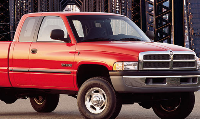
Diesel, Sand, 4x4 won't Move


Thread Starter
Joined: Aug 2005
Posts: 4
Likes: 0
From:
 Diesel, Sand, 4x4 won't Move
Here is the problem: Dodge 2500 diesel 4x4 will pull 10,000 pounds on dry roads, dirt, some mud with no problems. Put the same truck in soft sand and once stopped it doesn't want to move. Put it in 4-high or 4-low and push the pedal to the floor and it just shudders. It will move in 4-low but still shudders. Depending on the amount of soft sand and the incline will determine how much problems you will have. I have found it to be a problem with 99, 00 and 03 models but probably with all years. This is happening to many diesel 4x4 owners and discussion says the Ford and Chevy's don't seam to have the same issue. I have been searching the net and I found two other forums discussing the Dodge diesel auto tranny 4x4 problem in sand. I have talked to Dodge customer service (waste of time), three Dodge dealerships, and a performance transmission company in Colorado and no one knows for sure. The mind set is that it must have something to do with the way the RE47 tranny is designed. It may not allow maximum torque to be applied in first gear while sitting still. This is only a guess but it may just have something to do with it. I took my 2000 to the riverbank one time to try and attempt to pull someone out. After getting half way there the truck didn't feel right so I backed back out. I did notice when I was backing out the truck seem to pull better. It may have only been in my head and not reality. In reverse the tranny is in a lower gear ratio and the reverse band is locked up tight.
Has anyone else heard of this issue?
Has anyone else heard of this issue?

Professional
Joined: Aug 2004
Posts: 117
Likes: 1
From: 33.43.342, 84.21.602
RE: Diesel, Sand, 4x4 won't Move
hum. . .corrrect if wrong, but the 03's and up have the 48RE tranny, but 47-48RE the torque converter is junk to begin with.
what I would say the problem most likely is would be the 970 pound gorilla we have under the hood. I havent been in sand yet, but in soft mud my front end likes to sink like an anchor. even in grass the front tires leave a nice divit.
there are a few design snafu's with the 47-48RE, one being the pump doesnt work in reverse, so the TC isnt getting fluid when you start off and you could possably have some fins breaking off and turbulance leading to the flex plate breaking.
but one thing that realy stands out in my mind is when this guy was pulling a boat out of the water, he put the transfer in low range and all he did was smoke the tires, in high range 4x4 it pulled out like it wasnt there. this is from the massive low end torque the engine is capable of produceing and this could be another cause of the truck getting stuck in sand, it just has toooo much power
what I would say the problem most likely is would be the 970 pound gorilla we have under the hood. I havent been in sand yet, but in soft mud my front end likes to sink like an anchor. even in grass the front tires leave a nice divit.
there are a few design snafu's with the 47-48RE, one being the pump doesnt work in reverse, so the TC isnt getting fluid when you start off and you could possably have some fins breaking off and turbulance leading to the flex plate breaking.
but one thing that realy stands out in my mind is when this guy was pulling a boat out of the water, he put the transfer in low range and all he did was smoke the tires, in high range 4x4 it pulled out like it wasnt there. this is from the massive low end torque the engine is capable of produceing and this could be another cause of the truck getting stuck in sand, it just has toooo much power
Thread Starter
Joined: Aug 2005
Posts: 4
Likes: 0
From:
RE: Diesel, Sand, 4x4 won't Move
This question was asked in another forum from someone else. I have just been trying to figure it out. My 2000 has no problem pulling my 10,000 puond boat and trailer out of the water in 4-wheel or 2, but 2-wheel drive will spin the tires easy just by giving it a little to much. In another forum I read where a lady had the same issue with the guy and this happend when hers was new. Your probably right on the tranny model but either way it can be an issue, and I'm just trying to figure it out.

Record Breaker
Joined: May 2005
Posts: 2,415
Likes: 0
From: Wisconsin
RE: Diesel, Sand, 4x4 won't Move
I have this issue with my V10 truck...and my 318 Ramcharger...and my cousin's 3/4 ton Silverado...and basically every other truck I've ever driven. Trucks don't move well in the sand unless they're properly equipped to do so.
It's not a transmission issue. The issue lies with the lack of traction. First of all, unless you have lockers in both ends of your truck, you do not have TRUE 4wd when your wheels start to slip. When the wheels start to slip (with an open differential), you are going to lose traction. The open differential has one major flaw. It applies the SAME amount of torque to both wheels, and that amount of torque is limited to the greatest amount that will not cause a wheel to slip on whatever surface you might be on. So, even though there is more torque available, there needs to be enough traction (at BOTH wheels) to transmit that torque to the ground. If you give the truck more gas after the wheels start to slip, the wheels will just spin faster. Then you're up a creek without a canoe. And odds are, unless you have one of the new Power Wagons you don't have any type of traction aide in the front (lsd, locker, posi). The rear is even worse. The rear gets more power than the front, so if you don't have anything back there, you're going to have a real hard time in sand or on ice...or in snow. An open differential won't help you at all. The stock LSD is a good unit, but not as good as a locker.
A locker will cause the wheels to spin at the same speed and receive the maximum amount of torque regardless of traction. If one wheel ends up with no traction, the other wheel won't care. And if we were able to get a zexel-torsen differential for our trucks, things would be even better. A zexel-torsen differential is a torque biasing open differential. It functions just like a normal open differential, but when there is wheel slippage, it is able to apply more torque to the wheel (and only the wheel) that has good traction. It's all based on the bias ratio of the differential. A 6:1 bias ratio differential for example would apply 6 times as much power to the wheel with good traction in poor tractions situtations. Too bad they aren't available for many applications unless your vehicle has a Hummer badge on it.
Another thing that will hurt you in sand is your tires. If you're trying to gain traction in sand, you're going to need something more than road tires. You're going to want something with a very agressive tread pattern. The drawback to aggressive tires is they wear fast and are very loud when you travel on the road. There is no real solution for this problem. You have to choose one or the other.
Trucks, by nature, also suffer from one major traction flaw...they have very little weight over the rear wheels. Even if you're towing a huge boat, a lot of the weight is sitting on the trailer. And even the tongue weight that the trailer is producing isn't as good as "over the axle" weight. Plus that "970lb gorilla" is causing the truck to sink more in the front and lift more in the back.
That gorilla isn't really helping this problem either. It makes so much low end torque, that it spins the wheels easily on dry pavement (or at least it should...I know my V10 does). That problem is only magnified when you get into low traction situtations. There is a trick to lessen this problem though, but it only works with a manual transmission. It's something that's helpful in getting around on ice. If you start out in 2nd or 3rd gear you will have less power available to the wheels (because of the way transmission gearing works) and as a result it wil be harder to spin the wheels. You can'd do this with an auto transmission though.
These trucks weren't designed to haul or tow in the sand. They were designed to do function on road and in light offroad situtations. By light, I mean gravel roads...some mud...and that's it. However, there are items that can help you gain traction. Lockers are the best way. E-Lockers (or Air lockers) are a MUST if you're towing. NEVER tow with a truck that has auto-locking differentials. Traction ladders are helpful, but will cut down on ground clearance if you're going offroad. There is also a company that makes a bed shaped weight that you can fill with up to 800lbs. of sand. That would really help traction...especially in the winter.
I'd get into explaining why the reverse theory doesn't make sense, but I feel I've typed enough for now. To summarize, you have to have the right kind of tires to be driving (or towing) in sand. You have to get some weight in the back of the truck (the trailer doesn't cut it). You have to have the right traction aid...lockers are the best, but at least an LSD to get anywhere. And above all, you have to go SLOW. The more you press the pedal, the less traction you're going to have...because that gorilla is just gonna spin until it breaks something...or runs out of go-juice.
It's not a transmission issue. The issue lies with the lack of traction. First of all, unless you have lockers in both ends of your truck, you do not have TRUE 4wd when your wheels start to slip. When the wheels start to slip (with an open differential), you are going to lose traction. The open differential has one major flaw. It applies the SAME amount of torque to both wheels, and that amount of torque is limited to the greatest amount that will not cause a wheel to slip on whatever surface you might be on. So, even though there is more torque available, there needs to be enough traction (at BOTH wheels) to transmit that torque to the ground. If you give the truck more gas after the wheels start to slip, the wheels will just spin faster. Then you're up a creek without a canoe. And odds are, unless you have one of the new Power Wagons you don't have any type of traction aide in the front (lsd, locker, posi). The rear is even worse. The rear gets more power than the front, so if you don't have anything back there, you're going to have a real hard time in sand or on ice...or in snow. An open differential won't help you at all. The stock LSD is a good unit, but not as good as a locker.
A locker will cause the wheels to spin at the same speed and receive the maximum amount of torque regardless of traction. If one wheel ends up with no traction, the other wheel won't care. And if we were able to get a zexel-torsen differential for our trucks, things would be even better. A zexel-torsen differential is a torque biasing open differential. It functions just like a normal open differential, but when there is wheel slippage, it is able to apply more torque to the wheel (and only the wheel) that has good traction. It's all based on the bias ratio of the differential. A 6:1 bias ratio differential for example would apply 6 times as much power to the wheel with good traction in poor tractions situtations. Too bad they aren't available for many applications unless your vehicle has a Hummer badge on it.
Another thing that will hurt you in sand is your tires. If you're trying to gain traction in sand, you're going to need something more than road tires. You're going to want something with a very agressive tread pattern. The drawback to aggressive tires is they wear fast and are very loud when you travel on the road. There is no real solution for this problem. You have to choose one or the other.
Trucks, by nature, also suffer from one major traction flaw...they have very little weight over the rear wheels. Even if you're towing a huge boat, a lot of the weight is sitting on the trailer. And even the tongue weight that the trailer is producing isn't as good as "over the axle" weight. Plus that "970lb gorilla" is causing the truck to sink more in the front and lift more in the back.
That gorilla isn't really helping this problem either. It makes so much low end torque, that it spins the wheels easily on dry pavement (or at least it should...I know my V10 does). That problem is only magnified when you get into low traction situtations. There is a trick to lessen this problem though, but it only works with a manual transmission. It's something that's helpful in getting around on ice. If you start out in 2nd or 3rd gear you will have less power available to the wheels (because of the way transmission gearing works) and as a result it wil be harder to spin the wheels. You can'd do this with an auto transmission though.
These trucks weren't designed to haul or tow in the sand. They were designed to do function on road and in light offroad situtations. By light, I mean gravel roads...some mud...and that's it. However, there are items that can help you gain traction. Lockers are the best way. E-Lockers (or Air lockers) are a MUST if you're towing. NEVER tow with a truck that has auto-locking differentials. Traction ladders are helpful, but will cut down on ground clearance if you're going offroad. There is also a company that makes a bed shaped weight that you can fill with up to 800lbs. of sand. That would really help traction...especially in the winter.
I'd get into explaining why the reverse theory doesn't make sense, but I feel I've typed enough for now. To summarize, you have to have the right kind of tires to be driving (or towing) in sand. You have to get some weight in the back of the truck (the trailer doesn't cut it). You have to have the right traction aid...lockers are the best, but at least an LSD to get anywhere. And above all, you have to go SLOW. The more you press the pedal, the less traction you're going to have...because that gorilla is just gonna spin until it breaks something...or runs out of go-juice.
