


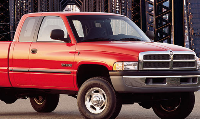
Supercharger or Turbo?


Record Breaker
Joined: Jan 2006
Posts: 1,075
Likes: 0
From:
 RE: Supercharger or Turbo?
i've never even seen turbos for gas dodge rams.. could you just use a turbo off a 2500 diesel on a gas 360 motor?? i have a 318 and really want to get a supercharger.. my low end is what kills me.. around 3,000 is when i really feel it pick up

Professional
Joined: May 2006
Posts: 156
Likes: 0
RE: Supercharger or Turbo?
ORIGINAL: 94Champ
How many turbo's do you see at top fuel running 5's?
How many turbo's do you see at top fuel running 5's?
I've owned vehicles with both (a toyota 4x4 with a t3/t4 and a 355 chevy with a small roots blower) and both are fun, and both have their downsides.
The turbo is great for gas mileage. If you don't want, or need the boost, keep your foot out of it, and the engine acts like a normal compression engine. You can't do this with the S/C. It's always producing boost. The turbo, conversely, produces a crap load of under-hood heat, and requires a ton of tubing to get to an intercooler.
The S/C is available as a kit, which is nice. You'd have to fab up a turbo for the ram, I've checked for kits, and no one makes a decent premade deal for it. Again, conversely, the S/C is tougher to intercool (or aftercool) and if you don't cool the intake charge, you are inviting detonation to the party, which boost hates. An option for the ram (albeit an expensive option) is the STS universal rear mount turbo kit. These mount a turbo at the end of the exhaust, near the rear axle to combat the underhood heat issues, and allow you to use aftermarket headers and exhaust with it still, and since the charge tube is so long, it acts as it's own intercooler. Downside, the kit is 6K, and includes no fuel management.
Either is a viable option for extra power, and if what you want is low end, a S/C is the way to go. The turbo is inherantly a more efficent system on fuel, and overall power output, but you'll pay for it up front. Either way, good luck!

Record Breaker
Joined: Nov 2005
Posts: 1,827
Likes: 3
From: Ontario Canada
RE: Supercharger or Turbo?
Roots/screw type supercharger will make almost a steady/constant amount of boost from low rpms to redline. Good on a 4x4 offroading, but can be a bit hard on the driveline. Great for hard launches at the track but run out of steam before going threw the traps at the end. Problem with roots is only one company selling them for us and Kenne Bell isnt known for good customer support.
Centrifrugal type superchargers (powerdyne, paxton, vortech & procharger) are similar to turbos in how they make progressively more boost as rpms increase. A bit easier on the driveline compared to a screw/roots. Could be good offroad as well if used correctly. Easier to launch cause its down on hp/trq at idle to 2500rpms(s/c parasitic loss). Good stall and your making ok power out of the hole but really starts to throw you back in the seat as rpms approach redline I would avoid Powerdyne outright.
Turbos are similar but make power at a bit higher rpm due to lag. You can get an STS turbo setup that is under your truck and eliminates the muffler. Personally I dont like the idea of having a k&N type intake that close to the ground on a daily driver. I would run it back up to the grill if possible. Hear they make some great #s on the hemi's.
Intercoolers regardless of boost levels help. By running a cooler charge your protecting the engine from detonation and allowing it to run more timing compared to a non intercooled setup. At 7-8psi on a non intercooled, I would expect about 8-10 degrees of tiiming would need to be pulled. With an intercooler you would not have to retard the timing at all.
Turbos, centrifrugal and roots/screw all have their issues and advantages depending on the application and amount you want to spend.
You can find Paxtons and Vortechs out there for a reasonable price with so many of them being made. May have to fab up brackets and pipe work but could be a semi cheap route for the guy thats handy/creative.
Same time be carefull because most are not warrantied after 50000miles and may be in need of a rebuild.
Centrifrugal type superchargers (powerdyne, paxton, vortech & procharger) are similar to turbos in how they make progressively more boost as rpms increase. A bit easier on the driveline compared to a screw/roots. Could be good offroad as well if used correctly. Easier to launch cause its down on hp/trq at idle to 2500rpms(s/c parasitic loss). Good stall and your making ok power out of the hole but really starts to throw you back in the seat as rpms approach redline
I would avoid Powerdyne outright. Turbos are similar but make power at a bit higher rpm due to lag. You can get an STS turbo setup that is under your truck and eliminates the muffler. Personally I dont like the idea of having a k&N type intake that close to the ground on a daily driver. I would run it back up to the grill if possible. Hear they make some great #s on the hemi's.
Intercoolers regardless of boost levels help. By running a cooler charge your protecting the engine from detonation and allowing it to run more timing compared to a non intercooled setup. At 7-8psi on a non intercooled, I would expect about 8-10 degrees of tiiming would need to be pulled. With an intercooler you would not have to retard the timing at all.
Turbos, centrifrugal and roots/screw all have their issues and advantages depending on the application and amount you want to spend.
You can find Paxtons and Vortechs out there for a reasonable price with so many of them being made. May have to fab up brackets and pipe work but could be a semi cheap route for the guy thats handy/creative.
Same time be carefull because most are not warrantied after 50000miles and may be in need of a rebuild.

Champion
Joined: Aug 2005
Posts: 3,313
Likes: 8
RE: Supercharger or Turbo?
Pete Hagenbuch was a Chrysler engine development engineer in the engines area from 1958 through to 1987; he worked in valvetrain, performance, emissions, and other areas. His work covered Chrysler’s most legendary engines — the 426 Hemi, the B/RB-series big blocks, the LA small blocks, the 2.2 turbos, and even the Australian Hemi Six.
he has an interesting interview here:
http://www.allpar.com/corporate/bios...interview.html
where he says:
quote
"They finally did it, and they are even looking at super chargers now. They should have looked at them in 1980, Eaton had a beauty. Eaton had a little Rootes that was just fabulous and would have been great for the fours and sixes. I wouldn’t be surprised if it’s the one Pontiac uses on their Grand Prix. But anyway, it was a great little machine and I never, ever got a chance to run the thing.
What reason did they give for not using a supercharger?
They wanted turbocharging, it was the thing of the moment. It was far superior if you were going for maximum, top end output. Who the hell wants maximum, top end output on a passenger car?
Supercharged cars blow your mind up to 60MPH. There are ways to reduce all the friction they absorb when you’re at part throttle, you can dead head them, you can bypass them, and you can do all kinds of things. They can be built, I’m sure Pontiac has proven it although I don’t know, to get reasonable fuel economy.......I am guilty on what we then referred to as the Turbo II. It used a Garret variable vane turbocharger and a long branch tuned intake manifold. It would have been a hell of an engine if Garrett’s Turbocharger did what they said it would do. As it was I think we sold a 100 of them. I retired before it went into production. The variable-vane turbocharger’s vanes became fixed as carbon built up, or so they tell me!
The long branch intake manifold did make it into production in the 1988 model year. I had a 2.2 in a Dodge Daytona (a kind of forgotten car, but a good one in its time). I also had a 1989 LeBaron coupe with a 225 turbo and an automatic. Actually it was my wife’s car; I was driving a Dakota pickup. The first turbo could have benefited from that intake manifold very nicely. You understand that none of us knew more than what we read in the books about turbocharging when we started, and they didn’t hire an expert so we just kind of stumbled around and came up with something that worked. The one thing we did right was locating the turbocharger right on the exhaust manifold, not in some remote place like some people have done just for space reasons. That was probably what saved it from being a total disaster. The losses in the heat in the turbo are huge, you can quantify them per inch away from the manifold outlet, the farther away you are the higher the losses, so that was one thing we did right.
The second thing we did right was, I learned later it got me in a lot of trouble because in a meeting with my boss, his boss, his boss, his boss and his boss and everybody else practically that was working on the turbo engine, we made the decision to make it a premium fuel engine. I said that is like a breath of fresh air, I’ve been trying to tell people we needed to do that for the past year. Some of those people were there and they didn’t appreciate it but nobody ever said anything. I heard later that my name was mud in certain circles for a while, but it wore off, I did something good later. And I was right; the thing would have been a disaster on unleaded.
I’d say that the biggest breakthrough, sad as it sounds, was when we specified premium fuel. For two reasons, one, we got a huge advantage in output and two, none of us except the electronics lab trusted the knock sensor in that engine, it was not reliable and to run that engine hard on regular octane would have melted the pistons or worse. It would have got into runaway pre-ignition and that’s all she wrote, that’s holes in pistons and all kinds of other horrible things. So, we finally managed to do that and that made the turbo. And of course the subsequent Turbo II was a premium fuel engine.
I do remember there was a subscript or a note in the owner’s manual saying if premium fuel is not available that mid-grade is satisfactory if you do not run the engine hard.
Ok, well you were taking a hell of a chance if you put in regular. And you paid a lot of money to get the turbo and back then what was premium, 5 cents? So it was damn foolish not to use premium. There were a lot of guys found out too, we had a lot of them, I got back into the business of visiting dealers there for a while.
That bad?
Oh yeah. We would always insist on a sample of fuel, and I didn’t want it out of the fuel tank I wanted it out of the fuel system so I knew what was going into the engine when it failed. Turbos are just naturally prone to melt and blow up, it’s not a proper way to design a passenger car engine it never has been and never will be. The under hood heat is a problem, deteriorating seals and all kinds of things. All the fancy wraps we put on the wiring you run a turbo hard for a year or so and you find that all those things have changed color and the whole place looks like it’s been fried.
he has an interesting interview here:
http://www.allpar.com/corporate/bios...interview.html
where he says:
quote
"They finally did it, and they are even looking at super chargers now. They should have looked at them in 1980, Eaton had a beauty. Eaton had a little Rootes that was just fabulous and would have been great for the fours and sixes. I wouldn’t be surprised if it’s the one Pontiac uses on their Grand Prix. But anyway, it was a great little machine and I never, ever got a chance to run the thing.
What reason did they give for not using a supercharger?
They wanted turbocharging, it was the thing of the moment. It was far superior if you were going for maximum, top end output. Who the hell wants maximum, top end output on a passenger car?
Supercharged cars blow your mind up to 60MPH. There are ways to reduce all the friction they absorb when you’re at part throttle, you can dead head them, you can bypass them, and you can do all kinds of things. They can be built, I’m sure Pontiac has proven it although I don’t know, to get reasonable fuel economy.......I am guilty on what we then referred to as the Turbo II. It used a Garret variable vane turbocharger and a long branch tuned intake manifold. It would have been a hell of an engine if Garrett’s Turbocharger did what they said it would do. As it was I think we sold a 100 of them. I retired before it went into production. The variable-vane turbocharger’s vanes became fixed as carbon built up, or so they tell me!
The long branch intake manifold did make it into production in the 1988 model year. I had a 2.2 in a Dodge Daytona (a kind of forgotten car, but a good one in its time). I also had a 1989 LeBaron coupe with a 225 turbo and an automatic. Actually it was my wife’s car; I was driving a Dakota pickup. The first turbo could have benefited from that intake manifold very nicely. You understand that none of us knew more than what we read in the books about turbocharging when we started, and they didn’t hire an expert so we just kind of stumbled around and came up with something that worked. The one thing we did right was locating the turbocharger right on the exhaust manifold, not in some remote place like some people have done just for space reasons. That was probably what saved it from being a total disaster. The losses in the heat in the turbo are huge, you can quantify them per inch away from the manifold outlet, the farther away you are the higher the losses, so that was one thing we did right.
The second thing we did right was, I learned later it got me in a lot of trouble because in a meeting with my boss, his boss, his boss, his boss and his boss and everybody else practically that was working on the turbo engine, we made the decision to make it a premium fuel engine. I said that is like a breath of fresh air, I’ve been trying to tell people we needed to do that for the past year. Some of those people were there and they didn’t appreciate it but nobody ever said anything. I heard later that my name was mud in certain circles for a while, but it wore off, I did something good later. And I was right; the thing would have been a disaster on unleaded.
I’d say that the biggest breakthrough, sad as it sounds, was when we specified premium fuel. For two reasons, one, we got a huge advantage in output and two, none of us except the electronics lab trusted the knock sensor in that engine, it was not reliable and to run that engine hard on regular octane would have melted the pistons or worse. It would have got into runaway pre-ignition and that’s all she wrote, that’s holes in pistons and all kinds of other horrible things. So, we finally managed to do that and that made the turbo. And of course the subsequent Turbo II was a premium fuel engine.
I do remember there was a subscript or a note in the owner’s manual saying if premium fuel is not available that mid-grade is satisfactory if you do not run the engine hard.
Ok, well you were taking a hell of a chance if you put in regular. And you paid a lot of money to get the turbo and back then what was premium, 5 cents? So it was damn foolish not to use premium. There were a lot of guys found out too, we had a lot of them, I got back into the business of visiting dealers there for a while.
That bad?
Oh yeah. We would always insist on a sample of fuel, and I didn’t want it out of the fuel tank I wanted it out of the fuel system so I knew what was going into the engine when it failed. Turbos are just naturally prone to melt and blow up, it’s not a proper way to design a passenger car engine it never has been and never will be. The under hood heat is a problem, deteriorating seals and all kinds of things. All the fancy wraps we put on the wiring you run a turbo hard for a year or so and you find that all those things have changed color and the whole place looks like it’s been fried.


Champion
Joined: May 2005
Posts: 3,549
Likes: 0
From: Wyckoff, NJ
RE: Supercharger or Turbo?
i really like superchargers and there better for trucks or offroading. the only reason i would want a turbo over a supercharger is like on my friends trans am that the turbo gives him enough lag to launch without breaking the tires completely loose and then the power is all there were as with the supercharger he would be spinning the tires off the line and getting horrible times.
Record Breaker
Joined: Nov 2005
Posts: 1,827
Likes: 3
From: Ontario Canada
RE: Supercharger or Turbo?
If your talking new the costs are
Turbos about $5500 to start (+++)
Superchargers about 3500 to start ( +++)
Supercharger is limited to about 52000-62000 rpms depending on what model you get (centrifrugal my choice over roots/screw)
Paxton, Procharger and Vortech do not make boost below about 2400rpms. You can drive in the city and on the highway and keep it out of boost if you can resist the urged to really hammer it lol.
Both turbo's and superchargers are limited to a few things
Stock headgaskets safe max of 7psi
Stock crank/rods figure them to about 500hp (crank)
Stock 360 block is good to about 850-950hp (crank)
As far as traction, again if its a centrifrugal its has similar characteristics to the turbo. Good off the line because the s/c robs a bit of hp till it starts to make boost. Once in boost all is forgiven. Only way I can describe it, with a supercharger, truck hunkers down and goes. With a stock motor and all the bolts ons I had more traction issues than I do with the Procharger. Figure with the forged 408 blower motor in that will all change and traction will be out the door with the Procharger back on and making some real boost.
Turbos about $5500 to start (+++)
Superchargers about 3500 to start ( +++)
Supercharger is limited to about 52000-62000 rpms depending on what model you get (centrifrugal my choice over roots/screw)
Paxton, Procharger and Vortech do not make boost below about 2400rpms. You can drive in the city and on the highway and keep it out of boost if you can resist the urged to really hammer it lol.
Both turbo's and superchargers are limited to a few things
Stock headgaskets safe max of 7psi
Stock crank/rods figure them to about 500hp (crank)
Stock 360 block is good to about 850-950hp (crank)
As far as traction, again if its a centrifrugal its has similar characteristics to the turbo. Good off the line because the s/c robs a bit of hp till it starts to make boost. Once in boost all is forgiven. Only way I can describe it, with a supercharger, truck hunkers down and goes. With a stock motor and all the bolts ons I had more traction issues than I do with the Procharger. Figure with the forged 408 blower motor in that will all change and traction will be out the door with the Procharger back on and making some real boost.