


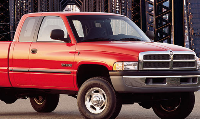
4wd actuator - electric conversion?


Thread Starter
|
Record Breaker

Joined: Jun 2011
Posts: 2,387
Likes: 41
From: Bismarck, ND

Alright I have an update to this. Ultimately I chose to rebuilt the front diff and keep the vacuum actuator. I replaced both shafts and the 4wd shift collar, which was quite expensive over just getting a cad delete kit. Why I chose to keep the CAD, I didn't want the exploding transfer case and cardan joint issue. I also did a full rebuild and 4.56 swap.
Some tips I have, if you are doing this while in the truck, you do not need a case spreader or pry bars to get the carrier out. I simply used a 1" ratchet strap around the sway bar. Use the hooks on the carrier and slowly ratchet the carrier out. Makes it nice and controlled. Also if you are doing a rebuild, get the proper bearing tools. I found a generic remover for the carrier and pinion bearing online. Clamshell design, ~$100, worked great. It is specific to Dana 44,60, 70, and 80. Also make sure you have access to a press or buy one. I got the HF 20 ton. Was more than enough. For setting up your ring and pinion make yourself some setup bearings. Get extra bearings and ream out the inside with sandpaper flap disc on a die grinder (you can use a drill but you will be at it for awhile) until it is a snug slip fit, use some gear lube so they don't get stuck. This way you can simply pull them on and off by hand for quick shim changes. Cut the cage and rollers off of the old bearing so you are left with just the inner races. The old inner races make perfect press tools for the pressing on the new bearings. Out of the 4 bearings between the pinion and carrier the Dana 60 and 70u have 3 of them the same. So if you are doing a gear change like I did, I was able to reuse most of my inner races and setup bearing for the rear. If you have Dana 60s front and rear even better. One of those the first one is painful the second is easy situations.
By the time I got done with the front I was really questioning on why I did the gear change as I then had the rear to do. I was glad I did it, found out the rear carrier races had mildly spun inside the caps but the bearing side was fine. What I found was some cheap bearing and races had been installed at some point on the rear carrier.
I used 2 different sources of gears for the diffs. The front was USA standard/Yukon. The rear was revolution gear. Have some opinions on these, both were 4.56 thick cut so I didn't have to change carriers.
For the front I ordered a USA standard of gears and Master Yukon install kit. Overall the install kit was great. Very nice selection of shim thicknesses, Timken bearings, a small tube of good gear paint, and decent instructions/tips, new ring bolts and loctite. Overall 10/10. The ring and pinion set came in a Yukon Box, no USA Standard stampings anywhere. I had to warm the ring gear to ~200F and it dropped on the carrier easy. The pinion needed some attention. I had to polish the surfaces where the bearings sit, especially the yoke end. Let's start with the snout end first. Even after polishing and using some gear lube it pressed on harder than it should have. The yoke end however needed a lot of massaging. So that needs to be a tight slip fit because it cannot go on until the pinion is in the housing. After a lot of very careful polishing I did get the bearing to slip on far enough that I could use yoke and nut to gently pull the pinion through. However once installed the pattern from tooth to tooth was very good, nice and quiet operation. 7.5/10
The rear I used a revolution gear kit. The install kit was good. Koyo bearings which seemed to be on par with the Timkens. Good bolts for the ring bolts and loctite. The shim selection left a little to be desired. There was hardly and slimmer shims. I needed to add.003" to get my new pinion deep enough, however the thinnest shim in the kit was .008". So I ended up using the .003" from the Yukon kit. I didn't need any carrier shims, I was able to swap shims around that were on the carrier already to achieve proper backlash. Overall 7.5/10. The gear set however was great. The machned finish was better. The pinion snout bearing pressed on appropriately with no polishing. I did need mild polishing for the yoke end bearing to get started on it, but not nearly as much as the Yukon set. Pattern was very consistent tooth to tooth, very quiet and smooth operating so far. Overall 10/10.
So overall I would go with a Yukon install kit and Revolution Gear set based on my experience. However if you do got with a revolution install kit, the bearings are fine but get some more shims, especially pinion depth.
So far I am really enjoying the 4.56s. The truck feels right now. It had factory 4.10s in it with 35s which would have been equivalent to stock tires and 3.55s. Now with the 4.56 and 35s its equivalent to stock tires with a 3.90 gear. 4th gear lock up occurs at 48mph instead of 52mph. which is good. I run cruise on hilly 55mph roads so now it isn't unlocking the converter just cause the cruise was slow to react going up hill. I am going to track fuel economy for the next tank as it seems to accelerate easier now and uses less throttle on the hills. One thing about second gens is you don't need to recalibrate your speedo for gear changes, This is because the speedometer uses tire revolutions per mile which is read off of a tone ring on the rear carrier. Only adjustments needed is when you change tire size.as that will change how many revolutions per mile the tire makes. I haven't hooked a trailer to it as I am still on the initial break in for the gears. I have smooth 4wd operation now. No more jerking and clunking in the front.
Don't fear re-gearing these trucks for some performance. The 2nd gen trucks are heavy with a taller than average gears, especially the overdrive gear, you won't be killing your fuel economy. What you will be doing is taking load off your drivetrain and lowering trans temps and have a nice driving truck.
Some tips I have, if you are doing this while in the truck, you do not need a case spreader or pry bars to get the carrier out. I simply used a 1" ratchet strap around the sway bar. Use the hooks on the carrier and slowly ratchet the carrier out. Makes it nice and controlled. Also if you are doing a rebuild, get the proper bearing tools. I found a generic remover for the carrier and pinion bearing online. Clamshell design, ~$100, worked great. It is specific to Dana 44,60, 70, and 80. Also make sure you have access to a press or buy one. I got the HF 20 ton. Was more than enough. For setting up your ring and pinion make yourself some setup bearings. Get extra bearings and ream out the inside with sandpaper flap disc on a die grinder (you can use a drill but you will be at it for awhile) until it is a snug slip fit, use some gear lube so they don't get stuck. This way you can simply pull them on and off by hand for quick shim changes. Cut the cage and rollers off of the old bearing so you are left with just the inner races. The old inner races make perfect press tools for the pressing on the new bearings. Out of the 4 bearings between the pinion and carrier the Dana 60 and 70u have 3 of them the same. So if you are doing a gear change like I did, I was able to reuse most of my inner races and setup bearing for the rear. If you have Dana 60s front and rear even better. One of those the first one is painful the second is easy situations.
By the time I got done with the front I was really questioning on why I did the gear change as I then had the rear to do. I was glad I did it, found out the rear carrier races had mildly spun inside the caps but the bearing side was fine. What I found was some cheap bearing and races had been installed at some point on the rear carrier.
I used 2 different sources of gears for the diffs. The front was USA standard/Yukon. The rear was revolution gear. Have some opinions on these, both were 4.56 thick cut so I didn't have to change carriers.
For the front I ordered a USA standard of gears and Master Yukon install kit. Overall the install kit was great. Very nice selection of shim thicknesses, Timken bearings, a small tube of good gear paint, and decent instructions/tips, new ring bolts and loctite. Overall 10/10. The ring and pinion set came in a Yukon Box, no USA Standard stampings anywhere. I had to warm the ring gear to ~200F and it dropped on the carrier easy. The pinion needed some attention. I had to polish the surfaces where the bearings sit, especially the yoke end. Let's start with the snout end first. Even after polishing and using some gear lube it pressed on harder than it should have. The yoke end however needed a lot of massaging. So that needs to be a tight slip fit because it cannot go on until the pinion is in the housing. After a lot of very careful polishing I did get the bearing to slip on far enough that I could use yoke and nut to gently pull the pinion through. However once installed the pattern from tooth to tooth was very good, nice and quiet operation. 7.5/10
The rear I used a revolution gear kit. The install kit was good. Koyo bearings which seemed to be on par with the Timkens. Good bolts for the ring bolts and loctite. The shim selection left a little to be desired. There was hardly and slimmer shims. I needed to add.003" to get my new pinion deep enough, however the thinnest shim in the kit was .008". So I ended up using the .003" from the Yukon kit. I didn't need any carrier shims, I was able to swap shims around that were on the carrier already to achieve proper backlash. Overall 7.5/10. The gear set however was great. The machned finish was better. The pinion snout bearing pressed on appropriately with no polishing. I did need mild polishing for the yoke end bearing to get started on it, but not nearly as much as the Yukon set. Pattern was very consistent tooth to tooth, very quiet and smooth operating so far. Overall 10/10.
So overall I would go with a Yukon install kit and Revolution Gear set based on my experience. However if you do got with a revolution install kit, the bearings are fine but get some more shims, especially pinion depth.
So far I am really enjoying the 4.56s. The truck feels right now. It had factory 4.10s in it with 35s which would have been equivalent to stock tires and 3.55s. Now with the 4.56 and 35s its equivalent to stock tires with a 3.90 gear. 4th gear lock up occurs at 48mph instead of 52mph. which is good. I run cruise on hilly 55mph roads so now it isn't unlocking the converter just cause the cruise was slow to react going up hill. I am going to track fuel economy for the next tank as it seems to accelerate easier now and uses less throttle on the hills. One thing about second gens is you don't need to recalibrate your speedo for gear changes, This is because the speedometer uses tire revolutions per mile which is read off of a tone ring on the rear carrier. Only adjustments needed is when you change tire size.as that will change how many revolutions per mile the tire makes. I haven't hooked a trailer to it as I am still on the initial break in for the gears. I have smooth 4wd operation now. No more jerking and clunking in the front.
Don't fear re-gearing these trucks for some performance. The 2nd gen trucks are heavy with a taller than average gears, especially the overdrive gear, you won't be killing your fuel economy. What you will be doing is taking load off your drivetrain and lowering trans temps and have a nice driving truck.
Last edited by adukart; Jun 10, 2025 at 12:09 PM.


Thread Starter
|
Record Breaker
Joined: Jun 2011
Posts: 2,387
Likes: 41
From: Bismarck, ND
The Koyo did feel really nice. But so did the both the original timkens in the truck and the new timkens. However I used some cheap bearings from autozone for making my carrier set up bearings (which was what I found installed on the rear carrier later). They were noticeably noisier and sloppier just spinning them in your hand. I wouldn't recommend anything less than Koyo, SKF, or Timken.

