


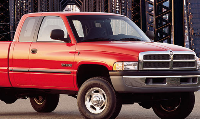
Flowmaster improve gas mileage?


Record Breaker
Joined: Jan 2006
Posts: 1,075
Likes: 0
From:
 RE: Flowmaster improve gas mileage?
depending on your exhaust pipe diameter.. 2.25 or 2.5 would give you good back pressure and keep your low end torque up.. probally help on gas mileage a mile or so per gallon figuring you wouldnt have to be so hard on the gas taking off

Joined: May 2004
Posts: 3,811
Likes: 3
From: Bett-neee
RE: Flowmaster improve gas mileage?
and exhaust system tends to improve mileage by allowing the engine to "pump air" more effeciantly, the stock system is somewhat restrictive.
its hard to tell b/c when you add a flowmaster it sounds wicked sick and its hard to have enough self controll not to romp on the throttle all day long..ive had mine of for how long,,, and i still catch myself getting in it hard from time to time... that right there will kill your mpg's
its hard to tell b/c when you add a flowmaster it sounds wicked sick and its hard to have enough self controll not to romp on the throttle all day long..ive had mine of for how long,,, and i still catch myself getting in it hard from time to time... that right there will kill your mpg's

Champion
Joined: Aug 2005
Posts: 3,313
Likes: 8
RE: Flowmaster improve gas mileage?
A low restriction exhaust system can improve MPG,
but don't expect much in 'typical driving'
Most day to day driving is done in the 1500-2500 rpm range with the throttle anywhere from 30-50% open.
In this range the amount of exhaust gas is much much smaller than what happens at 100% throttle and 4000 rpm.
Typically at 1800 rpm and 50% throttle the amount of exhaust gas is so low that the pressure in the exhaust pipes is below 1 psi already. A low restriction exhaust might this by 0.5 psi, but obviously you can't go below zero. This will improve MPG, but it will only be something like 0.1 to 0.3 MPG.
This improvement is so low that it is hard to measure, unless you do a very careful and scientific test.
Since the MPG of a Ram pickup can easily jump around 'naturally' by 1-3 MPG per tankful due to driving conditions,
many people put on a different exhaust - check the next tankful in an unscientific manner - and either praise or blame the exhaust for MPG changes of much greater amounts.
It is always a good idea to think about reducing exhaust pressure when it comes time to change the exhaust out - either because of corrosion or because you want a change of sound - but it seldom pays to change an exhaust solely to get a MPG gain in daily driving.
If you heavily load an engine with trailer towing or snow plowing
a lower restriction exhaust might pay off a bit sooner
but we are talking about a lot of 3000-4000 rpm operation at more than 3/4 throttle
to generate volumes of exhaust gas that build up 4-7 psi of backpressure in the exhaust.
A 1995 Magnum 5.9V8 at full throttle with the stock exhaust will only create about 2 psi of backpressure at 100% throttle at 2000 rpm. This rises to 7 psi at 100% throttle at 4000 rpm. I have measured this off the EGR backpressure hose that runs between on the EGR valve and the EGR Modulating unit. Note that as the rpm doubles the backpressure almost goes up 4 times?
It is worth noting that Dodge has been reducing the exhaust backpressure on the Rams over the years.
In 2002 Dodge put a lower restriction exhaust (and a different airbox) on the 3rd Gen Rams while still offering the Magnum 5.9V8
It is interesting to go to the Hypertech website and compare their 'stock' rear wheel dyno graphs of the 2002 5.9 Rams to the 2001 5.9 Rams that had the older exhaust, and to the still earlier 1997 5.9V8 Rams that had a exhaust similar to the 1995. Most of this difference is exhaust although there were some small camshaft and ignition changes over the years too.
1997 graph with a stock (blue) peak of 192 hp around 4000 rpm
http://www.hypertech-inc.com/get_dyn...095746&tp=jpeg
2001 graph with a peak of 197 hp around 4000 rpm
http://www.hypertech-inc.com/get_dyn...366590&tp=jpeg
2002 graph with a peak of 205 hp around 4000 rpm
http://www.hypertech-inc.com/get_dyn...384747&tp=jpeg
but don't expect much in 'typical driving'
Most day to day driving is done in the 1500-2500 rpm range with the throttle anywhere from 30-50% open.
In this range the amount of exhaust gas is much much smaller than what happens at 100% throttle and 4000 rpm.
Typically at 1800 rpm and 50% throttle the amount of exhaust gas is so low that the pressure in the exhaust pipes is below 1 psi already. A low restriction exhaust might this by 0.5 psi, but obviously you can't go below zero. This will improve MPG, but it will only be something like 0.1 to 0.3 MPG.
This improvement is so low that it is hard to measure, unless you do a very careful and scientific test.
Since the MPG of a Ram pickup can easily jump around 'naturally' by 1-3 MPG per tankful due to driving conditions,
many people put on a different exhaust - check the next tankful in an unscientific manner - and either praise or blame the exhaust for MPG changes of much greater amounts.
It is always a good idea to think about reducing exhaust pressure when it comes time to change the exhaust out - either because of corrosion or because you want a change of sound - but it seldom pays to change an exhaust solely to get a MPG gain in daily driving.
If you heavily load an engine with trailer towing or snow plowing
a lower restriction exhaust might pay off a bit sooner
but we are talking about a lot of 3000-4000 rpm operation at more than 3/4 throttle
to generate volumes of exhaust gas that build up 4-7 psi of backpressure in the exhaust.
A 1995 Magnum 5.9V8 at full throttle with the stock exhaust will only create about 2 psi of backpressure at 100% throttle at 2000 rpm. This rises to 7 psi at 100% throttle at 4000 rpm. I have measured this off the EGR backpressure hose that runs between on the EGR valve and the EGR Modulating unit. Note that as the rpm doubles the backpressure almost goes up 4 times?
It is worth noting that Dodge has been reducing the exhaust backpressure on the Rams over the years.
In 2002 Dodge put a lower restriction exhaust (and a different airbox) on the 3rd Gen Rams while still offering the Magnum 5.9V8
It is interesting to go to the Hypertech website and compare their 'stock' rear wheel dyno graphs of the 2002 5.9 Rams to the 2001 5.9 Rams that had the older exhaust, and to the still earlier 1997 5.9V8 Rams that had a exhaust similar to the 1995. Most of this difference is exhaust although there were some small camshaft and ignition changes over the years too.
1997 graph with a stock (blue) peak of 192 hp around 4000 rpm
http://www.hypertech-inc.com/get_dyn...095746&tp=jpeg
2001 graph with a peak of 197 hp around 4000 rpm
http://www.hypertech-inc.com/get_dyn...366590&tp=jpeg
2002 graph with a peak of 205 hp around 4000 rpm
http://www.hypertech-inc.com/get_dyn...384747&tp=jpeg