


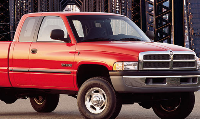
What if I removed the air dam?


Record Breaker
Joined: Nov 2005
Posts: 1,827
Likes: 3
From: Ontario Canada
 RE: What if I removed the air dam?
No dam on my2500HD 4x4 from the factory. Indy had one on it from the factory.
Figure if its a 4x2 it could cost highway mpg but it would probablybe minimal.
Figure if its a 4x2 it could cost highway mpg but it would probablybe minimal.

Legend


Joined: May 2005
Posts: 8,663
Likes: 8
From: Central Oklahoma
RE: What if I removed the air dam?
ORIGINAL: Socha_62
Air dams help alot with aerodynamics. I'm in a program sponsored by GM and the Dept. of Energy (www.challengex.org) to make a hybrid vehicle with 17 other schools. after exrtensive reasearch and calculations were adding a custom fuber glass air dam to the front of our car. We calculate a 4% MPG increase, and even though it doesn't seem like it, 4% is alot.
Air dams help alot with aerodynamics. I'm in a program sponsored by GM and the Dept. of Energy (www.challengex.org) to make a hybrid vehicle with 17 other schools. after exrtensive reasearch and calculations were adding a custom fuber glass air dam to the front of our car. We calculate a 4% MPG increase, and even though it doesn't seem like it, 4% is alot.


Champion
Joined: Aug 2005
Posts: 3,313
Likes: 8
RE: What if I removed the air dam?
Perhaps consider attaching the factory air dam with 'marine grade' velcro strips so that it could be easily taken on and off?
Here's and old post from 1=2001
of a 1995 Ram 4x2 air dam test at highway speed
that found an considerable effect on MPG,
but I can't help but notice that the new 2007 Tundra
has a aero Cd of 0.37 without an air dam
versus the 1994 Ram Cd of 0.42
and the 2002 Ram Cd of 0.528
-----
4/23/2001
I got frustrated today after getting word that a governmental decision I was
waiting for would not be forthcoming - despite being promised an answer for
the last two weeks.
In order to blow off steam,
and not end up with a completely wasted day,
I decided to try to find an answer to that urgent question weighing on the
minds of all mankind:
Does that Air Dam under the front bumper of a Ram do any good ?
I gathered up some music I hadn't listened to yet, and drove over to the
Clayton NC exit of I-40 just to the east of Raleigh and filled up with Exxon
87 octane. ($1.55 per gallon here)
I then drove in a loop trip down I-40 to Wilmington NC and back. The distance
was 218.7 miles. I started around 10 am when the temperature was about 73F.
There was a light wind from the south, which opposed my East by Southeast
route - at least on the first leg.
I drove a steady 70 mph with the cruise control set, and had the air
conditioner on with the temp control at the 11 o'clock position. Traffic was
light and I only had to take the cruise off 3-4 times on the trips.
I did drive by a forest fire just off the interstate though - complete with a
helicopter overhead with a underslung bucket that sprinkled water drops on my
windshield as I whizzed by without delay.
On the first trip with the air dam still on,
I used 11.53 gallons according to the gas pump,
which for 218.4 miles by the Ram's corrected odometer gave me a MPG of 18.94
miles per gallon.
I also reset the Oztrip computer and checked with it too during the trip. At
the end it said I used 11.60 gallons over 218.7 miles for an Oztrip estimated
MPG with the air dam on of 18.85
I then removed the air dam in the gas station parking lot.
If you do this be sure to spray WD-40 on the upper threads of the T-25 Torx
heead screws first. I first tried to remove them without the WD-40 and
stripped the first one - which then took 15 minutes to remove using a
vice-grip on the exposed threads inside the bumper. I thought Torx were
supposed to be strip-resistant ? With the WD-40 soak, all the rest came out
easy in less than 5 minutes. There are also two plastic rivets on the outside
edges (why Dodge, why not just two more torx's ?)
The second trip started around 2pm.
The temperature had gone up to about 80 degrees. Without the air dam the
Oztrip immediately showed less mpg at the steady 70 mph. I also felt I could
hear more wind noise - it seemed to come from the driver's side wheelwell
direction. Later I also thought the coolant temperature gauge was about 5
degrees higher at about 185 - but that might be due to the higher air
temperature outside.
Without the air dam, the Exxon gas station pump said I used 11.969 gallons
over 218.4 miles for an MPG of 18.25
The Oztrip computer estimated I used 11.99 gallons over 218.7 miles for an
estimated MPG of 18.24
So it looks like removing the air dam cost me 0.7 MPG at a steady highway
speed of 70 mph.
I guess two valid questions about a test like this would be:
1. "How much would two identical back-to-back trip MPG's differ by just
natural variation? "
2. Could anything else have caused the MPG difference ?
I do not know the exact answer to the first one - but based on the other test
runs I have done in the past I would guess natural variation would be
something like 0.2 to 0.5 mpg.
On the second question,
I imagine that varying wind speed might be a hidden cause. The cross wind from
the south did hurt the southeast bound leg of the trip, and help the northwest
bound leg - I could see this on the Oztrip meter. I would guess this wind was
about 10 mph.
It is also possible that the slight increase in air temperature made the air
conditioner work harder ( I personally doubt this) or perhaps the 7 degree F
hotter intake air made the engine slightly less efficient (the engine
textbooks mention this, but it is a very small effect).
I had hoped this test would have turned out the other way.
One reason I decided to do it was that a poster on the turbodieselregister.com
website had said that he had gained 1 mpg after taking his air dam off, then
lost 1 mpg when he put it back on later.
http://www.turbodieselregister.com/u...ML/000903.html
http://www.turbodieselregister.com/u...ML/001147.html
I was hoping to find another trick to gain some mpg, under the theory that
maybe the air dam was there only to reduce front end lift at high speed.
There is a book called 'Race Car Aerodynamics' that has a graph from a Society
of Automotive Engineers SAE paper that shows that air dams up to about 4
inches high slightly help in reducing aero drag.
Since the Ram's air dam is just about 4 inches too - I guess it does aid in
reducing aero drag after all.
Here's and old post from 1=2001
of a 1995 Ram 4x2 air dam test at highway speed
that found an considerable effect on MPG,
but I can't help but notice that the new 2007 Tundra
has a aero Cd of 0.37 without an air dam
versus the 1994 Ram Cd of 0.42
and the 2002 Ram Cd of 0.528
-----
4/23/2001
I got frustrated today after getting word that a governmental decision I was
waiting for would not be forthcoming - despite being promised an answer for
the last two weeks.
In order to blow off steam,
and not end up with a completely wasted day,
I decided to try to find an answer to that urgent question weighing on the
minds of all mankind:
Does that Air Dam under the front bumper of a Ram do any good ?
I gathered up some music I hadn't listened to yet, and drove over to the
Clayton NC exit of I-40 just to the east of Raleigh and filled up with Exxon
87 octane. ($1.55 per gallon here)
I then drove in a loop trip down I-40 to Wilmington NC and back. The distance
was 218.7 miles. I started around 10 am when the temperature was about 73F.
There was a light wind from the south, which opposed my East by Southeast
route - at least on the first leg.
I drove a steady 70 mph with the cruise control set, and had the air
conditioner on with the temp control at the 11 o'clock position. Traffic was
light and I only had to take the cruise off 3-4 times on the trips.
I did drive by a forest fire just off the interstate though - complete with a
helicopter overhead with a underslung bucket that sprinkled water drops on my
windshield as I whizzed by without delay.
On the first trip with the air dam still on,
I used 11.53 gallons according to the gas pump,
which for 218.4 miles by the Ram's corrected odometer gave me a MPG of 18.94
miles per gallon.
I also reset the Oztrip computer and checked with it too during the trip. At
the end it said I used 11.60 gallons over 218.7 miles for an Oztrip estimated
MPG with the air dam on of 18.85
I then removed the air dam in the gas station parking lot.
If you do this be sure to spray WD-40 on the upper threads of the T-25 Torx
heead screws first. I first tried to remove them without the WD-40 and
stripped the first one - which then took 15 minutes to remove using a
vice-grip on the exposed threads inside the bumper. I thought Torx were
supposed to be strip-resistant ? With the WD-40 soak, all the rest came out
easy in less than 5 minutes. There are also two plastic rivets on the outside
edges (why Dodge, why not just two more torx's ?)
The second trip started around 2pm.
The temperature had gone up to about 80 degrees. Without the air dam the
Oztrip immediately showed less mpg at the steady 70 mph. I also felt I could
hear more wind noise - it seemed to come from the driver's side wheelwell
direction. Later I also thought the coolant temperature gauge was about 5
degrees higher at about 185 - but that might be due to the higher air
temperature outside.
Without the air dam, the Exxon gas station pump said I used 11.969 gallons
over 218.4 miles for an MPG of 18.25
The Oztrip computer estimated I used 11.99 gallons over 218.7 miles for an
estimated MPG of 18.24
So it looks like removing the air dam cost me 0.7 MPG at a steady highway
speed of 70 mph.
I guess two valid questions about a test like this would be:
1. "How much would two identical back-to-back trip MPG's differ by just
natural variation? "
2. Could anything else have caused the MPG difference ?
I do not know the exact answer to the first one - but based on the other test
runs I have done in the past I would guess natural variation would be
something like 0.2 to 0.5 mpg.
On the second question,
I imagine that varying wind speed might be a hidden cause. The cross wind from
the south did hurt the southeast bound leg of the trip, and help the northwest
bound leg - I could see this on the Oztrip meter. I would guess this wind was
about 10 mph.
It is also possible that the slight increase in air temperature made the air
conditioner work harder ( I personally doubt this) or perhaps the 7 degree F
hotter intake air made the engine slightly less efficient (the engine
textbooks mention this, but it is a very small effect).
I had hoped this test would have turned out the other way.
One reason I decided to do it was that a poster on the turbodieselregister.com
website had said that he had gained 1 mpg after taking his air dam off, then
lost 1 mpg when he put it back on later.
http://www.turbodieselregister.com/u...ML/000903.html
http://www.turbodieselregister.com/u...ML/001147.html
I was hoping to find another trick to gain some mpg, under the theory that
maybe the air dam was there only to reduce front end lift at high speed.
There is a book called 'Race Car Aerodynamics' that has a graph from a Society
of Automotive Engineers SAE paper that shows that air dams up to about 4
inches high slightly help in reducing aero drag.
Since the Ram's air dam is just about 4 inches too - I guess it does aid in
reducing aero drag after all.