


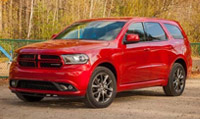
2014 r/t front collision warning


Rookie
Joined: Nov 2012
Posts: 91
Likes: 0
From: Midlothian VA

Mine just did it last week for the first time. I had just turned on to a four lane road and was in the right lane. There was a car ahead turning into a bank so I just let it coast and knew I would clear as long as he didn't stop and there were no cars to the left in case I had to swerve. Kind of creepy when it started braking but at least I know the system works. I've had the brake warning flash a few times when I was approaching another vehicle too quickly.
Marty
Marty

Veteran
Joined: Jun 2012
Posts: 353
Likes: 0
From: Earth
Mine just did it last week for the first time. I had just turned on to a four lane road and was in the right lane. There was a car ahead turning into a bank so I just let it coast and knew I would clear as long as he didn't stop and there were no cars to the left in case I had to swerve. Kind of creepy when it started braking but at least I know the system works. I've had the brake warning flash a few times when I was approaching another vehicle too quickly.
Marty
Marty
Usually it handles left curves on the interstate just fine when you are in the left lane and the curve puts the vehicle in the right lane in front of you. On Friday in one instance, mine hit the brakes. Perhaps it was a more sudden curve than usual.
All of this raises concern about the autonomous vehicles that are just around the corner. If they can't always handle vehicle detection perfectly, and given GPS inaccuracies and worn, incorrect, or snow covered lines - how can they make autonomous vehicles safe? The other day, my (up to date) Garmin GPS tried to get me to go the wrong way on a one-way turn lane. They clearly have it mis-marked as being two-way. There will be autonomous vehicles accidents where they think the road is (or was), blowing through stop signs, killing orphans and nuns, etc. The owners, manufacturers, GPS companies, etc will be sued repeatedly
Rookie
Joined: Nov 2012
Posts: 91
Likes: 0
From: Midlothian VA
I've noted on my 2012 Citadel that if the cruise is set and the car in front of me changes lanes and brakes, that it jams on the brakes. It takes about 4 seconds after the car pulls out of your lane before the collision avoidance recognizes the move and knows the lane is clear. This really annoys people- the first time it happened, both my wife and the guy tailgating me were quite agitated.
Usually it handles left curves on the interstate just fine when you are in the left lane and the curve puts the vehicle in the right lane in front of you. On Friday in one instance, mine hit the brakes. Perhaps it was a more sudden curve than usual.
All of this raises concern about the autonomous vehicles that are just around the corner. If they can't always handle vehicle detection perfectly, and given GPS inaccuracies and worn, incorrect, or snow covered lines - how can they make autonomous vehicles safe? The other day, my (up to date) Garmin GPS tried to get me to go the wrong way on a one-way turn lane. They clearly have it mis-marked as being two-way. There will be autonomous vehicles accidents where they think the road is (or was), blowing through stop signs, killing orphans and nuns, etc. The owners, manufacturers, GPS companies, etc will be sued repeatedly
Usually it handles left curves on the interstate just fine when you are in the left lane and the curve puts the vehicle in the right lane in front of you. On Friday in one instance, mine hit the brakes. Perhaps it was a more sudden curve than usual.
All of this raises concern about the autonomous vehicles that are just around the corner. If they can't always handle vehicle detection perfectly, and given GPS inaccuracies and worn, incorrect, or snow covered lines - how can they make autonomous vehicles safe? The other day, my (up to date) Garmin GPS tried to get me to go the wrong way on a one-way turn lane. They clearly have it mis-marked as being two-way. There will be autonomous vehicles accidents where they think the road is (or was), blowing through stop signs, killing orphans and nuns, etc. The owners, manufacturers, GPS companies, etc will be sued repeatedly
Marty

Captain

Joined: Apr 2013
Posts: 602
Likes: 1
From: Arnold, Maryland
Usually it handles left curves on the interstate just fine when you are in the left lane and the curve puts the vehicle in the right lane in front of you. On Friday in one instance, mine hit the brakes. Perhaps it was a more sudden curve than usual.
All of this raises concern about the autonomous vehicles that are just around the corner. If they can't always handle vehicle detection perfectly, and given GPS inaccuracies and worn, incorrect, or snow covered lines - how can they make autonomous vehicles safe?
All of this raises concern about the autonomous vehicles that are just around the corner. If they can't always handle vehicle detection perfectly, and given GPS inaccuracies and worn, incorrect, or snow covered lines - how can they make autonomous vehicles safe?
Absurd. I've been using my Mark I eyeball for nearly 5 decades and it has failed me only when it has been "modified" through the occasional use of excessive alcohol. That not withstanding, fully autonomous cars are a long way off exactly for the reasons posted. To make them work properly they'll probably have to bury a cable in the center of each lane to guide the vehicle, and even that will open up a can of worms, as posted by Shelbyguy.

Captain
Joined: Jul 2011
Posts: 571
Likes: 0
Absurd. I've been using my Mark I eyeball for nearly 5 decades and it has failed me only when it has been "modified" through the occasional use of excessive alcohol. That not withstanding, fully autonomous cars are a long way off exactly for the reasons posted. To make them work properly they'll probably have to bury a cable in the center of each lane to guide the vehicle, and even that will open up a can of worms, as posted by Shelbyguy.
smart roads were once thought to be the way to auto-driving. But not anymore, it's just too expensive to change the roads. The electronics in cars is cheap by comparison. Google already has a car that can navigate around SF by itself. It will be a little scary for us, but not our kids.
As for the collision braking, I'll take it any day over not having it. There are so many more distractions today while driving (cell phones, cranky kids, DVDs to change, cool cars to look at, 8 inch TFT screens to touch, etc., etc.) that I'd rather get that "auto-braking" than that "oops accident".
Veteran
Joined: Jun 2012
Posts: 353
Likes: 0
From: Earth
smart roads were once thought to be the way to auto-driving. But not anymore, it's just too expensive to change the roads. The electronics in cars is cheap by comparison. Google already has a car that can navigate around SF by itself. It will be a little scary for us, but not our kids.
As for the collision braking, I'll take it any day over not having it. There are so many more distractions today while driving (cell phones, cranky kids, DVDs to change, cool cars to look at, 8 inch TFT screens to touch, etc., etc.) that I'd rather get that "auto-braking" than that "oops accident".
As for the collision braking, I'll take it any day over not having it. There are so many more distractions today while driving (cell phones, cranky kids, DVDs to change, cool cars to look at, 8 inch TFT screens to touch, etc., etc.) that I'd rather get that "auto-braking" than that "oops accident".
Captain
Joined: Jul 2011
Posts: 571
Likes: 0
I agree on the collision avoidance braking, but as good as the autonomous technology may be, there will be deaths when those systems don't detect a pedestrian/bicyclist, or they'll barrel through an intersection which their maps incorrectly show as not having a stop sign. My new Garmin GPS with updated maps recently tried to guide me the wrong way on a one-way turn ramp - and autonomous systems will depend on less than 100% accurate map databases. The human brain is not infallible either, but it can evaluate and immediately deal with unusual/unexpected situations which autonomous systems will not initially and may never handle.
If you had told me growing up that one day I'd hold almost the entire body of human knowledge in the palm of my hand, I'd would have said you were crazy.


