When you click on links to various merchants on this site and make a purchase, this can result in this site earning a commission. Affiliate programs and affiliations include, but are not limited to, the eBay Partner Network.
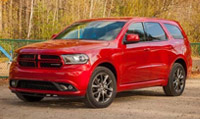
My 2012 Durango's outside temperature sensor normally works great... except when I have my front plow attached as pictured.
Even though the outside temperature may be 15F, after driving 5-10 minutes at 55mph (not plowing) the outside temp starts going up and might be 60F after 15minutes. What is going on? The sensor is located on the upper left side of the grill (facing forward), but is so far away from the plow I can't imagine its not getting enough airflow. All the other engine temperatures are completely normal.
This is speculation on my part, but... if the temp sensor is in the upper part of the grill, then the plow when raised will be shielding the radiator from the main airflow. The sensor, without the expected airflow, might be getting heated by the various heat-emitting parts in the sensor area as a result. My suggestion would be to move the sensor to the lower grill where it will be in the airflow when the plow is up. I'm surprised the temp sender is mounted high anyway, everything else I've ever seen a temp sender onfor outside temp has the sensor installed low in the nose, usually under the steel bumper that is behind the front fascia.
Your explanation has to be the right one, I mean what else could it possibly be? It’s just that you’d think the temperature sensor should be adequately insulated from heat generating parts of the engine, otherwise it wouldn’t normally be very effective. It’s almost as if when the plow is attached the airflow over the sensor is completely reversed somehow.
So you think lower is better? I guess intuitively I would’ve thought higher would be better, but obviously that is not the case.
It could be getting reversed. The lower airdam directs air up into the cavity in front of the radiator. This is how cars with no opening at all can stay cool. Airdams also help with aero so they're used even when the radiator airflow isn't needed. With the huge windblock of the plow, a lot of the expected airflow is missing so I can see air from under being push backwards out the front of the radiator. It would take that wind tunnel to prove though. I suppose you could tie some pliable nylon string on the grill and set a camera up on tthe back of the plow facing the grill and see what the string does at 55. If my guess is correct, the string should be pushed out away from the grill at 55. Totally a guess here though, I can definitely be wrong here.
On placement, the nose has a lot of heat rejection gear and heat rises, so I would expect that lower and shielded would be better.





 Weird Outside Temp Readings


