


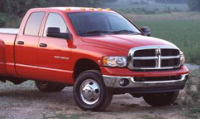
5.7L Hemi is a Big Block?


Professional
Joined: Mar 2005
Posts: 136
Likes: 0
From:
 RE: 5.7L Hemi is a Big Block?
And then there is the long/short block deal. I remember when I got my first engine catalog and I was confused as all hell....
Before anyone has to ask....
Short block: block and rotating assembly
Long block:above,plus heads and manifold
this is typical whether it is small or big block motor
If you have good heads, intake, cam and etc. then the short blcok can save you some money.
Course it also varies a little between manufacturers as some will include the tinware (oil pan and rocker covers). Some crate engines are ready to run and others have to have pulley's carbs, and other wiring added... etc,etc...
Just thought I'd add some muck to the pot
Before anyone has to ask....
Short block: block and rotating assembly
Long block:above,plus heads and manifold
this is typical whether it is small or big block motor
If you have good heads, intake, cam and etc. then the short blcok can save you some money.
Course it also varies a little between manufacturers as some will include the tinware (oil pan and rocker covers). Some crate engines are ready to run and others have to have pulley's carbs, and other wiring added... etc,etc...
Just thought I'd add some muck to the pot

Admin formally known as 94rt10ohio
Joined: Apr 2005
Posts: 9,025
Likes: 3
From: Curtice, OH
RE: 5.7L Hemi is a Big Block?
ORIGINAL: guido7
sure was, had two............
Heres a pic of my real forst new car, the day I bought it... I was back from vietnam for 30 days, and before mods on it.......bought Jan 5th, 1970, 383HP, Hurst CR 4 speed, 390 gears posi, loaded..........DAMN, wish I had it now.................
[IMG]local://upfiles/13612/FFEC15FA88904377A804DAFA4A94DA4A.jpg[/IMG]
sure was, had two............
Heres a pic of my real forst new car, the day I bought it... I was back from vietnam for 30 days, and before mods on it.......bought Jan 5th, 1970, 383HP, Hurst CR 4 speed, 390 gears posi, loaded..........DAMN, wish I had it now.................
[IMG]local://upfiles/13612/FFEC15FA88904377A804DAFA4A94DA4A.jpg[/IMG]

Champion
Joined: Feb 2005
Posts: 3,710
Likes: 2
From: Skagit County, WA
RE: 5.7L Hemi is a Big Block?
It really doesn't have much to do with displacement, aside from the fact that most big blocks have larger displacement. It has a lot more to do with the physical size of the block itself. They're a lot larger and heavier than the small block engines.
351 Cleveland isn't a big block, that's a myth. The ford 360 is a big block. The new GM 6.0 is a small block while their 8.1 is a big block, which by the way is 502 inches and makes that quoted encylcopedia definition inaccurate. The 5.7 hemi is a small block.
351 Cleveland isn't a big block, that's a myth. The ford 360 is a big block. The new GM 6.0 is a small block while their 8.1 is a big block, which by the way is 502 inches and makes that quoted encylcopedia definition inaccurate. The 5.7 hemi is a small block.


Professional
Joined: Mar 2005
Posts: 107
Likes: 0
From:
RE: 5.7L Hemi is a Big Block?
In the mid to early 60's Chrysler had a 318 that was loosely called a "big block" or "wide block" to distinguish it from the other 318 that was offered. I believe it was 1963 through 65 - although I'm sure there are some who know much more about that than I.

Joined: Jun 2005
Posts: 35
Likes: 0
From: PA
RE: 5.7L Hemi is a Big Block?
The 400cid cutoff between small/big has always been a loose rule of thumb as far as I have been taught, with one obvious exception being a Chevy 400 small block. the reason some engines over 400 are small blocks and some under 400cid are considered big blocks doesn't just have to do with displacement tho.
A 400 chevy small block is considered such because it shares the same casting as a 350, just different cylinder bores and different cranks. Likewise, a 383 was same casting as a 440cid, and I think it shared the 426 casting too, tho not 100% about that, but they were all considered big blocks. Chevy used to make a 366cid truck engine, but it was always called a big block because it shared the same block as a 396/454.
Could be totally off the mark, but that is what I have always thought of as the difference between small and big blocks as.
A 400 chevy small block is considered such because it shares the same casting as a 350, just different cylinder bores and different cranks. Likewise, a 383 was same casting as a 440cid, and I think it shared the 426 casting too, tho not 100% about that, but they were all considered big blocks. Chevy used to make a 366cid truck engine, but it was always called a big block because it shared the same block as a 396/454.
Could be totally off the mark, but that is what I have always thought of as the difference between small and big blocks as.

Professional
Joined: Dec 2003
Posts: 239
Likes: 0
From: United States
RE: 5.7L Hemi is a Big Block?
Mopar also had a 361 c.i. big block in the 1960's. Pontiacs were all one block style except for the 265/301 of the late 70's early 80's. Olds had a 394 big block and a 403 small block.

Amateur
Joined: Jun 2005
Posts: 32
Likes: 0
RE: 5.7L Hemi is a Big Block?
I have always viewed the differences between small and big blocks in regards to the stroke length and how fast they rev. A typical big block will not rev much over 3,300 RPM while a small block is happy to rev to 4,500.