



Ram 5.7L e-fan conversion DIY


Thread Starter
|
Rookie
Joined: May 2013
Posts: 50
Likes: 0
 Ram 5.7L e-fan conversion DIY
Whether this mod actually gives extra MPG or not, I could not take someone else's word for it and had to see for myself. I love to tinker and "customize", so this inexpensive (some do say time is money, but...) project was perfect for me.
There are few different ways to go about doing this. Some buy a kit, which comes pre-configured and ready to install, while others go a "slightly" cheaper route and gather the necessary parts from junk yard and local parts stores. Regardless of which you prefer, this project is relatively easy to do with just a handful of tools.
The biggest challenge I faced during the project is removing the fan clutch assembly from the water pump shaft. There is no good way to hold the pulley in place while turning the nut of the fan except for buying or making a special tool.
There are 4 holes on the water pump pulley, arranged in a square, and I have read that they are 3-in apart. To make the water pump pulley holder, others have used homemade special tool, which consists of an ~18-in length metal bar with holes drilled 3-in apart on one end of it, and maybe 5-mm dia. bolts and nuts fastened through the metal bar. The idea is that the bolts go into the holes of the water pump pulley, thus allowing you to hold it in place while turning the giant nut to remove the fat assembly.
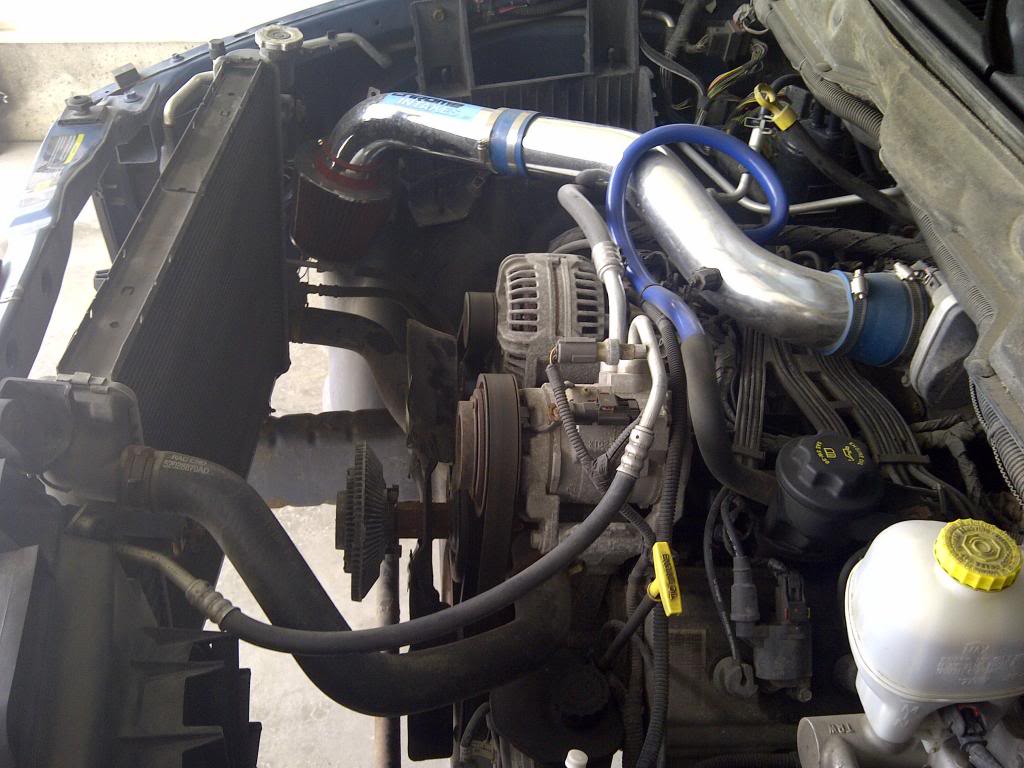
IMG_0548.jpg?t=1315222289
I started off by going to a junk yard to find a fan. The opening in the shroud is 22-in, so I was looking for something big. I ended up with a radiator fan from 1996 Grand Marquis. My reasoning was that is it a V-8 motor and the fan should be able to keep up.

On the way back I stopped in at Advance Auto and picked up an adjustable temperature fan control kit.
http://shop.advanceautoparts.com/web...204&showTitle=
When I got home, I opened the hood and put a fan in front of the truck to cool it down, ate lunch and went back out to begin. Here is a quick list of steps I followed:
1. remove battery ground lead from the battery
2. unplug coolant overflow fluid sensor, windshield washer pump, and windshield washer hose
-both connectors have a safety latch before you can squeeze the release lever to remove the plug.
-if you remove the hose from the pump itself, your washer fluid will come out. There is a splice by the fender well, in front of air filter housing, disconnect there and keep the end of the hose above the bottle.
3. remove two 10-mm bolts securing the coolant overflow and washer fluid bottles and set aside.
4. remove four 12-mm bolts holding the fan blade to the fan clutch assembly and move the fan toward the engine. (allows for shroud removal)
5. remove two 13-mm bolts securing the shroud to the radiator. The bolts are located on either side of the shroud toward the top of the radiator and remove the shroud being careful not to damage the radiator.
6. Remove the fan clutch assembly.
- this required putting two of the four 12-mm bolts back to hold the fan in place and out of the way. I also had to heat the nut to have any chance of removing it.
- contrary to what I have read online, the nut is standard thread, NOT reverse!
- get your homemade special tool, elbow grease and 36-mm wrench out and have fun
6. drill 3/16-in holes through what appears to be mounting tabs on the radiator shroud next to the fan opening. Nothing is mounted there, but there will be.
7. position the fan to line up the mounting tabs on the radiator to the mounting tabs on the shroud and use the two 10-mm (head) bolts and nuts to fasten fan to shroud.

8. install the bracket to the 3-rd mounting tab on the fan and fasten the bracket to the shroud.
- I made a bracket using aluminum bar I had laying around.


9. install the shroud back behind the radiator, but do not secure with screws at this time.
10. fasten the controller/relay to the ac condenser fan shroud.
-pick a place so the screws do not go through the condenser, obviously


11. install the thermal probe onto radiator
-choose your wire routing wisely, I decided to go under the inlet hose.


12. fasten the radiator shroud to the radiator using two 13-mm bolts.
13. take the red power lead from the controller and cut it leaving about 5-in to work with. strip exposing 1/2-in of the wire and fold that in half (giving you 1/4-in length of exposed copper) Insert into provided with the kit mounting tab and crimp.
14. connect the power lead to the fuse panel power lead located between the condenser fan and the fuse box
15. route the black wire towards the PS pump.
16. strip 3/8-in section of the ground lead going to the starter. Splice the black wire from the controller and the negative line from the fan here. Insulate.


17. Route the orange (fan output) wire from the controller to the PS pump. Splice the positive fan lead to the fan output wire.
18. route the yellow (ignition on) wire around the battery and into the cab through the firewall
19. splice yellow wire into "Ignition On" wire on the wiring harness
20. restore power by attaching the negative lead to the battery and tidy up the wires with plastic zip-ties
21. start your truck and monitor engine temperature while observing the operation of the fan.
There are few different ways to go about doing this. Some buy a kit, which comes pre-configured and ready to install, while others go a "slightly" cheaper route and gather the necessary parts from junk yard and local parts stores. Regardless of which you prefer, this project is relatively easy to do with just a handful of tools.
The biggest challenge I faced during the project is removing the fan clutch assembly from the water pump shaft. There is no good way to hold the pulley in place while turning the nut of the fan except for buying or making a special tool.
There are 4 holes on the water pump pulley, arranged in a square, and I have read that they are 3-in apart. To make the water pump pulley holder, others have used homemade special tool, which consists of an ~18-in length metal bar with holes drilled 3-in apart on one end of it, and maybe 5-mm dia. bolts and nuts fastened through the metal bar. The idea is that the bolts go into the holes of the water pump pulley, thus allowing you to hold it in place while turning the giant nut to remove the fat assembly.
IMG_0548.jpg?t=1315222289
I started off by going to a junk yard to find a fan. The opening in the shroud is 22-in, so I was looking for something big. I ended up with a radiator fan from 1996 Grand Marquis. My reasoning was that is it a V-8 motor and the fan should be able to keep up.
On the way back I stopped in at Advance Auto and picked up an adjustable temperature fan control kit.
http://shop.advanceautoparts.com/web...204&showTitle=
When I got home, I opened the hood and put a fan in front of the truck to cool it down, ate lunch and went back out to begin. Here is a quick list of steps I followed:
1. remove battery ground lead from the battery
2. unplug coolant overflow fluid sensor, windshield washer pump, and windshield washer hose
-both connectors have a safety latch before you can squeeze the release lever to remove the plug.
-if you remove the hose from the pump itself, your washer fluid will come out. There is a splice by the fender well, in front of air filter housing, disconnect there and keep the end of the hose above the bottle.
3. remove two 10-mm bolts securing the coolant overflow and washer fluid bottles and set aside.
4. remove four 12-mm bolts holding the fan blade to the fan clutch assembly and move the fan toward the engine. (allows for shroud removal)
5. remove two 13-mm bolts securing the shroud to the radiator. The bolts are located on either side of the shroud toward the top of the radiator and remove the shroud being careful not to damage the radiator.
6. Remove the fan clutch assembly.
- this required putting two of the four 12-mm bolts back to hold the fan in place and out of the way. I also had to heat the nut to have any chance of removing it.
- contrary to what I have read online, the nut is standard thread, NOT reverse!
- get your homemade special tool, elbow grease and 36-mm wrench out and have fun
6. drill 3/16-in holes through what appears to be mounting tabs on the radiator shroud next to the fan opening. Nothing is mounted there, but there will be.
7. position the fan to line up the mounting tabs on the radiator to the mounting tabs on the shroud and use the two 10-mm (head) bolts and nuts to fasten fan to shroud.
8. install the bracket to the 3-rd mounting tab on the fan and fasten the bracket to the shroud.
- I made a bracket using aluminum bar I had laying around.
9. install the shroud back behind the radiator, but do not secure with screws at this time.
10. fasten the controller/relay to the ac condenser fan shroud.
-pick a place so the screws do not go through the condenser, obviously
11. install the thermal probe onto radiator
-choose your wire routing wisely, I decided to go under the inlet hose.
12. fasten the radiator shroud to the radiator using two 13-mm bolts.
13. take the red power lead from the controller and cut it leaving about 5-in to work with. strip exposing 1/2-in of the wire and fold that in half (giving you 1/4-in length of exposed copper) Insert into provided with the kit mounting tab and crimp.
14. connect the power lead to the fuse panel power lead located between the condenser fan and the fuse box
15. route the black wire towards the PS pump.
16. strip 3/8-in section of the ground lead going to the starter. Splice the black wire from the controller and the negative line from the fan here. Insulate.
17. Route the orange (fan output) wire from the controller to the PS pump. Splice the positive fan lead to the fan output wire.
18. route the yellow (ignition on) wire around the battery and into the cab through the firewall
19. splice yellow wire into "Ignition On" wire on the wiring harness
20. restore power by attaching the negative lead to the battery and tidy up the wires with plastic zip-ties
21. start your truck and monitor engine temperature while observing the operation of the fan.
Last edited by alpiniste; Jun 6, 2013 at 04:45 PM.

Professional
Joined: Aug 2008
Posts: 249
Likes: 0
From: Red Deer, Alberta
if your having troubles getting the old fan clutch assembly off, If you got an air chisel handy, Use it with a broad head chisel, and use it to break it free. Its reverse thread as well I think.
Worked for me.
Worked for me.



Rookie
Joined: Apr 2013
Posts: 65
Likes: 1
From: Dayton IN
I think some of the Ford fans can draw as much as 80 amps when they first turn on you might check in to that. I have read some people have problems with the autozone controllers.
Thread Starter
|
Rookie
Joined: May 2013
Posts: 50
Likes: 0
I have read that in multiple threads. I am not having any problems as of yet.
Trending Topics
Rookie
Joined: Apr 2013
Posts: 65
Likes: 1
From: Dayton IN
I wish I had my controller so I could do my efan mod. I went with delta current controller F55 they are supposed to be the best controllers out there but they take forever to get. I have been waiting more then a month.

Rookie
Joined: Feb 2011
Posts: 71
Likes: 0
ituhhemi: I paid 65 or 75 buck for mine that includes the 30bucks for the controller. it came with a relay but I got the hyden cuz l liked the idea of it controlling the fan. oh yeah I got mine off of ebay because I could find one where I was at, at the time
and to stop the over amp start up I just put an extra relay between the controller and the fan so im going to see how that works out
and to stop the over amp start up I just put an extra relay between the controller and the fan so im going to see how that works out