


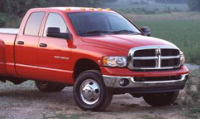
Help! 04 Ram P/U overheats under load.


Thread Starter
Joined: Aug 2005
Posts: 7
Likes: 0
 Help! 04 Ram P/U overheats under load.
I have a 04 Dodge Ram that I have installed a water pump and thermostat in and it still
gets hot. 240 degree and red line with a trailer. The belt is installed correctly and it only
has 44,000 miles on it. I did do a block test for a blown head gasket and all looks great.
At no time has it blown fluid out the radiator. I do have a scann tool and it looks like the
guage is correct with the readings Im getting.
Do we have any TSB's or tricks to fixing this problem. Like I said, I did replace the
water pump and thermo thinking it could be it. At this point I still dont think its head gaskets.
Im not loosing fluid and Im not burning it.
I've fallin and I cant get up! HELP!
gets hot. 240 degree and red line with a trailer. The belt is installed correctly and it only
has 44,000 miles on it. I did do a block test for a blown head gasket and all looks great.
At no time has it blown fluid out the radiator. I do have a scann tool and it looks like the
guage is correct with the readings Im getting.
Do we have any TSB's or tricks to fixing this problem. Like I said, I did replace the
water pump and thermo thinking it could be it. At this point I still dont think its head gaskets.
Im not loosing fluid and Im not burning it.
I've fallin and I cant get up! HELP!

Record Breaker
Joined: Feb 2005
Posts: 2,192
Likes: 0
From:
RE: Help! 04 Ram P/U overheats under load.
Have you tested the thermostat in a pot of water? It is actually pretty cool to see it work. Take a pot of water and place ther thermostat in it. Heat the water up until the thermostat pops open. I use a cooking thermometer to test the water temp.
I would do a multi approach here, starting from the beginning...
1. Drain and flush with a cleaner like Prestone Radiator flush or something similar.
2. Flush some more. It takes time, but is time well invested.
3. Replace thermostat if defective or corroded.
4. Replace coolant with a kind that is good for all fluid types like the new prestone "All makes, all models, all fluids" kind
5. Replace the radiator cap. If it isn't maintaining pressure, you'll over heat.
6. Keep the resevoir full. After it runs for a couple of heat/cool cycles, take the radiator cap off (when cool of course) and make sure the fluid is all the way to the top.
Oh yeah, clean the outside of the radiator with a cleaner that is aluminum safe. Get all the bugs and road dirt out of there. Only clean it when it is cool.
I would do a multi approach here, starting from the beginning...
1. Drain and flush with a cleaner like Prestone Radiator flush or something similar.
2. Flush some more. It takes time, but is time well invested.
3. Replace thermostat if defective or corroded.
4. Replace coolant with a kind that is good for all fluid types like the new prestone "All makes, all models, all fluids" kind
5. Replace the radiator cap. If it isn't maintaining pressure, you'll over heat.
6. Keep the resevoir full. After it runs for a couple of heat/cool cycles, take the radiator cap off (when cool of course) and make sure the fluid is all the way to the top.
Oh yeah, clean the outside of the radiator with a cleaner that is aluminum safe. Get all the bugs and road dirt out of there. Only clean it when it is cool.


Professional
Joined: Nov 2005
Posts: 107
Likes: 0
From:
RE: Help! 04 Ram P/U overheats under load.
A 2004 with 44k miles? Why isn't it sitting in the dealer's service area letting someone ELSE fix it under warranty???
Otherwise, I second Osteo's suggestions
Israel
Otherwise, I second Osteo's suggestions
Israel
Professional
Joined: Nov 2005
Posts: 107
Likes: 0
From:
RE: Help! 04 Ram P/U overheats under load.
I went back and read up on it -- By the way I looked at it, it may just be the water pump that's covered. My bad...
One of the troublesome things to diagnose would be a clogged radiator. My jeep was that way -- new water pump, new thermostat, hoses, bypass the heater core, everything, yet it still ran hot. The radiator wasn't flowing enough to keep it cool -- you could barely see it, but the lower hose would squeeze in a bit under the vacuum stress because it couldn't get enough volume out of the radiator.
You may want to check the radiator over, while it is running, with a IR temp gun -- check the whole surface area over in a grid pattern, and you should have somewhat uniform heat dissipation from top to bottom. Look for cool spots or areas where it changes several degrees in a few inches (clogged passages that won't be flowing hot coolant through).
Israel
One of the troublesome things to diagnose would be a clogged radiator. My jeep was that way -- new water pump, new thermostat, hoses, bypass the heater core, everything, yet it still ran hot. The radiator wasn't flowing enough to keep it cool -- you could barely see it, but the lower hose would squeeze in a bit under the vacuum stress because it couldn't get enough volume out of the radiator.
You may want to check the radiator over, while it is running, with a IR temp gun -- check the whole surface area over in a grid pattern, and you should have somewhat uniform heat dissipation from top to bottom. Look for cool spots or areas where it changes several degrees in a few inches (clogged passages that won't be flowing hot coolant through).
Israel
Record Breaker
Joined: Feb 2005
Posts: 2,192
Likes: 0
From:
RE: Help! 04 Ram P/U overheats under load.
ORIGINAL: iengle
I went back and read up on it -- By the way I looked at it, it may just be the water pump that's covered. My bad...
One of the troublesome things to diagnose would be a clogged radiator. My jeep was that way -- new water pump, new thermostat, hoses, bypass the heater core, everything, yet it still ran hot. The radiator wasn't flowing enough to keep it cool -- you could barely see it, but the lower hose would squeeze in a bit under the vacuum stress because it couldn't get enough volume out of the radiator.
You may want to check the radiator over, while it is running, with a IR temp gun -- check the whole surface area over in a grid pattern, and you should have somewhat uniform heat dissipation from top to bottom. Look for cool spots or areas where it changes several degrees in a few inches (clogged passages that won't be flowing hot coolant through).
Israel
I went back and read up on it -- By the way I looked at it, it may just be the water pump that's covered. My bad...
One of the troublesome things to diagnose would be a clogged radiator. My jeep was that way -- new water pump, new thermostat, hoses, bypass the heater core, everything, yet it still ran hot. The radiator wasn't flowing enough to keep it cool -- you could barely see it, but the lower hose would squeeze in a bit under the vacuum stress because it couldn't get enough volume out of the radiator.
You may want to check the radiator over, while it is running, with a IR temp gun -- check the whole surface area over in a grid pattern, and you should have somewhat uniform heat dissipation from top to bottom. Look for cool spots or areas where it changes several degrees in a few inches (clogged passages that won't be flowing hot coolant through).
Israel
Trending Topics
Thread Starter
Joined: Aug 2005
Posts: 7
Likes: 0
RE: Help! 04 Ram P/U overheats under load.
I would think radiator but get this, I can run it down the road and get it hot. Pull back into the
shop and put it in park. Then hold the RPM's to 2,000 and cool the engine down off of the
suspected radiator.
Im about to bail on this one befor I get to deep.
This is what I have done so far.
1. Block test for CO in cooling system. None found. OK.
2. Replaced water pump and thermostat. OK
3. New antifreeze and tested old. OK
4. Checked radiator flow, Looks good!
5. Checked and tested clutch fan. OK
Im going to suggest a radiator to the owner but I still
think its ok. I would think that because I can hold it at 2,000
RPM and cool it that its working. But my load is not there and that
could be all the difference.
How do we clog a radiator at 44,000 miles? It looks realy clean inside!
shop and put it in park. Then hold the RPM's to 2,000 and cool the engine down off of the
suspected radiator.
Im about to bail on this one befor I get to deep.
This is what I have done so far.
1. Block test for CO in cooling system. None found. OK.
2. Replaced water pump and thermostat. OK
3. New antifreeze and tested old. OK
4. Checked radiator flow, Looks good!
5. Checked and tested clutch fan. OK
Im going to suggest a radiator to the owner but I still
think its ok. I would think that because I can hold it at 2,000
RPM and cool it that its working. But my load is not there and that
could be all the difference.
How do we clog a radiator at 44,000 miles? It looks realy clean inside!
Professional
Joined: Nov 2005
Posts: 107
Likes: 0
From:
RE: Help! 04 Ram P/U overheats under load.
GM had a number of problems with the early Dex-Cool systems, but I don't think that is an issue anymore. I have seen a few that looked clean but still wouldn't flow -- rare cases though.
Sounds like you have gone through most of the water related issues. Are you sure that you don't have a different problem causing the overheating? (is it really overheating, spewing water, or just shows hot on the gauge?) Is it a timing or fuel issue causing detonation or a lean condition, makeing it run hot under load?
Is there a hot cylinder? Have you checked each cylinder with a heat gun, maybe at the exhaust port? Are they all near the same temp?
Israel
Sounds like you have gone through most of the water related issues. Are you sure that you don't have a different problem causing the overheating? (is it really overheating, spewing water, or just shows hot on the gauge?) Is it a timing or fuel issue causing detonation or a lean condition, makeing it run hot under load?
Is there a hot cylinder? Have you checked each cylinder with a heat gun, maybe at the exhaust port? Are they all near the same temp?
Israel
Record Breaker
Joined: Feb 2005
Posts: 2,192
Likes: 0
From:
RE: Help! 04 Ram P/U overheats under load.
How about a radiator cap? If it's not holding pressure well, it will get hot and overheat. Somebody else recently had the same issue and it turned out to be the radiator cap.
The problem with the old GM Dex-cool was not funny. I had it happen to me. Everything turned browned and plugged up. Supposedly there was too much iron in the water they used when they topped it off in addition to the poor quality Dex-Cool. Not to mention the 6 tranny rebuilds in 3 months...but that is another story for another day. Glad I'm done with GM.
The problem with the old GM Dex-cool was not funny. I had it happen to me. Everything turned browned and plugged up. Supposedly there was too much iron in the water they used when they topped it off in addition to the poor quality Dex-Cool. Not to mention the 6 tranny rebuilds in 3 months...but that is another story for another day. Glad I'm done with GM.