


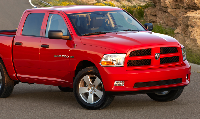
2011 Ram 1500 - 5.7 - 4x4 - Stallijg on decel - No codes


Thread Starter
|
Captain


Joined: Sep 2018
Posts: 553
Likes: 64
 2011 Ram 1500 - 5.7 - 4x4 - Stalling on decel - No codes
Mileage 187k
About 300 miles ago, I put a cam & lifters in this engine. It was a bone-stock repair using parts ordered per VIN from local dealership - no performance mods or programming.
The repair was very standard/common in terms of how things went - there was nothing about the engine that I found during tear down & cleaning/inspection that I noted as unusual or concerning.
The throttle body was pretty dirty but the plate moved freely, so I cleaned it with carb cleaner, rags & compressed air.
All appropriate ECM reset/relearn procedures were done.
I did find the VVT actuator solenoid had broken screens on it (the plastic seams of the screen had broken but the actual screens were in tact) and replaced the solenoid, but there were no other problems noted.
Engine was assembled in-vehicle using service manual per Identifix, and I had no reason to question the specs or procedures.
The initial start after the repair, and the subsequent test drives (total of 4 drives), were all very standard.
The truck ran fine for about 300 miles, then it began stalling on deceleration, particularly when exiting the highway/interstate.
There are no codes for the power train and no drive ability concerns.
I’ve already scoped the crank & cam signals during the stall and there’s nothing wrong with the signals (at least not that’s visible in the wave form).
I’ve also confirmed the torque converter clutch and VVT/MDS systems are disengaging and not stuck on.
It will stall at almost exactly 1,000 RPM every time IF the ambient temperature is approx. 50*F or warmer. At lower temps, the stalling is not as consistent, but will still occur if driven for longer periods on the highway.
The stalling can be prevented by tapping on the accelerator pedal or by shifting to neutral.
I’ve already checked & tested several other components/wiring/etc. but no luck.
As always, thank you.
About 300 miles ago, I put a cam & lifters in this engine. It was a bone-stock repair using parts ordered per VIN from local dealership - no performance mods or programming.
The repair was very standard/common in terms of how things went - there was nothing about the engine that I found during tear down & cleaning/inspection that I noted as unusual or concerning.
The throttle body was pretty dirty but the plate moved freely, so I cleaned it with carb cleaner, rags & compressed air.
All appropriate ECM reset/relearn procedures were done.
I did find the VVT actuator solenoid had broken screens on it (the plastic seams of the screen had broken but the actual screens were in tact) and replaced the solenoid, but there were no other problems noted.
Engine was assembled in-vehicle using service manual per Identifix, and I had no reason to question the specs or procedures.
The initial start after the repair, and the subsequent test drives (total of 4 drives), were all very standard.
The truck ran fine for about 300 miles, then it began stalling on deceleration, particularly when exiting the highway/interstate.
There are no codes for the power train and no drive ability concerns.
I’ve already scoped the crank & cam signals during the stall and there’s nothing wrong with the signals (at least not that’s visible in the wave form).
I’ve also confirmed the torque converter clutch and VVT/MDS systems are disengaging and not stuck on.
It will stall at almost exactly 1,000 RPM every time IF the ambient temperature is approx. 50*F or warmer. At lower temps, the stalling is not as consistent, but will still occur if driven for longer periods on the highway.
The stalling can be prevented by tapping on the accelerator pedal or by shifting to neutral.
I’ve already checked & tested several other components/wiring/etc. but no luck.
As always, thank you.
Last edited by GumbyRT; Apr 22, 2026 at 12:59 PM.

Record Breaker


Joined: Feb 2015
Posts: 1,135
Likes: 56
From: Iowa
Are you able to monitor manifold pressure just prior to the stalling? Does it also stall if you cost to a stop rather than brake to a stop? I wonder if you have a vacuum leak and when applying brakes, the extra vacuum needed by the brake booster exceeds what the engine is producing as it gets to 1000 rpms, causing the stalling.
If you start the truck, put it in Drive or Reverse with your foot on the brake pedal, how smooth is the idle?
While idling in Park if you apply the brake does the engine speed change? Does the behavior change between a cold start and an engine that's already up to operating temperature?
-Rod
If you start the truck, put it in Drive or Reverse with your foot on the brake pedal, how smooth is the idle?
While idling in Park if you apply the brake does the engine speed change? Does the behavior change between a cold start and an engine that's already up to operating temperature?
-Rod
Thread Starter
|
Captain
Joined: Sep 2018
Posts: 553
Likes: 64
Thanks for the reply.
I did forget to mention that I replaced the throttle body a couple of weeks ago. I’d found enough play in the throttle plate that I thought it could’ve been getting pulled all the way shut by the vacuum. I also found the retaining tab on the TB side of the connector was missing and the connector was getting pushed out as the engine warmed up.
Still no change in the stalling.
Regarding your ideas/questions -
1) I monitored the MAP signal voltage using the graphing function of my scan tool a few weeks ago. I don’t recall exact numbers but it was relatively stable and would only drop off after the stall. I can graph RPM & MAP together and there’s a clear delay between the stall occurring and the MAP signal dropping off.
I can easily repeat the test when I have a chance and report back the numbers.
2) Stalls while coasting or braking - still at about 1,000 RPM - makes no difference.
IME, leaking brake boosters are usually loud enough to be noticeable, but I’m happy to plug off the booster port and see what happens. My first truck didn’t have power brakes and I’m not afraid to drive without them for a few miles if it definitely rules out the booster.
3) There are no other drivability concerns. Idle is always stable, in or out of gear.
4) I’m not sure it’s possible to test the stall with the engine cold. The triggering criteria is slowing down from highway speeds, so by the time I get it up to speed it’s already out of the “cold” phase of startup, even if it’s not fully up to temp. I’ll think on that.
How familiar are you with the short runner valves in the intake? I think from a purely mechanical standpoint, it’s unlikely the SRV is to blame, but I don’t have a lot of experience with them, either.
Thanks for the input - I’ll process this at peak Windows 95 efficiency and report back with any new information.
I did forget to mention that I replaced the throttle body a couple of weeks ago. I’d found enough play in the throttle plate that I thought it could’ve been getting pulled all the way shut by the vacuum. I also found the retaining tab on the TB side of the connector was missing and the connector was getting pushed out as the engine warmed up.
Still no change in the stalling.
Regarding your ideas/questions -
1) I monitored the MAP signal voltage using the graphing function of my scan tool a few weeks ago. I don’t recall exact numbers but it was relatively stable and would only drop off after the stall. I can graph RPM & MAP together and there’s a clear delay between the stall occurring and the MAP signal dropping off.
I can easily repeat the test when I have a chance and report back the numbers.
2) Stalls while coasting or braking - still at about 1,000 RPM - makes no difference.
IME, leaking brake boosters are usually loud enough to be noticeable, but I’m happy to plug off the booster port and see what happens. My first truck didn’t have power brakes and I’m not afraid to drive without them for a few miles if it definitely rules out the booster.
3) There are no other drivability concerns. Idle is always stable, in or out of gear.
4) I’m not sure it’s possible to test the stall with the engine cold. The triggering criteria is slowing down from highway speeds, so by the time I get it up to speed it’s already out of the “cold” phase of startup, even if it’s not fully up to temp. I’ll think on that.
How familiar are you with the short runner valves in the intake? I think from a purely mechanical standpoint, it’s unlikely the SRV is to blame, but I don’t have a lot of experience with them, either.
Thanks for the input - I’ll process this at peak Windows 95 efficiency and report back with any new information.
Are you able to monitor manifold pressure just prior to the stalling? Does it also stall if you cost to a stop rather than brake to a stop? I wonder if you have a vacuum leak and when applying brakes, the extra vacuum needed by the brake booster exceeds what the engine is producing as it gets to 1000 rpms, causing the stalling.
If you start the truck, put it in Drive or Reverse with your foot on the brake pedal, how smooth is the idle?
While idling in Park if you apply the brake does the engine speed change? Does the behavior change between a cold start and an engine that's already up to operating temperature?
-Rod
If you start the truck, put it in Drive or Reverse with your foot on the brake pedal, how smooth is the idle?
While idling in Park if you apply the brake does the engine speed change? Does the behavior change between a cold start and an engine that's already up to operating temperature?
-Rod
Record Breaker
Joined: Feb 2015
Posts: 1,135
Likes: 56
From: Iowa
I didn't pick up on the comment in the original post suggesting that it's only after up to temperature such as after a highway drive. That is pretty interesting and starts to point more to things that monitor temperature or that would be impacted by temperature. Are you also able to graph/monitor the IAT and ECT values just before and after the stalling occurs? I'm not very familiar with the 2011 to know if there is an easy way to turn the Overdrive off, but maybe the lockup torque converter fails to disengage and is bogging the engine as you come to a stop. In a safe situation, try shifting to neutral as you approach the 1000 rpm zone and see if the stall still occurs.
I'm not very familiar with the short runner valves in the engine. I didn't even know the 5.7 used those. I've had a couple of Fords and a Mercedes with variable length intake manifold runners but was not aware the 5.7 has that. I wouldn't really expect that to cause stalling, especially since it also happens if you just coast to a stop, but if it's actuated by a solenoid you can probably monitor that with your scan tool too to see if that's being commanded to open or close around the 1000 rpm mark..
-Rod
I'm not very familiar with the short runner valves in the engine. I didn't even know the 5.7 used those. I've had a couple of Fords and a Mercedes with variable length intake manifold runners but was not aware the 5.7 has that. I wouldn't really expect that to cause stalling, especially since it also happens if you just coast to a stop, but if it's actuated by a solenoid you can probably monitor that with your scan tool too to see if that's being commanded to open or close around the 1000 rpm mark..
-Rod