
Top 5 Crucial Upgrades Needed for the Next-gen Hellcat Challenger
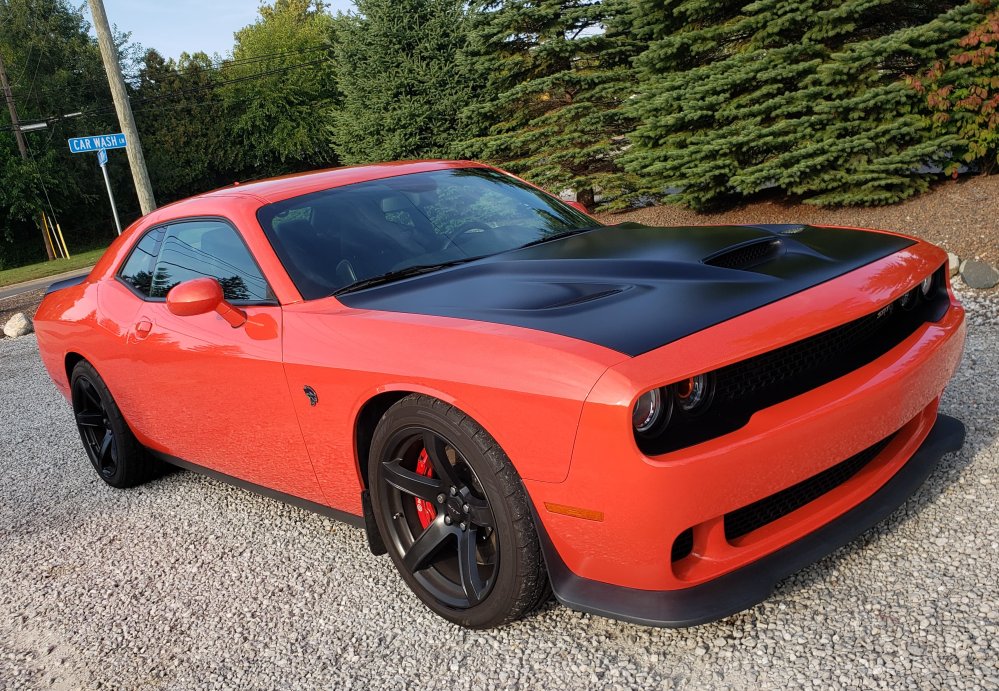
Challenger Hellcat is one of the greatest American muscle cars ever, but there are aspects which could be better.
The next generation Dodge Challenger is expected to arrive within the next few years. There is no official date from FCA, but it is expected that a new Mopar muscle car will be introduced in 2023 or 2024, if not sooner. The current Dodge Challenger is a pretty incredible machine, helping the car climb into a secure second spot in the segment sales race. This is particularly true of the Hellcat models, which reset the bar for all American muscle cars.
Dodge has a tough task ahead of them in creating a next generation Challenger Hellcat that is greater than the car that is on sale today. However, having owned and daily driven the Go Mango Hellcat Challenger shown above for the past three years, I see room for improvements. There are some key points which many owners commonly complain about, but with the TRX being so packed with new technology, we see the opportunity for improvements there as well.
Today, we bring you a look at five changes that could help make the next generation Challenger Hellcat ever greater, written from the perspective of an owner who loves the car.
1. Improved Backup Camera System
One of the most common complaints by owners of the Dodge Challenger SRT Hellcat pertain to the backup camera system. In some cases, owners feel that the picture should be of much higher quality. This is not a problem for some people, but the image on some cars is terribly grainy, particularly at night. Meanwhile, other cars have a crystal clear picture day and night.
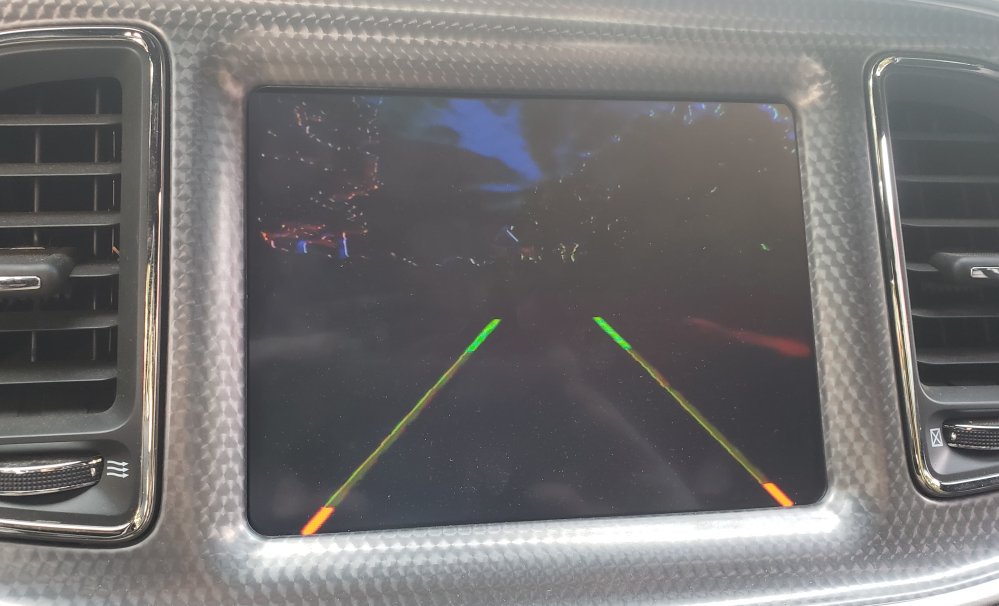
In other cases, the backup camera provides a blackened picture, almost looking like a negative print when it has gotten wet. For instance, after I wash my Challenger, I have to open and close the trunk to get the backup camera to work properly. Until I do, the picture is too dark to see anything, even in broad daylight.
2. Improved Anti-theft Protection
Sadly, the current Dodge Challenger and Charger are among the most commonly stolen vehicles in America. Hellcat models are particularly valuable with thieves, as the engine, transmission, brakes, wheels and suspension are all high-dollar components on the black market which are hard to track. In many cases, Challenger or Charger that is stolen one night turns up early the next morning, stripped down to the bare chassis.

The UConnect system does offer a paid tracking service, but not all Challenger owners subscribe to that service after the first, free year. The high rate of stolen Hellcat cars makes them most costly to insure, while also creating street for owners who leave their cars parked in public places for long periods of time. Owners would love to see something done to the next generation cars that make them much harder to steal.
3. Driver-controlled (Active) Adjustable Exhaust
The 2.75-inch exhaust system on the current Dodge Challenger SRT Hellcat sounds great. It features active exhaust valves that open and close based on throttle position. This makes the car a little quieter when coasting around town, but when you put the hammer down, the valves open and the supercharged Hemi roars. When you pick track mode, the valves open with the least amount of throttle input, but there is no way to keep the valves open all of the time.

Many Hellcat Challenger owners, including myself, have turned to the aftermarket to keep the exhaust note at full volume all of the time. A product called the MFER1 keeps the valves open all of the time without triggering the check engine light. If you just remove the valves or lodge them open, you will get a check engine light, but the exhaust valve plates lead to full volume all of the time without any trouble codes.
The Ford Mustang has an adjustable exhaust system, but it is based on a mode selection rather than throttle position. When you twitch to the loudest exhaust setting in the Mustang, the exhaust immediately opens up to full volume. That is what many Challenger and Charger Hellcat owners want, so this would be an impactful and simple way to make buyers happy.
4. TRX Bits in the Challenger
The 2021 Ram 1500 TRX has several new features that would – and probably will – make a big impact in the next generation Dodge Challenger SRT Hellcat. The simplest swap from the supercharged pickup is the new, larger shift paddles. The paddles on the current Challenger are great, but they are smaller and can be harder to find during stints of spirited driving.

Next, the TRX features a 12-inch UConnect infotainment screen, a new heads-up display and a new digital rearview mirror. The 12-inch screen debuted with the new generation of the Ram 1500, but the heads-up display and digital rearview mirror were introduced on the TRX. They will be offered on other 2021 Ram 1500 models as well, but we fully expect to see all three on the next generation Challenger.
The 12-inch infotainment screen is a no-brainer, as the Challenger has routinely come with the premium screen system. The digital rearview mirror makes for a much larger, clearer view than a traditional reflective mirror. If Dodge improves the backup camera system, they could add the screen-based rearview mirror and make the Challenger safer by giving the driver a better view of what is going on out back.

As for the heads-up display, it has become popular in General Motors vehicles and the system in the Ram 1500 looks great. Even if it is only an optional upgrade, this is a system that Hellcat owners would enjoy. Projecting the information from the Performance Pages onto the windshield, right in the driver’s line of sight, would effectively make the car a bit safer and more engaging for the driver. Imagine being able to see the performance timer while you are making a full pull, or gauges measures such as boost pressure or air-to-fuel ratio.
FCA Media images of the TRX
5. Mopar Performance Stage Upgrade Kits
The current supercharged Dodge Challenger makes anywhere from 707 to 808, depending on the specific model. The early Hellcat packaged 707 horsepower, which has climbed to 717 horsepower over the years. The Redeye packs 797 horsepower and the Super Stock is the first American production road car with more than 800 horsepower, delivering a whopping 808 horsepower. Even though these cars are all among the most powerful American cars ever, owners love adding power. Fortunately, it isn’t hard to add power with simple upgrades and an engine tune, but Mopar doesn’t offer any factory power-adding upgrades for the Hellcat cars.

Back in the 1990s, you could buy a pre-programmed engine computer for the Dodge Ram 1500 which added significant amounts of power. I had one in a 1994 360 Ram 1500 and it made a huge difference. In the early 2000s, Dodge Neon SRT4 buyers could pick from three different “stage kits”, with varying levels of power added. Each kit came with some engine components and an engine computer with a performance tune, designed to make the most of the new parts. Something like that would be an absolute hit with Hellcat owners.

Just a performance tune on a pre-programmed engine tune would allow the Hellcat Challenger to gain solid power without changing any engine parts. However, combining a tuned computer with a smaller pulley and larger injectors would allow owners to pick up big power. Without adding undue stress to the internal engine components, the original Hellcat cars with 707 or 717 horsepower could easily climb past the 800 mark. Meanwhile the Redeye and Super Stock with a Mopar kit could creep up beyond 900 horsepower.
Litens image of the Hellraiser pulley
Photos for Dodge Forum by Patrick Rall
Join the Dodge Forums now!

You must be logged in to post a comment.