
In-Depth Details of the Dodge Demon
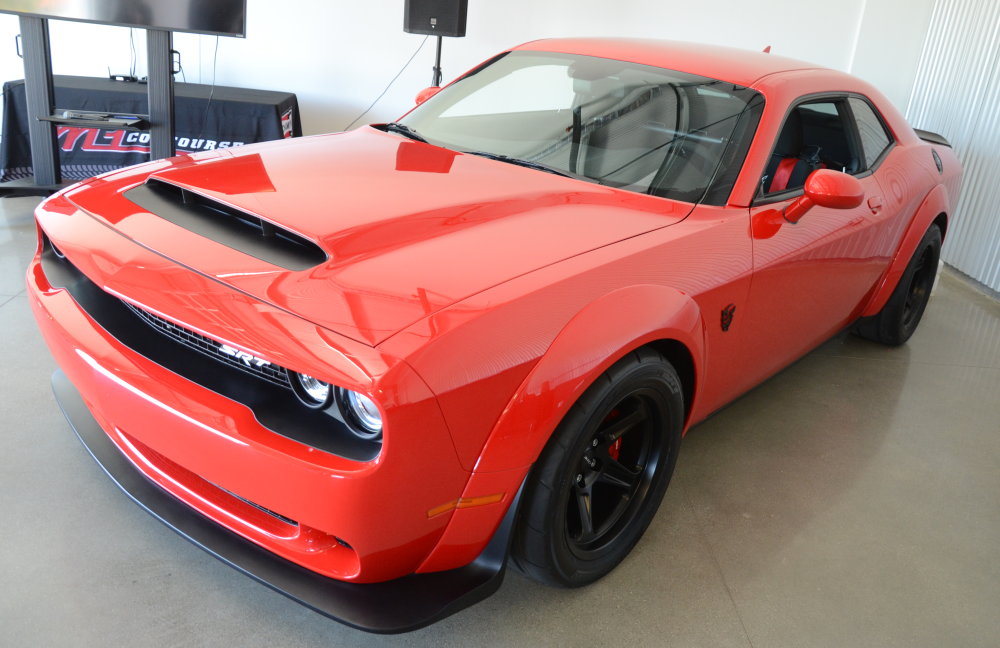
Here is a long list of all of the features which make the 2018 Dodge Challenger SRT Demon different from the Challenger Hellcat.
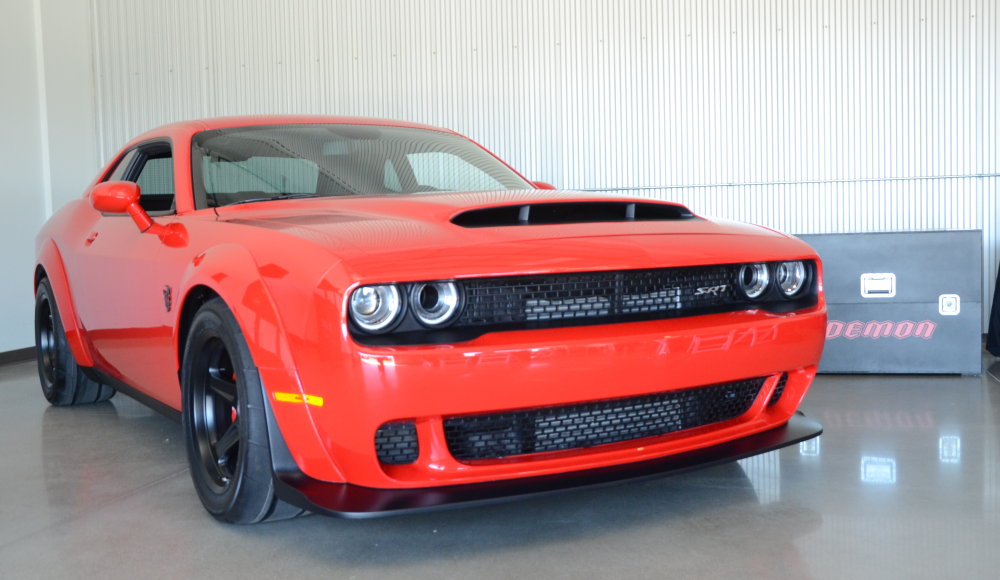
Dodge had a handful of automotive writers to M1 Concourse for a closer look at the key details of the 2018 Dodge Challenger SRT Demon. While some people insist (foolishly) that the Demon is just a Hellcat with no interior, flares and more power, the long list below shows how many unique features are found in just the drivetrain of the newest Mopar muscle car.
Induction System
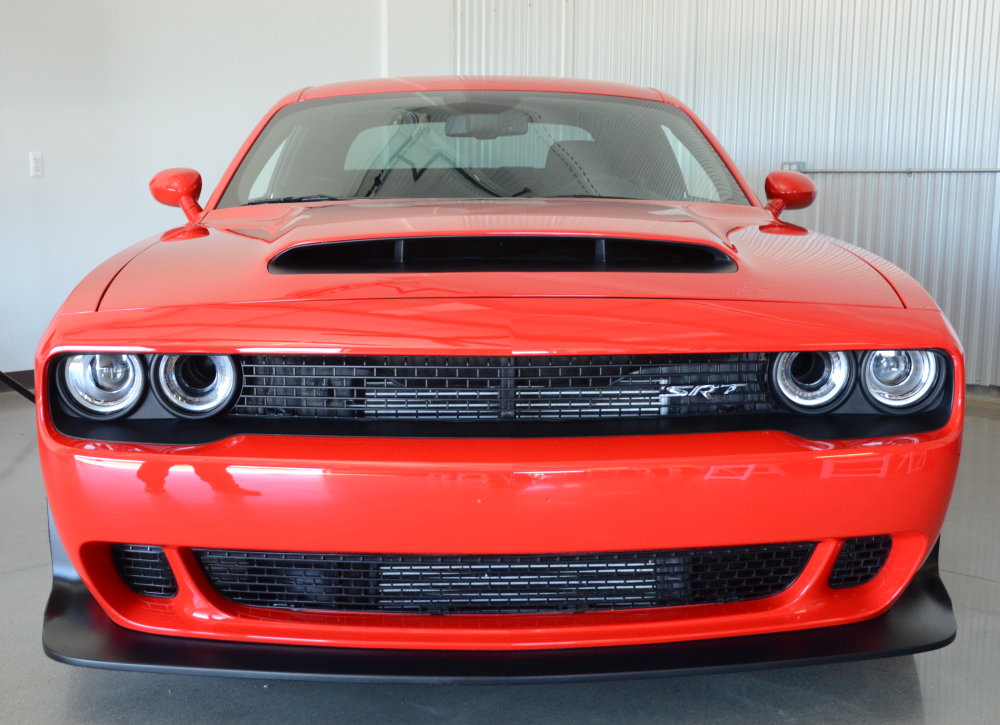
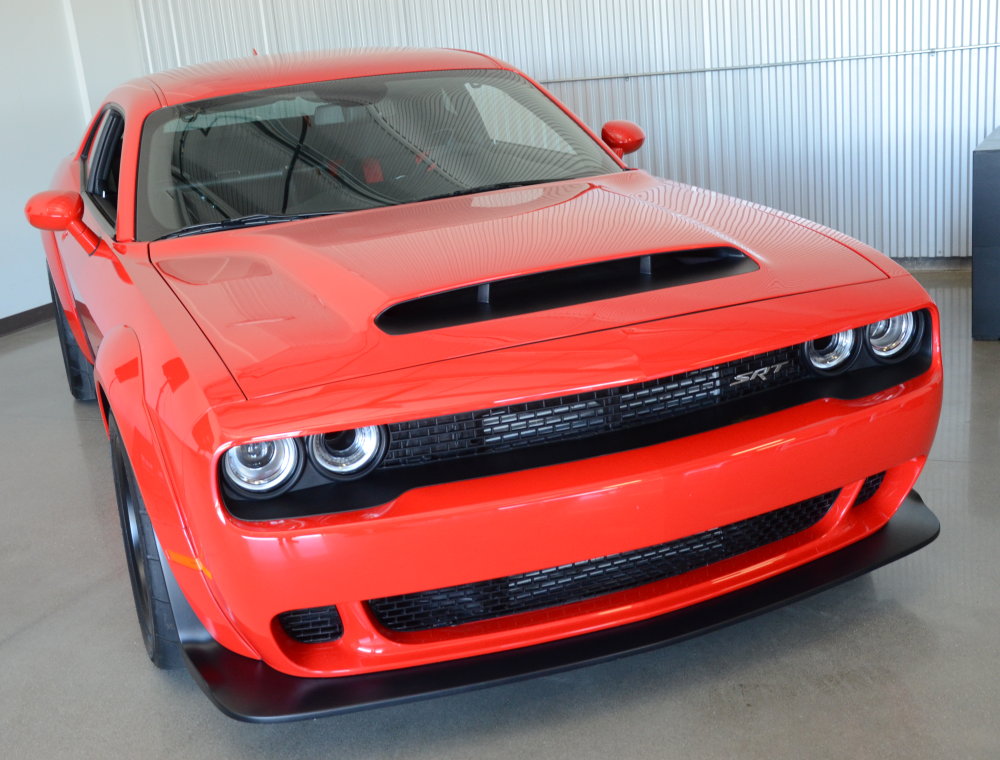
-Air Grabber Hood – functional hood scoop and dual Air Catcher headlights feed cold air to the 14.8 liter air box
-High flow, low restriction air inlet system feeds the supercharger with 35% less resistance at wide open throttle than the Hellcat
-Oval/Conical, oiled air filter element offers 72% increase in filtration area – 1,224 cm2 to 712cm2
-92mm throttle body
-Optimized induction system geometry to meet pass-by noise requirements
Supercharger and Drive System
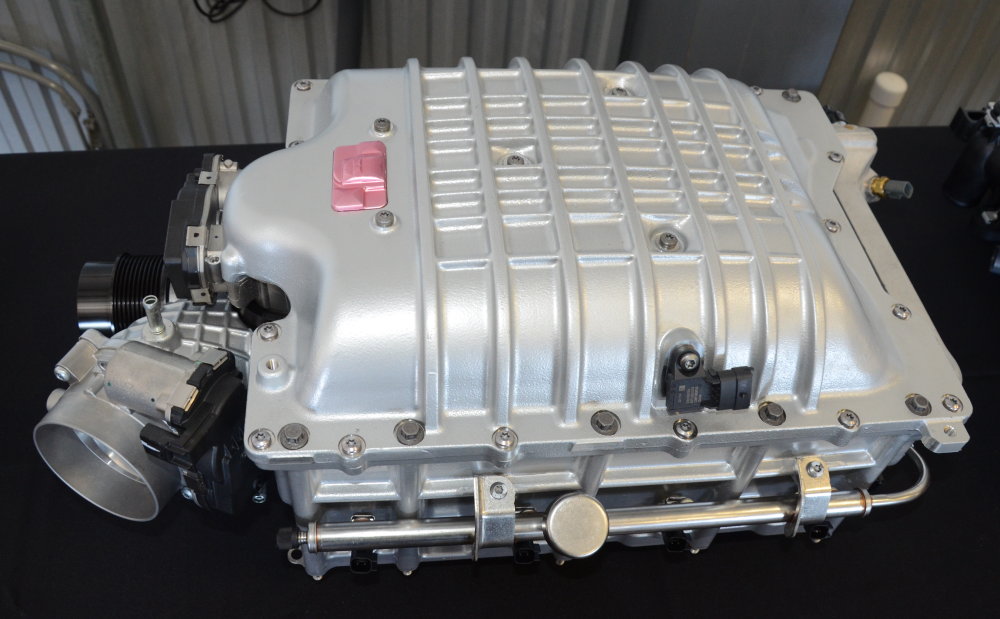
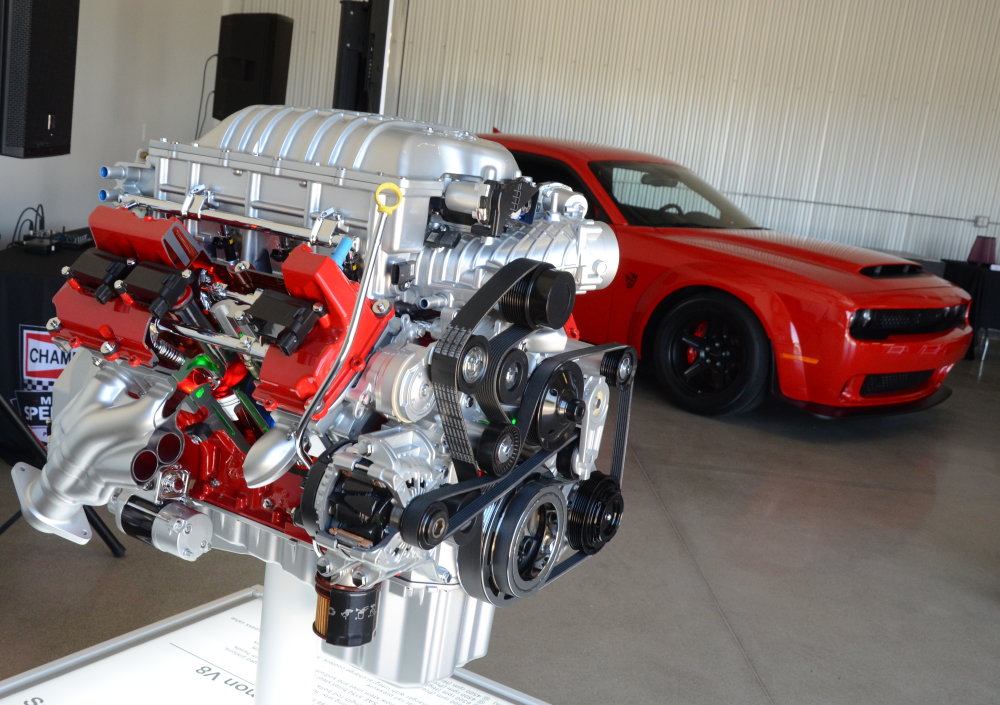
-2700cc twin screw IHI supercharger in the Demon is 320cc bigger than the Hellcat supercharger via 28mm rotor length increase
-Improved inlet air flow around the front bearing housing
-Integral charge coolers and integrated electronic bypass valve – maximum boost pressure is 100kpa (14.5psi) vs 80kpa (11.6psi) in the Hellcat
-Sealed bearing and lubrication system with premium synthetic grease
-2.36:1 drive ratio with 15,340rpm maximum supercharger speed at 6,500 engine rpm
-1 way clutch decoupled and 10 rib belt drive system
-At 800ft or 7.35 second down the quarter mile, the engine will suck all of the air out of the cabin of the Demon – 105 cubic feet. At the quarter mile, the Demon uses 173 cubic feet or air – about the capacity of 816 human lungs.
Cooling System
-Dual water to air heat exchangers integrated into the supercharger housing
-Cooling module containing the low temp system, high temp system and AC-based chiller
-250w cooling pump moves 45 liters per minute
-Separate air/oil heat exchanger with partial bypass
-258kw total cooling system heat rejection at full power. That would boil a quart of water in 1.2 seconds.
Fuel system
-Increased flow injectors – 67 grams per second at full power
-Optimized injector targeting for high airflow supercharged engine with 20 degree bent spray and a 17 degree cone
-Increased variable pressure and fuel flow via twin in-tank fuel pumps – resulting in 250 to 700kpa of pressure – a 27% increase over the Hellcat’s peak pressure
-High octane calibration via the crate PCM is 50-state emission legal
-Knock detection reverts to standard engine calibration if octane isn’t high enough
-At full power, fuel flow is 510lb/hr or 1.36 gallons per minute. The average shower in the US flows at 2 gallons per minute
Cylinder Heads and Valvetrain
-High strength, high thermal conductivity aluminum alloy cylinder heads (A356) with heat, quench and solution treatment
-Single groove collets for improved stability with revised design valve springs and top retainers
-33% increased valve spring oil cooling and rocker tip lubrication via head gasket metering change
-Hemi style combustion chamber with 34.5 degree valve angle and twin M14 spark plugs
-2 piece follow stem inlet and sodium cooled exhaust valves with high temp resistant heads – good for continuous temperatures of 800C
-5150 gun drilled steel cam with revised profiles. 14.25mm intake lift, 14mm exhaust lift, lobe centers 109/137, durations of 224 and 240 at 0.050 lift
-Hydraulic actuated variable valve timing – 17 degrees variation in Demon
-Hydraulic roller tappets, no MDS
Exhaust System
-Double wall, insulated, high temp tubular stainless steel exhaust headers
-73mm diameter low restriction twin exhaust system offers 66kpa backpressure at full power
-High temperature close-coupled catalysts, capable of 1,050C
-Custom engineered exhaust sound using electronically controlled exhaust valves to offer the best sound and meet pass-by noise requirements
Cylinder Block
-103.9 bore, high strength cast iron block with 4-bolt steel main caps
-Peak cylinder pressure of 135 bar on race gas
-Revised design main bearing cap bolts with increased bolt clamp load
-Increase cylinder head bolt clamp load – 52kN to 80 kN
-Deck plate honed to minimized assembled engine bore distortion
-Painted Demon red
Rotating Assembly
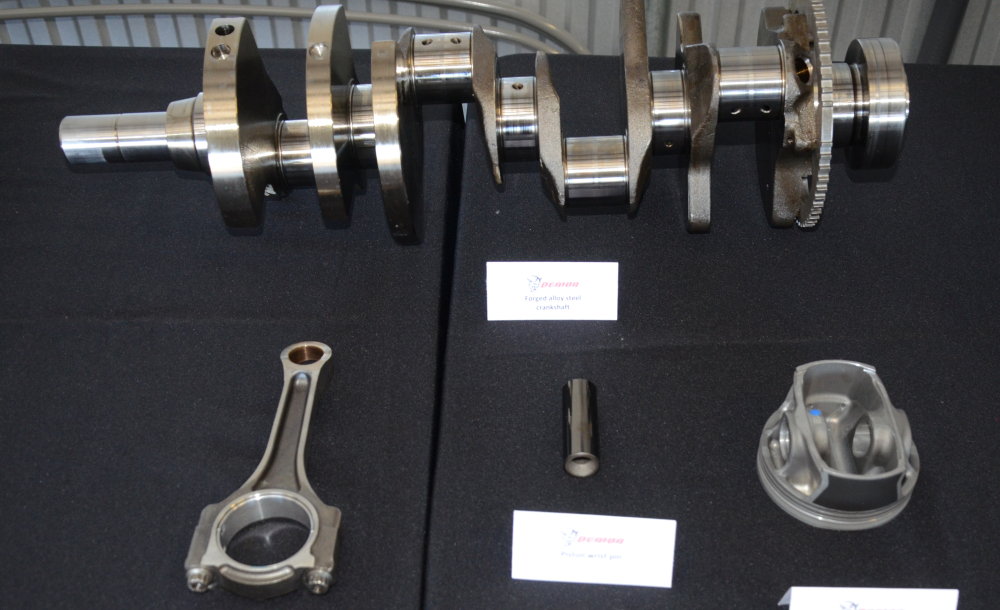
-Forged alloy steel crankshaft with 90.9 mm stroke and revised balancing
-Induction-hardened crank bearing surfaces with high load capacity beatings, individual journal optimized main bearing clearances (10 micron difference compared to the Hellcat)
-Inclined box wall forged high strength alloy pistons running 30 micron increased piston to bore clearances
-Piston cooling jets with 100% increase flow oil cooling compared to Hellcat
-Revised material TV damper bolt with increased clamp load from 118kN to 175kN
-Upgraded powder forged connecting rods with a tapered small end, an enlarged big end and an enlarged shank. Revised high tensile fasteners on the connecting rods, 210,000 psi capacity.
-Piston and connecting rod loading 11.1 tons on compression stroke, 3.2 tons on exhaust stroke, each 50 times per second
-Piston acceleration is 2600Gs at 695 grams, an assault rifle bullet accelerates at 2000Gs with just 25 grams
Lubrication Circuit
-High flow 25cc/rev oil pump from the crank nose
-8 high flow piston cooling jets with check valves, double the cooling oil flow of the Hellcat
-Increased oil flow to the cylinder heads for valve spring and rocker tip lubrication, 33% increase over Hellcat
-Optimized oil pan and windage tray system for oil control during 1.8g launch
-0w-40 Pennzoil SRT oil
Transmission
-8-speed TorquefFlite with paddle shifters
-Upgraded 151k torque convertor, 18% increase in torque multiplication, 11% increase in stall speed, increased lockup speed, 400 millisecond shifts in drag mode, 200ms in track mode
-TransBrake locks output shaft of transmission at up to 2350rpm. Locks clutch packs A, B, C and E, unlocks E on launch.
-110% increase in engine stall torque compared to simple brake torque launch
-18% more torque at the rear tires during launch
Driveline
-Uni-directional LSD for optimum acceleration, braking and cornering stability
-Upgraded 230mm ring gear in new differential housing
-Revised 3.09 final drive
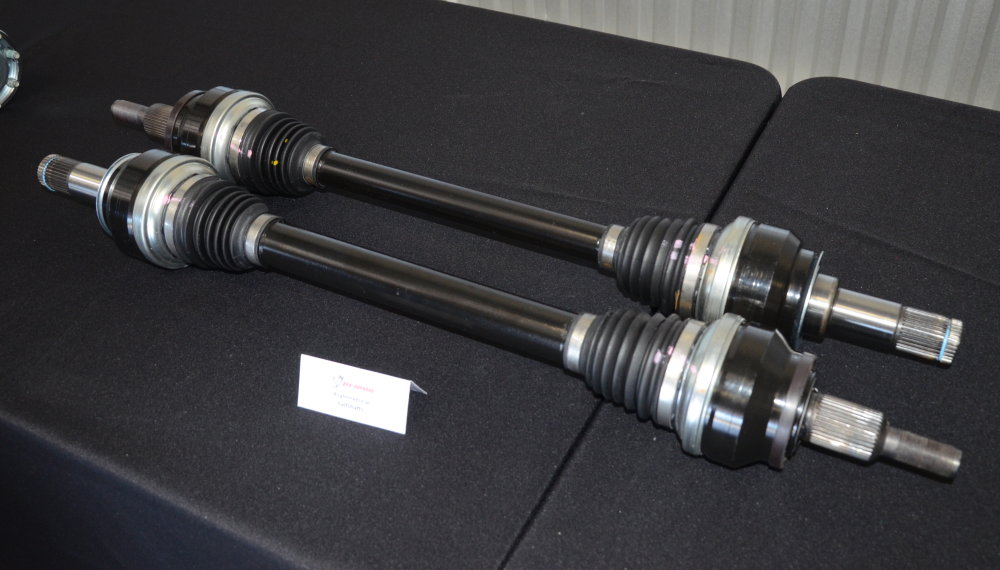
-Upgraded half shafts with 8-ball cross glide inner and outer joints. Increase diameter barshaft with 41 end spline count and high alloy steel inner and outer stub shafts
-Upgrade driveshaft with 20% thicker high strength, low alloy steel rube, with strength steel stub shats
-Power hop mitigation software via wheel speed sensors allows torque cut to avoid component damage
The bottom line is that all of these changes lead to a 4,200lb Dodge Challenger which will pull the front wheels off of the ground on launch and run a 9.65 quarter mile thanks to the 840 horsepower Hemi. When compared to the new Camaro ZL1, the Demon makes more horsepower by 4,500rpm and more torque by 2,300rpm. When compared to the Nissan GTR, the Demon makes more power by 3,800rpm and more torque by just 1,300rpm. When compared to the new McLaren 720S supercar, the Demon has 131 more horsepower and 202lb-ft more torque.

You must be logged in to post a comment.