
Dodge Boss Tim Kuniskis Talks about SRT, Future Electrification

Dodge CEO brought the Hellcat and Demon to market sees a bright future in Mopar performance.
Back in February, we brought you the news that the high performance Street and Racing Technology division of FCA-now-Stellantis had effectively been relocated throughout the company, with those folks who were the most responsible for vehicles like the Dodge Hellcat cars being integrated into other divisions. Some outlets took the “doom and gloom” angle, suggesting that the end of the SRT division meant the end of exciting, high performance Mopar machines. We didn’t see it as such, as all of the minds who brought the likes of the 2018 Demon to life were still with the company, just in new-to-them departments.
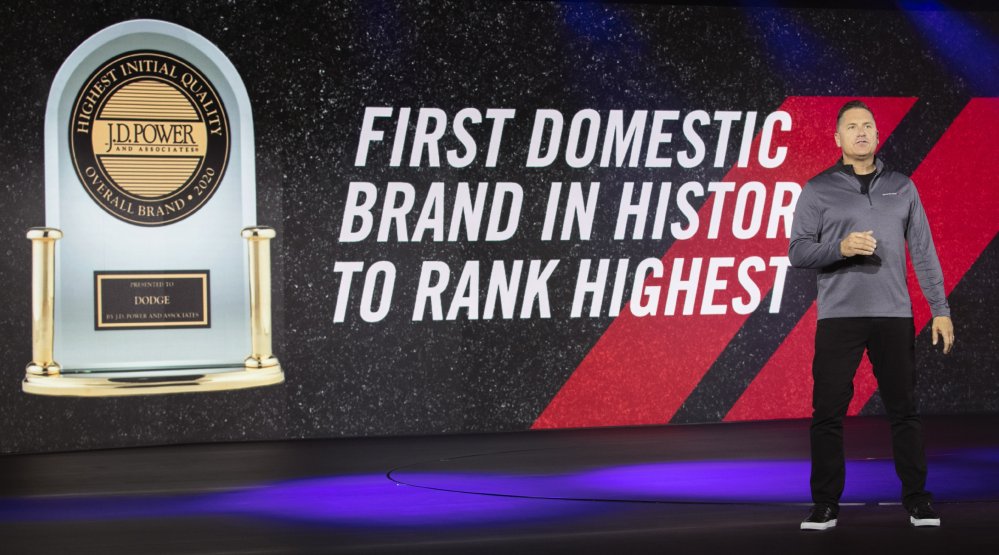
Fortunately, Dodge CEO Tim Kuniskis recently spoke with Autoweek about the people who were formerly part of the SRT. Not surprisingly, Kuniskis pointed out that these people are still working to develop the next generation performance cars, but they are doing so for the entire lineup more than just for dedicated, high performance models. He also talked about the future of Mopar performance as electrification plays a bigger role in the Dodge portfolio.
The Latest on SRT
The Autoweek piece begins by touching on the rumors and reports earlier this year about the end of SRT. It points out that the SRT people are no longer sharing an office, but Stellantis hasn’t killed SRT. It then includes this long quote from Kuniskis.
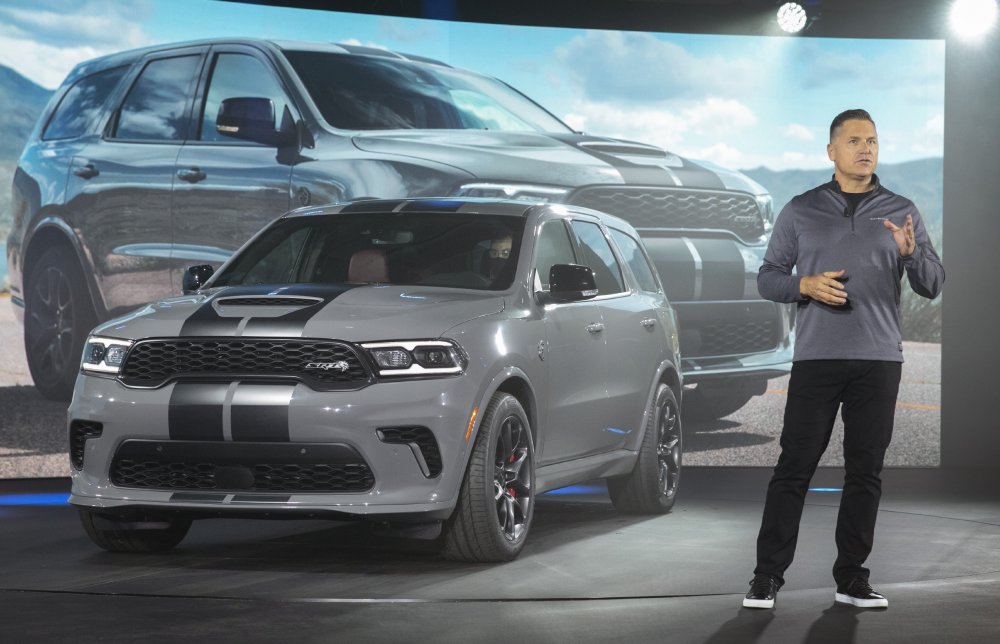
We took this core group of people that were sitting in one building where guys were working on TRX in one area, and Rubicon 392 in another area, and Chargers and Challengers in another area, and sent the TRX group to work with the Ram engineers, the Rubicon 392 group to work with the Wrangler engineers and so on.
People looked at that change and said ‘SRT is being disbanded.’ Absolutely not. It’s the opposite. It’s the right thing to do for performance because SRT today is a sub brand within Dodge. The highest trims are SRTs. It goes from base and rises to SRT. The highest performance of any of our lineups are SRTs.
None of those cars can exist without the base car team, because you don’t have the economies of scale of the base car. There would never be a Hellcat without a V6-powered Challenger and Charger. It would be impossible, because you could never pay for the platform or the engineering. You have to the base engineering paid for with the volume cars and then you can have the performance sub brand that takes that car and modifies it.

His comments make perfect sense, especially when we look at the fact that so much “SRT styling” has been introduced on lower-priced models. There are a few good examples of this in recent time. The scooped hood design of the V6 Durango, Challenger and Charger was first introduced on the SRT models, the flat-bottomed steering wheel on the Challenger GT models came from SRT models and some high performance parts, such as the Brembo brakes, started on the SRT models before being introduced on the likes of the Challenger T/A or Charger Daytona.
Based on Kuniskis’ comments, it sounds like the SRT engineers and designers will have more involvement in the design process of an entire vehicle lineup, rather than just the high performance models. To us, that sounds like we could see a shift towards sportier designs inside and out on lower-priced models and that can only be a good thing.
Dodge Electrification
Next, Kuniskis talked about electrification of Dodge models and those who oppose that move might want to brace for impact.
Today we sell internal combustion engines, fairly traditional layouts, eight-speed transmissions, front engine and rear drive—there are huge synergies with the base car. Now look at the future. I can’t give you a date but I can tell you the future is coming faster than we could have guessed 24 months ago and the shift to electrification is coming like a tidal wave.
He went on to state that the introduction of electrification will “enable more performance than we’ve ever seen before”. When you look at the highest performance hypercars, the vast majority of them feature both an internal combustion engine and some sort of electric drive system. A high performance hybrid setup could be exactly what Dodge needs to take the Hellcat cars to the next level.
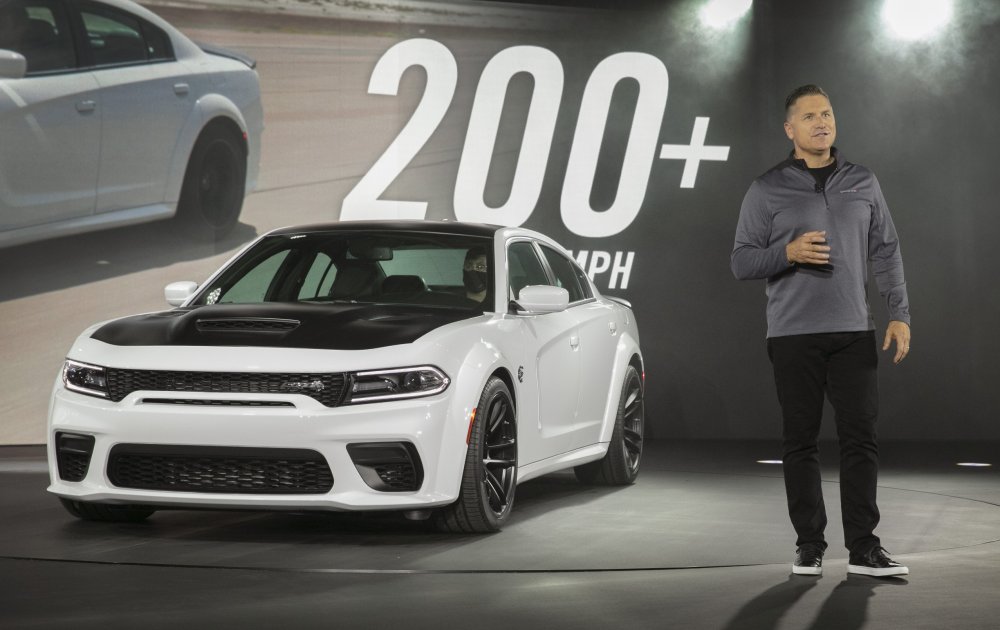
The biggest obstacle with the Dodge Challenger or Charger in Hellcat form is traction. Even with drag radial tires, you have to launch them carefully to get the best track times. That could be fixed by adding some sort of hybrid system with introduces all-wheel-drive by providing electric propulsion to the front wheels.
The key issue with that approach is the added weight of a pair of already-heavy cars, but if the company can cut weight in future models, they could offer greater levels of performance and greater fuel economy with the introduction of hybridization. In fact, Ralph Gilles hinted to something similar earlier this year as well.
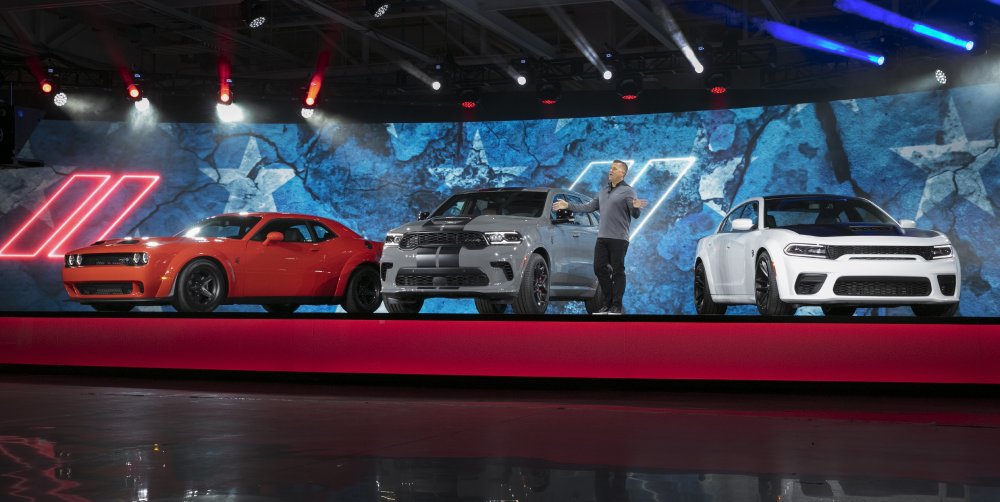
In short, electrification appears to be coming soon to the Dodge lineup, but that will not mean the end of high performance Mopar machines.
Photos: Dodge
Join the Dodge Forums now!

You must be logged in to post a comment.