
Dodge: Charger Daytona’s Unintended Acceleration Is Actually Intended

Stellantis says that there is no unintended acceleration, but instead it’s the same safety feature they have in their internal combustion engine vehicles.
In the 1980s claims of unintended acceleration nearly ruined Audi. It turned out that most of the cases were actually just drivers hitting the gas instead of the brakes. A CBS report that aired in 1986 used a rigged Audi to “prove” that it would accelerate out of control all on its own. By the time Audi was cleared the damage was done and the company nearly collapsed. If you have been following the news at all you know that Stellantis is financially struggling right now. The last thing it needs is some sort of unintended acceleration controversy.
So, guess what just happened? A member of the Edmunds editorial team reported an unintended acceleration case with a 670-horsepower, 2024 Dodge Charger Daytona EV. But Stellantis is telling us not to worry about it. In fact, it is a safety feature. Huh?
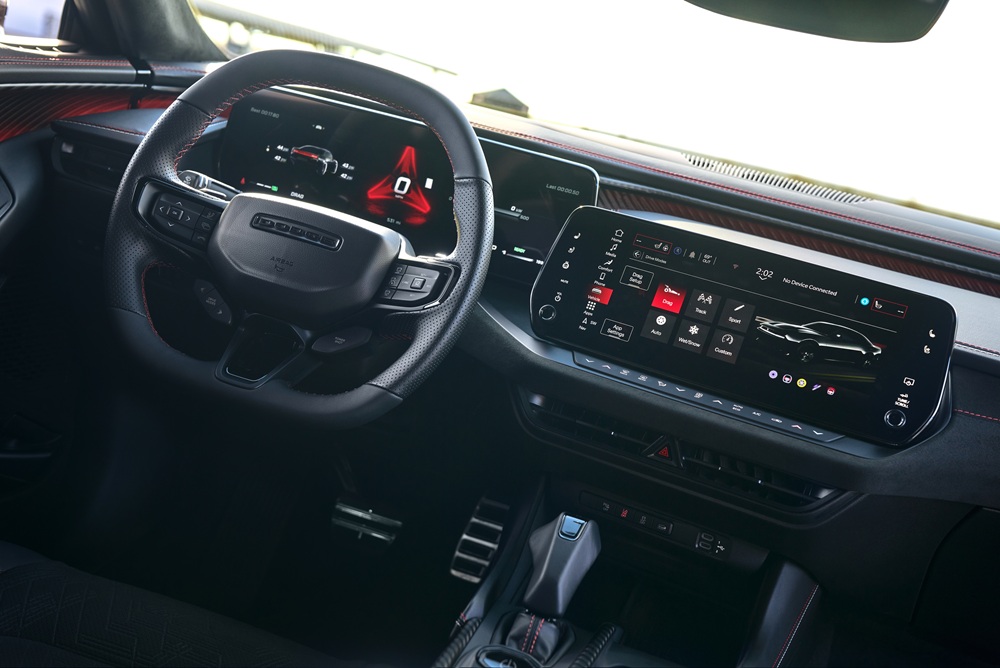
A video of the incident was posted on the Edmundsvideo Youtube channel. In their written report the Edmunds tester explained that he pulled out of a parking lot when a slew of warning lights appeared on the instrument panel. The car was also sluggish and didn’t accelerate normally. Also, the regenerative braking didn’t seem to be working. In fact, it was worse than not working. Not only was the car now slowing down when the driver lifted off the accelerator. The car was actually speeding up at a rate of about 1 mph per second. How can that be normal?
Not An Isolated Case
The Edmunds tester is not alone. The Autopian has gathered a series of similar complaints from other drivers. This is getting more concerning. But the automaker responded back to Edmunds and explained that there is really nothing to worry about. The emailed statement said:
“In the rare event of an accelerator pedal fault, Stellantis has implemented a ‘drive-by-brake’ safety feature, which allows the driver to control speed through the brake pedal. In this instance, the feature worked as intended, and the driver was able to safely maneuver the vehicle off the road. This feature has been in Stellantis internal combustion engine vehicles for many years and has been carried over to battery electric vehicles.” Our readers in the IT industry will probably get a kick out of this it’s not a bug, it’s a feature type of response.
True or False?
This claim of being a safety feature sounds like a bit of a stretch. Nobody seems to be aware of it. I just scanned the 271-page owner’s manual for the 2024 Dodge Charger and found no reference of ‘drive-by-brake’ or anything else that would appear to describe this feature. To us this seems like a feature that you would want to make very clear to your owners should they ever experience it. Most people do not expect a car to accelerate by itself under any circumstances.
Brakes Will Stop You
It is important to note that even though this experience is unsettling to all that experienced it, the drivers were all able to bring the car to a safe stop by using the brake pedal. Should this ever happen to you, keep your wits about you and simply apply firm brake pressure and you should come to a controlled stop. That being said, we think Dodge has some explaining to do.
Photos: Stellantis
Join the Dodge Forums now!

You must be logged in to post a comment.