
2020 Dodge Charger Widebody First Drive: Bigger Is Better
Racing with the Hellcat
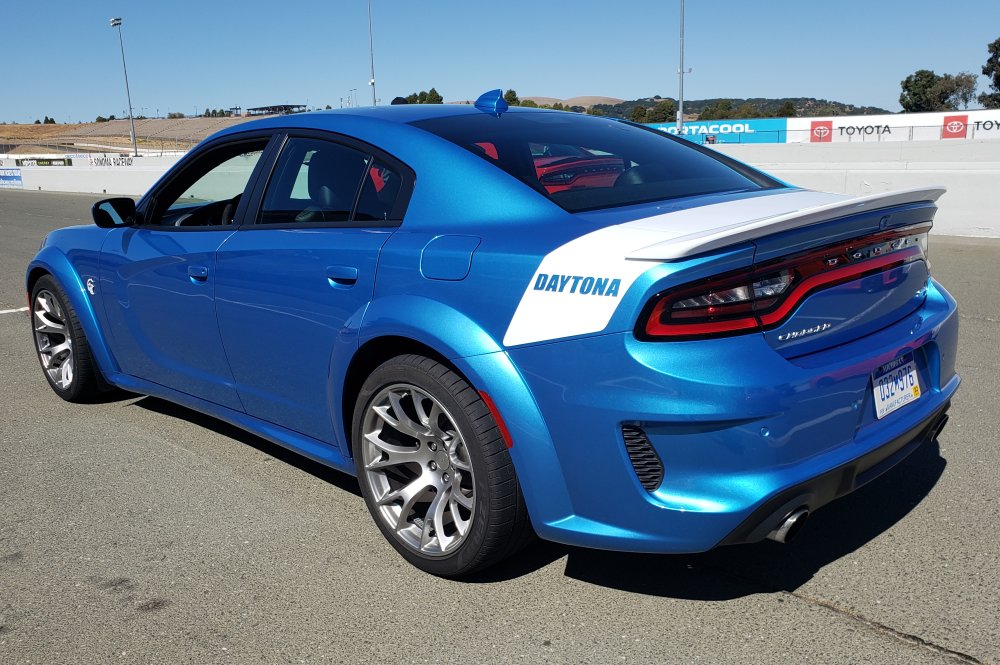
My second test session was in a 2020 Dodge Charger SRT Hellcat, specifically the one painted B5 Blue and outfitted with the features of the Daytona 50th Anniversary Edition package.
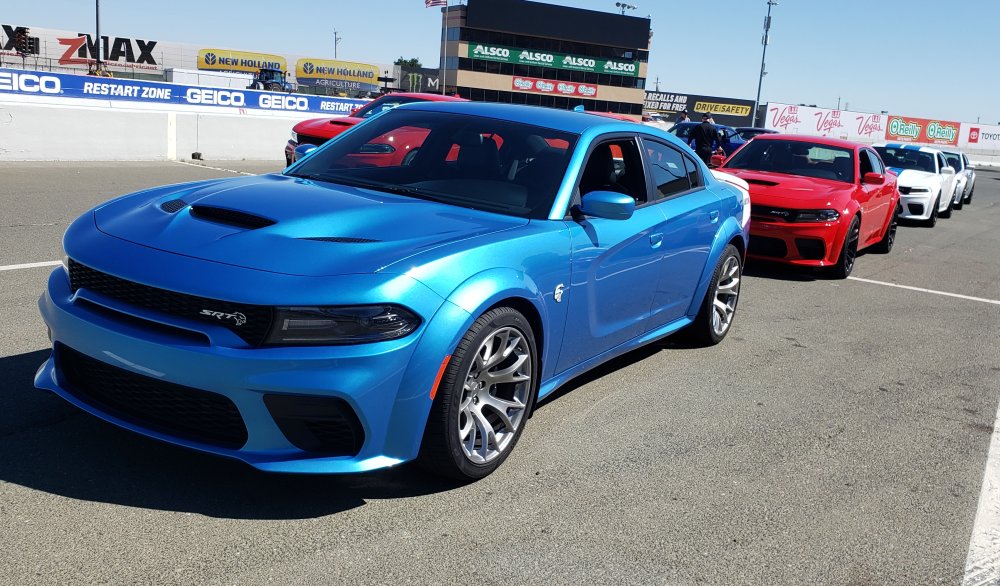
While this car had 10 extra horsepower, the brakes, suspension, wheels, tires and steering bits are all tuned the same as they are with the non-Daytona Hellcat. Also, many of those handling bits are shared with the R/T Scat Pack widebody, so I expected all of the widebody Chargers to have relatively similar handling characteristics, but with a little more weight over the front end and a whole lot more power.

Frankly, while the Hellcat has more weight up front than the Scat Pack, the handling characteristics of the two are nearly identical. The Hellcat might take a little more effort to turn in with the added weight, but unless you are literally testing them back-to-back, or if you are a professional racer who can detect tiny differences, the widebody Chargers offer the same basic handling abilities. Like my first test session, I was stunned at how well the 4,600+ pounds Dodge super sedan handled the turns, comfortably slowing for the tight turns and scooting through the sweeping turns with ease.
The biggest challenge with the 2020 Charger SRT Hellcat with the standard widebody package is still traction, as applying too much throttle in a turn, or when coming over a rise, will cause the supercharged model to quickly spin the tires. This forced me to be a bit more delicate with the throttle, particularly in sweeping turns or when digging out of a tight turn, but as was the case on the street, the wider tires allow you to make better use of the available power.

Thanks to the extra horsepower, the Hellcat Charger saw higher speeds on the straightaways, so the brakes were pushed even harder, yet lap after lap, session after session, the big sedan smoothly slowed down from high speeds to make the tightest turns.
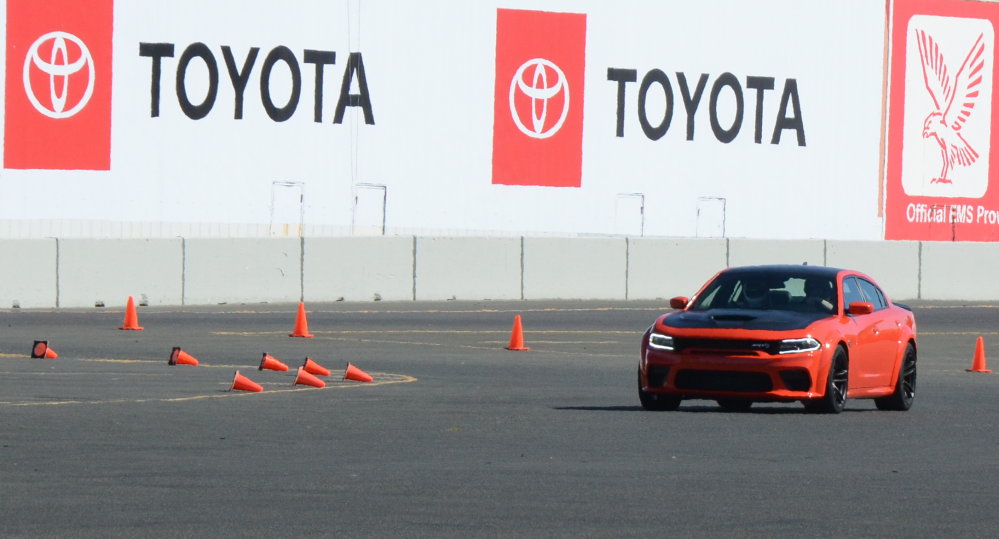
As the day went on, I made more laps in the Scat Pack cars, followed by laps in the non-Daytona Hellcat Chargers. Many people asked if I could feel the extra 10 horsepower of that limited edition package, but in the road course racing situation, I didn’t find the Daytona to be noticeably stronger than the other Hellcat cars on the track. That being said, the Daytona package is gorgeous, from the unique B5 Blue paint and the silver wheels to the interior appointments, this is a great looking package that is sure to be the most collectable of the 2020 Chargers, but buyers shouldn’t expect the car to be considerably quicker, as we are only talking about 10 more horsepower.
In any case, with each lap of each session, I got more and more comfortable with the track and with the 2020 Dodge Charger widebody test cars, allowing me to better-realize their handling prowess on the twisty track. In the end, having tested standard-width Chargers on multiple tracks, there is no question in my mind that the Scat Pack and Hellcat widebody models offer better handling, braking and acceleration performance than the cars with the skinnier stock tires, but that isn’t just on paper.
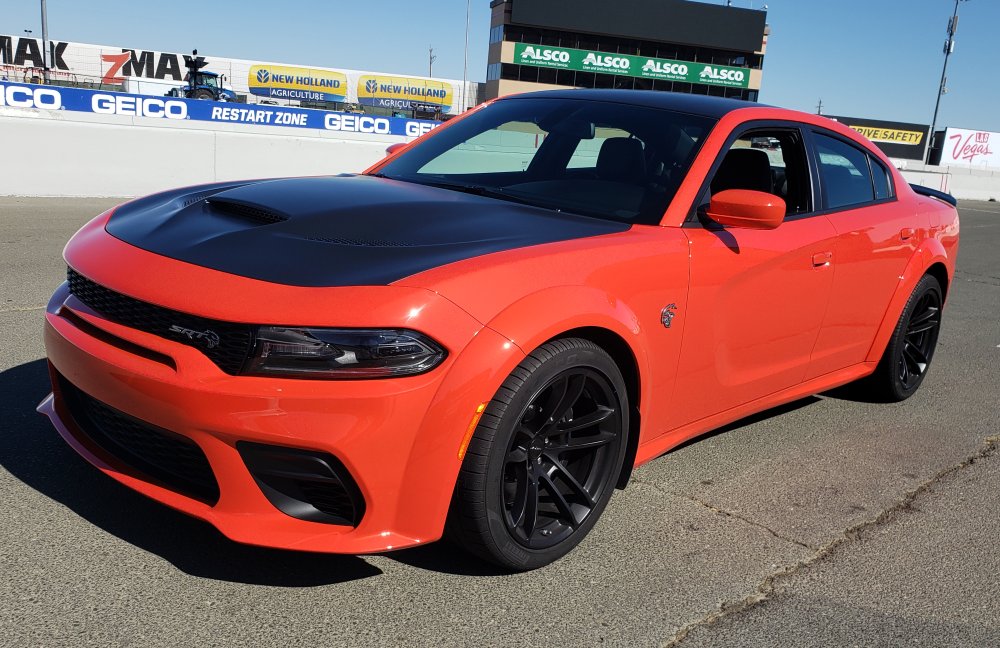
The advantages of the Charger can be experienced in the real world by everyday drivers, so if you like the look of the widebody package and you want the best possible performance from your 2020 Dodge sedan, you will want to opt for the Scat Pack widebody or the mighty Hellcat. The modern Charger has been an impressive performance sedan since being introduced for the 2015 model year, but with the introduction of the 2020 widebody package, the big Dodge sedan gets noticeably better.

Photos & Videos for DodgeForum.com by Patrick Rall
Join the Dodge Forums now!

You must be logged in to post a comment.