


desert oil


Thread Starter
|
Rookie
Joined: Feb 2008
Posts: 75
Likes: 0
From:
 desert oil
I'm stationed in 29 palms ca where the temp is over 100+ daily I've always ran a higher weight oil when the summer time comes but I was told 20w50 is to thick and will ruin the oil pump. What would u run? Anyone live in a desert climate like me? Thanks

Champion
Joined: Mar 2009
Posts: 2,639
Likes: 4
From: Bent Mountain Va
Can't be specific when I don't know any info on what vehicle or engine you have or how many miles are on it but as a general rule 10w40 should be sufficient. 20w50 should work OK also and will not hurt the oil pump. I personally would go with 10w40 unless I was having low oil pressure problems due to engine wear.


Registered User
Joined: Jul 2010
Posts: 4
Likes: 0
From: Valdosta Georgia
Alot of people dont know what the two numbers mean. Im not saying you dont i just wanted to add this for those who didnt. The first number is the hot weight, and the second is the cold weight. I drive a 96 1500 with the 5.9. I live in southern Georgia and use 10/30. Temps here reach the triple digits as well. I maintain 40psi all day.
Champion
Joined: Mar 2009
Posts: 2,639
Likes: 4
From: Bent Mountain Va
This is why I like this site. It makes me think and do research that teaches me new things. That said I would use the 20w40 where you live Dodgeman707.
Yegarboy: I think you have it backwards.
Multi viscosity oils work like this: Polymers are added to a light base (5W, 10W, 20W), which prevent the oil from thinning as much as it warms up. At cold temperatures the polymers are coiled up and allow the oil to flow as their low numbers indicate. As the oil warms up the polymers begin to unwind into long chains that prevent the oil from thinning as much as it normally would. The result is that at 100 degrees C the oil has thinned only as much as the higher viscosity number indicates. Another way of looking at multi-vis oils is to think of a 20W-50 as a 20 weight oil that will not thin more than a 50 weight would when hot.
Multi viscosity oils are one of the great improvements in oils, but they should be chosen wisely. Always use a multi grade with the narrowest span of viscosity that is appropriate for the temperatures you are going to encounter. In the winter base your decision on the lowest temperature you will encounter, in the summer, the highest temperature you expect. The polymers can shear and burn forming deposits that can cause ring sticking and other problems. 10W-40 and 5W-30 require a lot of polymers (synthetics excluded) to achieve that range. This has caused problems in diesel engines, but fewer polymers are better for all engines. The wide viscosity range oils, in general, are more prone to viscosity and thermal breakdown due to the high polymer content. It is the oil that lubricates, not the additives. Oils that can do their job with the fewest additives are the best.
Yegarboy: I think you have it backwards.
Multi viscosity oils work like this: Polymers are added to a light base (5W, 10W, 20W), which prevent the oil from thinning as much as it warms up. At cold temperatures the polymers are coiled up and allow the oil to flow as their low numbers indicate. As the oil warms up the polymers begin to unwind into long chains that prevent the oil from thinning as much as it normally would. The result is that at 100 degrees C the oil has thinned only as much as the higher viscosity number indicates. Another way of looking at multi-vis oils is to think of a 20W-50 as a 20 weight oil that will not thin more than a 50 weight would when hot.
Multi viscosity oils are one of the great improvements in oils, but they should be chosen wisely. Always use a multi grade with the narrowest span of viscosity that is appropriate for the temperatures you are going to encounter. In the winter base your decision on the lowest temperature you will encounter, in the summer, the highest temperature you expect. The polymers can shear and burn forming deposits that can cause ring sticking and other problems. 10W-40 and 5W-30 require a lot of polymers (synthetics excluded) to achieve that range. This has caused problems in diesel engines, but fewer polymers are better for all engines. The wide viscosity range oils, in general, are more prone to viscosity and thermal breakdown due to the high polymer content. It is the oil that lubricates, not the additives. Oils that can do their job with the fewest additives are the best.
Registered User
Joined: Jul 2010
Posts: 4
Likes: 0
From: Valdosta Georgia
Thanks for the lesson Seal  i guess my intel was a tad off lol. Sorry if i was misleading Dodgeman707. It was not my intention.
i guess my intel was a tad off lol. Sorry if i was misleading Dodgeman707. It was not my intention.
Trending Topics

Record Breaker
Joined: Mar 2010
Posts: 1,017
Likes: 3
From: Pittsburgh, PA
Congratulations on having 488k on your truck. Lol. I certainly wouldn't change anything, and keep using the 20w50. But maybe not here in PA. Whatever you or the previous owners were doing must be right.
Thread Starter
|
Rookie
Joined: Feb 2008
Posts: 75
Likes: 0
From:
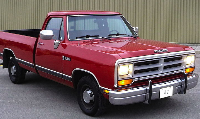
Thanks lol my uncle was the original owner and I bought it off him in 2000 for a grand. The guy at the local autozone told me there's no way in hell a small block dodge could have that many miles unrebuilt lol hes the one that also told me about 20w50 being bad for the engine. I'm soon goin to camp leJeune north Carolina and I plan on making the drive lol. Its 2500 miles from here or 3100 from home if I take leave first. Ill get ya guys posted on the trip.

Registered User
Joined: Apr 2009
Posts: 48
Likes: 0
From: clarks summit Pa

I have a 1976 w200 with a 360 Auto,
Been running 20-50 in the summer and 10-30 in the winter
Switched from Castrol to Kendall at about 70,000 miles
I live in NE Pennsylvania.
When i put in the Crane RV Cam, the stock cam had hardly any wear at 60,000 miles. Truck just turned 96,000 last week.
Been running 20-50 in the summer and 10-30 in the winter
Switched from Castrol to Kendall at about 70,000 miles
I live in NE Pennsylvania.
When i put in the Crane RV Cam, the stock cam had hardly any wear at 60,000 miles. Truck just turned 96,000 last week.

