


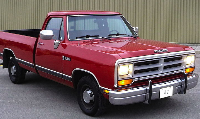
Brake line wishful thinking


Thread Starter
|
Professional


Joined: Oct 2019
Posts: 229
Likes: 17
From: waiting for the space ship
 Brake line wishful thinking
Avoid it. If one line is rotted and leaking, and you replace it, the rest of the corroded lines will soon weep or burst as well.
That is my sad song. Save yourself some fluid and time, and just do them all. Since I did the rear wheel cylinders and the pads are iffy, might as well do the calipers while I am there.
The extra $100 won't say hello to an ER.
That is my sad song. Save yourself some fluid and time, and just do them all. Since I did the rear wheel cylinders and the pads are iffy, might as well do the calipers while I am there.
The extra $100 won't say hello to an ER.

Grand Champion


Joined: May 2019
Posts: 5,146
Likes: 721
From: S.W. Indiana
Avoid it. If one line is rotted and leaking, and you replace it, the rest of the corroded lines will soon weep or burst as well.
That is my sad song. Save yourself some fluid and time, and just do them all. Since I did the rear wheel cylinders and the pads are iffy, might as well do the calipers while I am there.
The extra $100 won't say hello to an ER.
That is my sad song. Save yourself some fluid and time, and just do them all. Since I did the rear wheel cylinders and the pads are iffy, might as well do the calipers while I am there.
The extra $100 won't say hello to an ER.
Never skimp in brakes. Replace the rubber hoses, all three of them, if any develop cracks from dry rot. It's a lot easier on the hemorrhoids if you don't suck everything closed when the brake fail at speed.
Thread Starter
|
Professional
Joined: Oct 2019
Posts: 229
Likes: 17
From: waiting for the space ship
upgrade
A
after finishing up a 25' coil of steel 3/16 line went to try the nickel copper line. It is softer, flares more easily, seems to give a better flare and bends better. It;s 38 as opposed to 19 a coil, but I believe will save enough time to make it worthwhile.
Still for a keeper prebent stainless is the way to go.
after finishing up a 25' coil of steel 3/16 line went to try the nickel copper line. It is softer, flares more easily, seems to give a better flare and bends better. It;s 38 as opposed to 19 a coil, but I believe will save enough time to make it worthwhile.
Still for a keeper prebent stainless is the way to go.
Grand Champion
Joined: May 2019
Posts: 5,146
Likes: 721
From: S.W. Indiana
A
after finishing up a 25' coil of steel 3/16 line went to try the nickel copper line. It is softer, flares more easily, seems to give a better flare and bends better. It;s 38 as opposed to 19 a coil, but I believe will save enough time to make it worthwhile.
Still for a keeper prebent stainless is the way to go.
after finishing up a 25' coil of steel 3/16 line went to try the nickel copper line. It is softer, flares more easily, seems to give a better flare and bends better. It;s 38 as opposed to 19 a coil, but I believe will save enough time to make it worthwhile.
Still for a keeper prebent stainless is the way to go.
I'd be leery of using copper lines. Yes, they are softer and easier to work. They are also softer and easier to fail. They are NOT D.O.T. legal. Maybe you're using a stronger alloy, but I've never seen street legal copper lines.
Thread Starter
|
Professional
Joined: Oct 2019
Posts: 229
Likes: 17
From: waiting for the space ship
It's a copper nickel alloy, www.surrauto.com made in the USA to SAE automotive standards. Lifetime warranty. I believe the alloy was first developed in Sweden by Volvo and Saab. You are correct in that copper is prohibited for brake line use.
From the State Police in Maryland
Vehicle Safety Inspection Program Bulletin 6601 Ritchie Highway, N.E., Glen Burnie Maryland 21062 410-768-7388 Web Site: www.mdsp.maryland.gov/ASED Page 1 0f 1ASED-007 Date: January 01, 2019Bulletin: All Inspection Station PersonnelFrom:Automotive Safety Enforcement DivisionRE:Copper/Nickel Brake LineTo clarify the regulations for brake lines, Copper-Nickel automotive brake line is permitted, and meets vehicle equipment regulations for vehicle inspection criteria. This material is being used by OEMs in new vehicle manufacture and replacement equipment manufacture. and are permitted as replacement. Non-automotive grade or solid copper is not permitted. As a reminder, compression fittings are not permitted on hydraulic brake lines.
My counterman at Federated recommended it to me. Build a relationship with those that can help you. Steve in Laurel Md.
From the State Police in Maryland
Vehicle Safety Inspection Program Bulletin 6601 Ritchie Highway, N.E., Glen Burnie Maryland 21062 410-768-7388 Web Site: www.mdsp.maryland.gov/ASED Page 1 0f 1ASED-007 Date: January 01, 2019Bulletin: All Inspection Station PersonnelFrom:Automotive Safety Enforcement DivisionRE:Copper/Nickel Brake LineTo clarify the regulations for brake lines, Copper-Nickel automotive brake line is permitted, and meets vehicle equipment regulations for vehicle inspection criteria. This material is being used by OEMs in new vehicle manufacture and replacement equipment manufacture. and are permitted as replacement. Non-automotive grade or solid copper is not permitted. As a reminder, compression fittings are not permitted on hydraulic brake lines.
My counterman at Federated recommended it to me. Build a relationship with those that can help you. Steve in Laurel Md.
Last edited by Xombi; Oct 16, 2020 at 11:24 PM.
Grand Champion
Joined: May 2019
Posts: 5,146
Likes: 721
From: S.W. Indiana
It's a copper nickel alloy, www.surrauto.com made in the USA to SAE automotive standards. Lifetime warranty. I believe the alloy was first developed in Sweden by Volvo and Saab. You are correct in that copper is prohibited for brake line use.
From the State Police in Maryland
Vehicle Safety Inspection Program Bulletin 6601 Ritchie Highway, N.E., Glen Burnie Maryland 21062 410-768-7388 Web Site: www.mdsp.maryland.gov/ASED Page 1 0f 1ASED-007 Date: January 01, 2019Bulletin: All Inspection Station PersonnelFrom:Automotive Safety Enforcement DivisionRE:Copper/Nickel Brake LineTo clarify the regulations for brake lines, Copper-Nickel automotive brake line is permitted, and meets vehicle equipment regulations for vehicle inspection criteria. This material is being used by OEMs in new vehicle manufacture and replacement equipment manufacture. and are permitted as replacement. Non-automotive grade or solid copper is not permitted. As a reminder, compression fittings are not permitted on hydraulic brake lines.
My counterman at Federated recommended it to me. Build a relationship with those that can help you. Steve in Laurel Md.
From the State Police in Maryland
Vehicle Safety Inspection Program Bulletin 6601 Ritchie Highway, N.E., Glen Burnie Maryland 21062 410-768-7388 Web Site: www.mdsp.maryland.gov/ASED Page 1 0f 1ASED-007 Date: January 01, 2019Bulletin: All Inspection Station PersonnelFrom:Automotive Safety Enforcement DivisionRE:Copper/Nickel Brake LineTo clarify the regulations for brake lines, Copper-Nickel automotive brake line is permitted, and meets vehicle equipment regulations for vehicle inspection criteria. This material is being used by OEMs in new vehicle manufacture and replacement equipment manufacture. and are permitted as replacement. Non-automotive grade or solid copper is not permitted. As a reminder, compression fittings are not permitted on hydraulic brake lines.
My counterman at Federated recommended it to me. Build a relationship with those that can help you. Steve in Laurel Md.
I closed shop 35 years ago so I guess things have changed slightly. Perhaps a copper alloy is more rust resistant. I'll stay with steel and my hydraulic tube flare tool.

Grand Champion


Joined: Feb 2015
Posts: 7,435
Likes: 578
Still for a keeper prebent stainless is the way to go.
https://www.sstubes.com/
Trending Topics

Registered User
Joined: Oct 2020
Posts: 4
Likes: 0
From: Louisiana
Line Size
A
after finishing up a 25' coil of steel 3/16 line went to try the nickel copper line. It is softer, flares more easily, seems to give a better flare and bends better. It;s 38 as opposed to 19 a coil, but I believe will save enough time to make it worthwhile.
Still for a keeper prebent stainless is the way to go.
after finishing up a 25' coil of steel 3/16 line went to try the nickel copper line. It is softer, flares more easily, seems to give a better flare and bends better. It;s 38 as opposed to 19 a coil, but I believe will save enough time to make it worthwhile.
Still for a keeper prebent stainless is the way to go.
for a 1974 d100, are the back brake lines 3/16 or 3/8? The fitting on the Y says 3/8 but is that just the fitting size or the actual line size? Anyone know where I can find pre-bent to fit? I feel I have searched everywhere and can’t find anything.
Last edited by R.J. Louviere; Oct 28, 2020 at 01:56 AM. Reason: Add on
Thread Starter
|
Professional
Joined: Oct 2019
Posts: 229
Likes: 17
From: waiting for the space ship
Mine were 3/16. 3/8 is huge for brake lines. If the rear is original and rotted and the rest of the lines are nasty looking well just bite the bullet and get a pre-bent set. The lines going to the proportioning valve are easy to kink if not careful.
Treat your brakes like you are riding your children in the truck. Examine calipers while at it, and I am guessing you did the rear wheel cylinders.
Check the fuel lines as well All that steel rots at roughly the same rate. If you drop the tank it's easier to secure the rear brake lines, and replace rear fuel line rubber. Flat ratchet on the fuel tank strap after loose juicing it is a good plan.
Treat your brakes like you are riding your children in the truck. Examine calipers while at it, and I am guessing you did the rear wheel cylinders.
Check the fuel lines as well All that steel rots at roughly the same rate. If you drop the tank it's easier to secure the rear brake lines, and replace rear fuel line rubber. Flat ratchet on the fuel tank strap after loose juicing it is a good plan.
Registered User
Joined: Oct 2020
Posts: 4
Likes: 0
From: Louisiana
Don’t think they are rotten
Mine were 3/16. 3/8 is huge for brake lines. If the rear is original and rotted and the rest of the lines are nasty looking well just bite the bullet and get a pre-bent set. The lines going to the proportioning valve are easy to kink if not careful.
Treat your brakes like you are riding your children in the truck. Examine calipers while at it, and I am guessing you did the rear wheel cylinders.
Check the fuel lines as well All that steel rots at roughly the same rate. If you drop the tank it's easier to secure the rear brake lines, and replace rear fuel line rubber. Flat ratchet on the fuel tank strap after loose juicing it is a good plan.
Treat your brakes like you are riding your children in the truck. Examine calipers while at it, and I am guessing you did the rear wheel cylinders.
Check the fuel lines as well All that steel rots at roughly the same rate. If you drop the tank it's easier to secure the rear brake lines, and replace rear fuel line rubber. Flat ratchet on the fuel tank strap after loose juicing it is a good plan.
It didn’t blow out, only started leaking at the Y. Does anyone know where I can find a pre bent set? 74 D100 single cab, disc on front drum on rear. We changed the front disc and I have everything to change the rear drum.