


**Prevent Your Hemi From Throwing Rods**


Thread Starter
|
Captain
Joined: Jul 2012
Posts: 561
Likes: 3
 **Prevent Your Hemi From Throwing Rods**
I have done quite a bit of thinking & research on this subject as well as my own experience while only having my Durango for a week!.
I purposely set out to buy a Durango with a blown motor as a cheap way to get a beautiful vehicle as I do engine swaps all the time and can get a $10,000 vehicle for a 1/4 of that. Anway, being a life long Mopar fan and having a Dad who is all Mopar (owned a 1968 GTX with a 440 4 speed since he was 18) obviously we LOVE Hemi Engines. I've collected early Hemi engines (50's Hemi's) & parts since I was 12 (I'm now 26) and the goal is always to get a Hemi period, or hemi vehicle be it a pipe dream 426, 50s hemi or new Hemi. Point is we're Mopar nuts and proud of it, so when we seen an alarming number of 03-06 Durango's with Hemi's that had rods snap off we WERE WORRIED and crushed that Mopar may have finally delivered a product we could not stand behind when those pesky Ford boys start running their mouths.
So being in shock about the whole thing I set out to find a reason why these state of the art engines that were featured on the Worlds 10 best engines many times were throwing rods. Came up with a common theme in researching what happening to these poor engines leading up to throwing rods...WATER Hydro Locking!. The common symptom- "went thru a car wash and it started to run poorly & 2 days later started it up and it threw a rod before even putting it into gear!". Or "Runs like crap when it rains, threw a rod shortly after". Stories like this are very common in regards to the 5.7 hemi...Scary $hit!. So just a day before pulling the trigger on an awesome Durango, I had to find out why these engines were failing to decide if even investing in a Hemi Durango was even worth it, and as luck would have it I found a little bit of promise and restoration in my faith in New Mopars, the cowl leaks water right on top of the intake manifold and it pools up on the intake and can saturate the foam under the intake and the engine will suck that water vapor in via leaky/worn intake gaskets and hydrolock thus causing the engine to put immense stress on the rods trying to compress water (which does not compress) and they snap. Happy with that I bought my Durango last week and researched ways to prevent it. I then felt a little sick because I found out that there was a cowl update to divert most of the run off and my Durango had that upgraded cowl & still threw a rod prior to me buying it.
The first thing I did when I got my Durango home, were the first things anyone who bought a new car would do...I WASHED IT!. I then decided to open the hood & found out that I do indeed have the upgraded cowl, but also that there was still quite a bit of water on & around the intake manifold from my current water hose washing... The source of the leak turned out to be from the windshield wiper arm holes! So to recap, water is still soaking into that foam sponge under the intake manifold and even with the better design cowl they are still ticking time bombs!
I then had the idea to be proactive about the whole thing, but I thought..."engines are always exposed to rain water & car washes everyday why do they not hydro lock?". The answer is simple, the cowl funnels water onto the intake manifold which itself sits on top of a foam piece (that my guess cushions the plastic intake from engine vibrations) it acts like a sponge trapping moisture that can easily be sucked up around the intake if it had worn gaskets. I decided that my new Hemi prior to me even putting it in the Durango will receive new intake gaskets BUT they will be installed with a bead of copper permatex around each port as an extra layer of protection even if the cowl leaks.
So it appears 3 things are causing this problem to happen...
Bad Cowl that drips water all over the engine.
A foam "sponge" under the intake manifold that traps all the rain/water and leaves a surprise for the owner days after the water was acquired.
Finally, bad intake manifold gaskets that flatten out and fail to seal completely over time allowing that water to be sucked in.
This theory is further validated by most Hemi's that throw rods commonly throwing their rear 4 cylinders rods... Since engines dip toward the rear for a more favorable driveshaft angle it would make sense as to why these are the cylinders most commonly throwing the rods.
In closing, this is information that EVERY 5.7 Hemi owner should check out and be proactive about, it just might save that wonderful engineering Marvel of a Hemi the pain of a thrown rod.
I purposely set out to buy a Durango with a blown motor as a cheap way to get a beautiful vehicle as I do engine swaps all the time and can get a $10,000 vehicle for a 1/4 of that. Anway, being a life long Mopar fan and having a Dad who is all Mopar (owned a 1968 GTX with a 440 4 speed since he was 18) obviously we LOVE Hemi Engines. I've collected early Hemi engines (50's Hemi's) & parts since I was 12 (I'm now 26) and the goal is always to get a Hemi period, or hemi vehicle be it a pipe dream 426, 50s hemi or new Hemi. Point is we're Mopar nuts and proud of it, so when we seen an alarming number of 03-06 Durango's with Hemi's that had rods snap off we WERE WORRIED and crushed that Mopar may have finally delivered a product we could not stand behind when those pesky Ford boys start running their mouths.
So being in shock about the whole thing I set out to find a reason why these state of the art engines that were featured on the Worlds 10 best engines many times were throwing rods. Came up with a common theme in researching what happening to these poor engines leading up to throwing rods...WATER Hydro Locking!. The common symptom- "went thru a car wash and it started to run poorly & 2 days later started it up and it threw a rod before even putting it into gear!". Or "Runs like crap when it rains, threw a rod shortly after". Stories like this are very common in regards to the 5.7 hemi...Scary $hit!. So just a day before pulling the trigger on an awesome Durango, I had to find out why these engines were failing to decide if even investing in a Hemi Durango was even worth it, and as luck would have it I found a little bit of promise and restoration in my faith in New Mopars, the cowl leaks water right on top of the intake manifold and it pools up on the intake and can saturate the foam under the intake and the engine will suck that water vapor in via leaky/worn intake gaskets and hydrolock thus causing the engine to put immense stress on the rods trying to compress water (which does not compress) and they snap. Happy with that I bought my Durango last week and researched ways to prevent it. I then felt a little sick because I found out that there was a cowl update to divert most of the run off and my Durango had that upgraded cowl & still threw a rod prior to me buying it.
The first thing I did when I got my Durango home, were the first things anyone who bought a new car would do...I WASHED IT!. I then decided to open the hood & found out that I do indeed have the upgraded cowl, but also that there was still quite a bit of water on & around the intake manifold from my current water hose washing... The source of the leak turned out to be from the windshield wiper arm holes! So to recap, water is still soaking into that foam sponge under the intake manifold and even with the better design cowl they are still ticking time bombs!
I then had the idea to be proactive about the whole thing, but I thought..."engines are always exposed to rain water & car washes everyday why do they not hydro lock?". The answer is simple, the cowl funnels water onto the intake manifold which itself sits on top of a foam piece (that my guess cushions the plastic intake from engine vibrations) it acts like a sponge trapping moisture that can easily be sucked up around the intake if it had worn gaskets. I decided that my new Hemi prior to me even putting it in the Durango will receive new intake gaskets BUT they will be installed with a bead of copper permatex around each port as an extra layer of protection even if the cowl leaks.
So it appears 3 things are causing this problem to happen...
Bad Cowl that drips water all over the engine.
A foam "sponge" under the intake manifold that traps all the rain/water and leaves a surprise for the owner days after the water was acquired.
Finally, bad intake manifold gaskets that flatten out and fail to seal completely over time allowing that water to be sucked in.
This theory is further validated by most Hemi's that throw rods commonly throwing their rear 4 cylinders rods... Since engines dip toward the rear for a more favorable driveshaft angle it would make sense as to why these are the cylinders most commonly throwing the rods.
In closing, this is information that EVERY 5.7 Hemi owner should check out and be proactive about, it just might save that wonderful engineering Marvel of a Hemi the pain of a thrown rod.
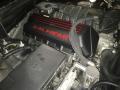
vaffanculo
Joined: Oct 2008
Posts: 7,954
Likes: 2
From: Pittsburgh, PA
It must have been resolved by 2007. I owned a 5.7 liter hemi Durango for close to seven years and it would sit outside for the most of spring, all of summer and most of fall months. I have never had a problem with the cowl of rough starting. I have my 1969 Coronet R/T in the garage for those warmer months until it goes into my warehouse for its winters nap.

Registered User
Joined: Sep 2013
Posts: 1
Likes: 0
From: Jacksonville, Florida
I just replaced my 2004 Durango 5.7L engine with a Reman engine. The engine had 114k miles and would run rough with heavy rain then would smooth out when rain stopped. 2 pistons and rods shattered. I think it hydrolocked due to sucking water in the intake. I will test with a water hose and heavy rain to see if this was the problem and let everyone know. I spoke to my mechanic who installed the reman engine and he said the head gasket blew and dumped coolant into 2 cylinders and hydro-locked then the piston shattered and broke the rods on those 2 cylinders. The mechanic also said the drain holes under the plastic cowl were clogged. I haven't replaced the cowl yet, but the engine runs great in the rain now. I don't know if cleaning out the cowl drains stopped it from running rough in the rain or having a properly sealed intake manifold. When it ran rough in the rain before the engine blew I felt that maybe the plug wires or the coils were grounding out from the rain, but we haven't changed either of them. My advice to anyone with this engine is to have the intake gasket tested with a smoke leak tester and clean out cowl drain tubes.
Last edited by joea16; Oct 8, 2013 at 06:02 PM.

Registered User
Joined: Oct 2013
Posts: 17
Likes: 1
vary nice post ! i have an 04 with a hemi and everything u mentioned happened to it . when it would rain it ran like crap and when things went bad it was one of the rear cyls that went . not sure if the cowl is updated or not but i will certainly be looking at that when i swap the engine out . also the engine that goes in will have the new intake gaskets too .


Amateur
Joined: Oct 2013
Posts: 35
Likes: 1
Just bought an 05 hemi 4x4. Is there anything I can do without changing the intake gaskets as a preventative measure?
Trending Topics

Registered User
Joined: Oct 2013
Posts: 2
Likes: 0
RE: DannyD
I think you are ok...I believe the problem lies with the 2004 hemi only
Thread Starter
|
Captain
Joined: Jul 2012
Posts: 561
Likes: 3
Unfortunately it seems to go to 04-06 because 07+ had both different intakes (depending on the application) and the cowl redesigned to divert water better.
The intake is easy enough to take off I'd just get new gaskets & copper permatex the gasket slots in the intake so that when you stick the new gaskets in they seep permatex on each side of the gasket to create a triple layer protection against this sucking up water issue.
The redesigned cowl isn't very much of a security blanket for this issue as the leaks can still come through the wiper holes & leak on top of the engine. Permatexing the intake ensures that regardless if the engine gets wet (unavoidable issue!) it will still seal.
Just a couple minute rinse with the hose on my Durango and I noticed a couple small pools of water directly on the head & intake mating surfaces exactly over where the common cylinders to throw rods are. Cylinders 6 & 8.
The intake is easy enough to take off I'd just get new gaskets & copper permatex the gasket slots in the intake so that when you stick the new gaskets in they seep permatex on each side of the gasket to create a triple layer protection against this sucking up water issue.
The redesigned cowl isn't very much of a security blanket for this issue as the leaks can still come through the wiper holes & leak on top of the engine. Permatexing the intake ensures that regardless if the engine gets wet (unavoidable issue!) it will still seal.
Just a couple minute rinse with the hose on my Durango and I noticed a couple small pools of water directly on the head & intake mating surfaces exactly over where the common cylinders to throw rods are. Cylinders 6 & 8.