


The beauty of aftermarket gauges


Thread Starter
|
Banned
Joined: Apr 2009
Posts: 2,816
Likes: 4
From: Los Angeles, CA
 The beauty of aftermarket gauges
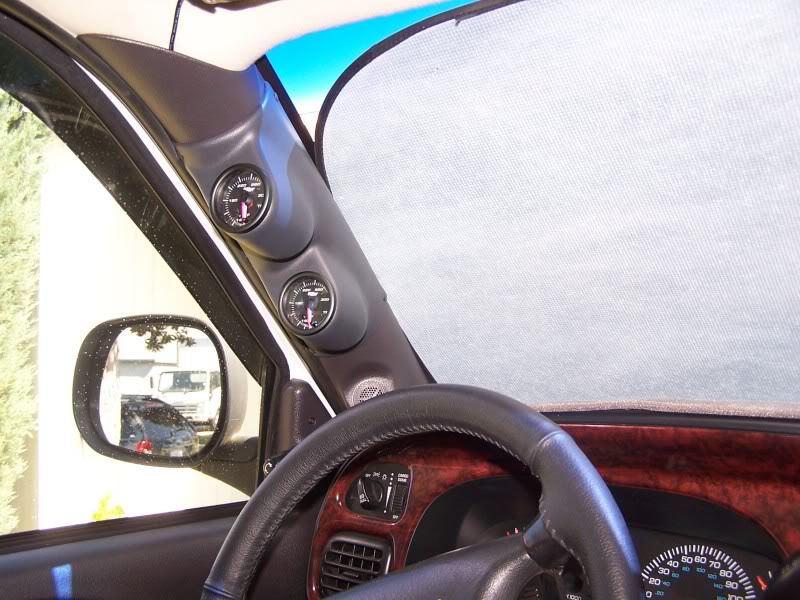
Well, it's been about two weeks that I've had both my tranny oil and engine oil temperature gauges hooked up and I've noticed some interesting things. First off, both sending units are well submerged in their respective fluids. For the tranny I welded a bung in the pan at the rear so airflow doesn't hit it. It protrudes well into the pan so the entire bulb is in the fluid. For the oil sender I used a billet aluminum oil filter adapter. Again, the bulb protrudes directly into the oil stream.
My truck has always run a bit on the cool side. The factory temp gauge rarely gets as high as 180 and usually hovers right about a sliver to either side of that one spot. I once saw it come close to the 210 mark, but I was hauling about a 7k load in the bed and on a trailer and it only did it when I was stopped and idling for about 10 minutes with the A/C on.
It has been hot as hell (literally) here in Socal for the past week (temps above 100) and I've been doing a lot of driving around in it. What I've noticed is that even though the stock gauge barely moves, the aftermarket gauges can fluctuate as much as 10-25 degrees. Obviously they are more responsive and accurate, but it is so much nicer to see a more reflective picture of what's going on temperature-wise than what the stock gauge can convey. The tranny fluid is usually 10-20 degrees cooler than the engine oil, but in traffic, climbing a grade or pulling a trailer it comes close to matching the engine oil temp. Still, I have yet to see either one reach over 200 under any situation, even with the A/C on and as hot as it has been lately.
I highly recommend adding one or both of these gauges, especially if you tow. The peace of mind I now have that I can better monitor what's going on under the hood makes driving more enjoyable. The stock coolant temp gauge is fine, but it really isn't designed to respond like an aftermarket gauge. I think by the time it alerted me to a problem it might be too late.
Just wanted to share with you guys.
My truck has always run a bit on the cool side. The factory temp gauge rarely gets as high as 180 and usually hovers right about a sliver to either side of that one spot. I once saw it come close to the 210 mark, but I was hauling about a 7k load in the bed and on a trailer and it only did it when I was stopped and idling for about 10 minutes with the A/C on.
It has been hot as hell (literally) here in Socal for the past week (temps above 100) and I've been doing a lot of driving around in it. What I've noticed is that even though the stock gauge barely moves, the aftermarket gauges can fluctuate as much as 10-25 degrees. Obviously they are more responsive and accurate, but it is so much nicer to see a more reflective picture of what's going on temperature-wise than what the stock gauge can convey. The tranny fluid is usually 10-20 degrees cooler than the engine oil, but in traffic, climbing a grade or pulling a trailer it comes close to matching the engine oil temp. Still, I have yet to see either one reach over 200 under any situation, even with the A/C on and as hot as it has been lately.
I highly recommend adding one or both of these gauges, especially if you tow. The peace of mind I now have that I can better monitor what's going on under the hood makes driving more enjoyable. The stock coolant temp gauge is fine, but it really isn't designed to respond like an aftermarket gauge. I think by the time it alerted me to a problem it might be too late.
Just wanted to share with you guys.


Thread Starter
|
Banned
Joined: Apr 2009
Posts: 2,816
Likes: 4
From: Los Angeles, CA
Trending Topics
Ain't that the truth. Do you run a FP gauge in the cab?


