


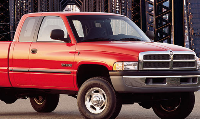
Ball joint torque on a '98 Cummins


Thread Starter
|
Rookie
Joined: Apr 2007
Posts: 65
Likes: 2
 Ball joint torque on a '98 Cummins
Along with a few other front-end maintenance tasks, I'm replacing the driver
side ball joints in my '98 2500 Cummins with a Dana 60 front axle. It has proven to be a frustrating job since I've never done a ball joint job before in my life on ANY vehicle,
let alone a heavy one such as this. At this point the new ball joints are pressed into the knuckle and it's ready to be torqued to the axle. My question is just how critical it is to get the proper torque specs on them? Chilton's says to tighten the lower to 35 lbs, then the upper to 70 (I think these numbers are correct, from memory) and then re-torque the lower to 160-170. I'm using an appropriately sized wrench to tighten them, not having
either the right socket or 1/2" drive torque wrench. A mechanic friend of mine (who is generally a very good mechanic, having managed a dealer's repair shop for some time) told me it's not that important to hit those numbers; rather, basically torque the top one until it feels right, then crank the bottom one as tight as possible. Being a newbie at this particular job I REALLY don't want to do it again next year and am looking for some input from you guys so that something doesn't get screwed up.
This truck has almost 280,000 miles (the last 75,000 of them being mine) and amazingly enough, both ball joints appear to be originals since they don't have zerks. Hopefully after getting these, the tie-rod ends and the trackbar done (the trackbar got a Luke's Link) the truck will be drivable again instead of "herd-able".
All help is greatly appreciated.
JC
side ball joints in my '98 2500 Cummins with a Dana 60 front axle. It has proven to be a frustrating job since I've never done a ball joint job before in my life on ANY vehicle,
let alone a heavy one such as this. At this point the new ball joints are pressed into the knuckle and it's ready to be torqued to the axle. My question is just how critical it is to get the proper torque specs on them? Chilton's says to tighten the lower to 35 lbs, then the upper to 70 (I think these numbers are correct, from memory) and then re-torque the lower to 160-170. I'm using an appropriately sized wrench to tighten them, not having
either the right socket or 1/2" drive torque wrench. A mechanic friend of mine (who is generally a very good mechanic, having managed a dealer's repair shop for some time) told me it's not that important to hit those numbers; rather, basically torque the top one until it feels right, then crank the bottom one as tight as possible. Being a newbie at this particular job I REALLY don't want to do it again next year and am looking for some input from you guys so that something doesn't get screwed up.
This truck has almost 280,000 miles (the last 75,000 of them being mine) and amazingly enough, both ball joints appear to be originals since they don't have zerks. Hopefully after getting these, the tie-rod ends and the trackbar done (the trackbar got a Luke's Link) the truck will be drivable again instead of "herd-able".
All help is greatly appreciated.
JC


Professional
Joined: Jan 2009
Posts: 134
Likes: 0
From: Delaware
I have always heard tighten the hell out of them, I have 2 friends that are mechanics and they put them on with an air gun every time its accesible if not they use a breaker bar and tighten the HELL out of them..
Then again the one guy only torque's wheels and nothing else not head bolts, intake bolts, nothing!! I personnally don't torque anything either except wheels.. Never any issues..
By the way what brand ball joints did you use?
Then again the one guy only torque's wheels and nothing else not head bolts, intake bolts, nothing!! I personnally don't torque anything either except wheels.. Never any issues..
By the way what brand ball joints did you use?