


comp cam install


Thread Starter
|
Professional
Joined: May 2011
Posts: 104
Likes: 1
 comp cam install
I just wanted to pass on some info on the replacement comp cam for a 5.9
First off, the cam lift is .070 higher than the stock and evreything else considered,is fairly close in duration and opening and closing degrees of the valves.
New springs are required, I personally opted for the lunati's (numbers can be provided for those intrested). New 8 deg locks and retainers...I went with mopar perf.
I also went with new mopar roller lifters, and increased the pushrod length .050 to stop the lifter chatter. I used a set of chromoly trick flow pushrods.
The real need to know info is the timing chain and degreeing of the cam. Chrysler claims that they didn't change the key-way placement on the timing gears,but I don't buy it. The original cam was degree'd at 109. comp reccomends 108 for their cam. When I degree'd the cam on the new timing chain on the original cam straight up,it dropped the install 5 deg to 104. So when people say to jump the 4 deg advance on the new chain, your really just installing the cam back to it's original installed degree.No performance gained.
Jumping the advanced key with the comp cam only yeilded me 106 deg, so I may have to advance the crank further yet. The thing that stinks about that,is that mopar discontinued their offset key-ways for the cam giving you a range of +/-5 deg. Some investigation led me to cloyes having a 9 key crank sprocket on one of their timing sets,which will be the way I have to go to get the installed height I need or want.
Anyone doing a cam swap or new chain,be sure to degree the cam before and after removing the old cam and or replacing the chain to make sure your installed where you think you are. If not,a simple chain set replacement will leave you thinking you lost alot of horsepower and torque.
Advancing the crank increases the torque and extends the rpm range.
Retarding the crank increases the torque on the bottom end of the rpm range and lowers the overall range. This leaves a massive hole in your mid-range torque,say between 2K and 3K rpm, where you really need the power for towing and or hauling.
A little personal info......
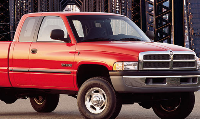
I have 2001 2500HD (1 ton suspension) 5.9l with a 46re trans. I do alot of towing at roughly 15,000lbs combined weight. The truck has just shy of 200,000 miles.
Overall, I'm very impressed with the comp cam.Better fuel mileage and a noticeable power, and torque gain. I may end up installing the cam at 110 deg,but time will tell. The motor is all stock otherwise,with 150 lb cranking compression across the board. 4-hole ford injectors,KN air filter,and my own custom 3 inch exhaust out the back with magnaflow cat and muffler. I also relocated the air intake temp sensor to below the throttle body in the center of the manifold in a casting blank for a vacuum port. This effectively drops the intake temp reading roughly 20-30 degrees and won't throw a check engine light due to base cold temp remaining the same as the ect. This increased mileage about 1 mpg,by richening the mixture slightly.Factory lean specs are too lean, requireing higher rpm to compensate. That means more downshifts and more gas consumption.
Well anyway, just passing on some info.
First off, the cam lift is .070 higher than the stock and evreything else considered,is fairly close in duration and opening and closing degrees of the valves.
New springs are required, I personally opted for the lunati's (numbers can be provided for those intrested). New 8 deg locks and retainers...I went with mopar perf.
I also went with new mopar roller lifters, and increased the pushrod length .050 to stop the lifter chatter. I used a set of chromoly trick flow pushrods.
The real need to know info is the timing chain and degreeing of the cam. Chrysler claims that they didn't change the key-way placement on the timing gears,but I don't buy it. The original cam was degree'd at 109. comp reccomends 108 for their cam. When I degree'd the cam on the new timing chain on the original cam straight up,it dropped the install 5 deg to 104. So when people say to jump the 4 deg advance on the new chain, your really just installing the cam back to it's original installed degree.No performance gained.
Jumping the advanced key with the comp cam only yeilded me 106 deg, so I may have to advance the crank further yet. The thing that stinks about that,is that mopar discontinued their offset key-ways for the cam giving you a range of +/-5 deg. Some investigation led me to cloyes having a 9 key crank sprocket on one of their timing sets,which will be the way I have to go to get the installed height I need or want.
Anyone doing a cam swap or new chain,be sure to degree the cam before and after removing the old cam and or replacing the chain to make sure your installed where you think you are. If not,a simple chain set replacement will leave you thinking you lost alot of horsepower and torque.
Advancing the crank increases the torque and extends the rpm range.
Retarding the crank increases the torque on the bottom end of the rpm range and lowers the overall range. This leaves a massive hole in your mid-range torque,say between 2K and 3K rpm, where you really need the power for towing and or hauling.
A little personal info......
I have 2001 2500HD (1 ton suspension) 5.9l with a 46re trans. I do alot of towing at roughly 15,000lbs combined weight. The truck has just shy of 200,000 miles.
Overall, I'm very impressed with the comp cam.Better fuel mileage and a noticeable power, and torque gain. I may end up installing the cam at 110 deg,but time will tell. The motor is all stock otherwise,with 150 lb cranking compression across the board. 4-hole ford injectors,KN air filter,and my own custom 3 inch exhaust out the back with magnaflow cat and muffler. I also relocated the air intake temp sensor to below the throttle body in the center of the manifold in a casting blank for a vacuum port. This effectively drops the intake temp reading roughly 20-30 degrees and won't throw a check engine light due to base cold temp remaining the same as the ect. This increased mileage about 1 mpg,by richening the mixture slightly.Factory lean specs are too lean, requireing higher rpm to compensate. That means more downshifts and more gas consumption.
Well anyway, just passing on some info.


Thread Starter
|
Professional
Joined: May 2011
Posts: 104
Likes: 1
There's a tiny lope when the engine is cold, but once it's warmed up you wouldn't hardly notice a difference.
As for the 46RE, It was rebuilt by the factory around 89K for the first owner. I just rebuilt it personally this last fall. It was starting to slip a little in second,which showed, and the torque convertor was starting to feel mushy.
I upgraded the trans with red alto clutches and kolene plates. Replaced the front drum, increasing from 3 clutches to 7. Over drive clutches were increased as well as the direct drive clutches and spring. Fairbanks shift kit, along with upgraded servo pistons and acumulator piston. Carbon fiber bands,and a 5:1 front band apply.I also went with a 1800 stall convertor, which varies from 18-2400 depending on load.
I wish I had done the trans years ago. It works flawlesly now. No slip,firm shifts,cooler temps. Even knocked down my rpm by 300 while in OD (still trying to figure that one out).
I do have to say that this truck has defied the odds of normal, I'm still on the original wheelbearings,and just replaced the original ball-joints about 2 yrs ago. Although it did require me putting a new gear set in the rear, due to a pinion bearing failure.I haven't even replaced any u-joints yet.
As for the 46RE, It was rebuilt by the factory around 89K for the first owner. I just rebuilt it personally this last fall. It was starting to slip a little in second,which showed, and the torque convertor was starting to feel mushy.
I upgraded the trans with red alto clutches and kolene plates. Replaced the front drum, increasing from 3 clutches to 7. Over drive clutches were increased as well as the direct drive clutches and spring. Fairbanks shift kit, along with upgraded servo pistons and acumulator piston. Carbon fiber bands,and a 5:1 front band apply.I also went with a 1800 stall convertor, which varies from 18-2400 depending on load.
I wish I had done the trans years ago. It works flawlesly now. No slip,firm shifts,cooler temps. Even knocked down my rpm by 300 while in OD (still trying to figure that one out).
I do have to say that this truck has defied the odds of normal, I'm still on the original wheelbearings,and just replaced the original ball-joints about 2 yrs ago. Although it did require me putting a new gear set in the rear, due to a pinion bearing failure.I haven't even replaced any u-joints yet.

Legend
Joined: Jul 2007
Posts: 7,843
Likes: 13
From: DFW, Texas
Might want to do a bit of research on patc and aps precision about that 5:1 apply lever. A few companies that build performance transmissions for 46re applications don't recommend the 5:1 apply lever as it causes premature drum and band wear. That particular lever is for diesel application, not gas trans use.

Champion
Joined: Apr 2007
Posts: 2,831
Likes: 1
From: Miami, Fl
Ok I got a question for you what springs did you get from lunati and was any head work required.....I called lunati and they said the heads would need some work done for the springs to seat properly
Trending Topics
Thread Starter
|
Professional
Joined: May 2011
Posts: 104
Likes: 1
Might want to do a bit of research on patc and aps precision about that 5:1 apply lever. A few companies that build performance transmissions for 46re applications don't recommend the 5:1 apply lever as it causes premature drum and band wear. That particular lever is for diesel application, not gas trans use.
You may be correct on that, and I more than likely have the 4.3:1 arm considering I consulted and bought from Patc. Viper 3 kit along with some extras.
Thread Starter
|
Professional
Joined: May 2011
Posts: 104
Likes: 1
As far as fitting is concerened, I believe the OD of the spring is 1.043 and the seat is about 1.031. The spring measured an actual 1.038. The only problem is where the seat is shouldered on the high side, but rotating the spring to change the starting point of the inital coil allows it to seat.
I wasn't looking to pull heads this time around,and if I really had to,I would have used a shim to decrease installed height about .010, which would allow them to install without any shoulder contact. The base of the spring doesn't really move anyway. I don't even have any scuffing on the bottom coil of any. You'll find there's really only 2 springs per side that are a little snug.
As long as your not building it for high rpm and higher than .500 lift at which point you'll need the guides milled anyway, you can use these springs without machining the seats. They really only need a touch-up on the width of the seat as long as you keep the stock installed height.