


What Oil to Use


Thread Starter
|
Rookie
Joined: Dec 2004
Posts: 74
Likes: 0
From:
 What Oil to Use
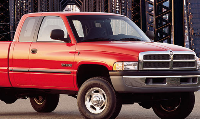
Truck is a 99 quad cab with the 5.9L and 84,000 miles.
I live in mid-michigan where winters are frickin long and cold but rarely below 0 but normaly close to it......I assume synthetics would be good......Could someone recommend a weight AND tell me what the numbers mean like 10w-30 is what........
I live in mid-michigan where winters are frickin long and cold but rarely below 0 but normaly close to it......I assume synthetics would be good......Could someone recommend a weight AND tell me what the numbers mean like 10w-30 is what........

Captain
Joined: Mar 2005
Posts: 691
Likes: 0
From:
RE: What Oil to Use
Oil is a topic you can get really really **** about and everyone has a opinion. So i'll give you my answer that works for me.
I lived in chicago for my first 24 years on earth. I used 10w 30 Mobil 1 full syn oil in all my cars year round. It got really cold in chicago but you guys are further up north so I guess you might want to do 10w 30 in summer and 5w 30 in winter.
Thats my opinion only.
Oh I also changed my oil every 5k too. The full syn oil can go longer than 3k.
I lived in chicago for my first 24 years on earth. I used 10w 30 Mobil 1 full syn oil in all my cars year round. It got really cold in chicago but you guys are further up north so I guess you might want to do 10w 30 in summer and 5w 30 in winter.
Thats my opinion only.
Oh I also changed my oil every 5k too. The full syn oil can go longer than 3k.

Registered User
Joined: Jul 2005
Posts: 34
Likes: 0
From: South Florida
RE: What Oil to Use
Your manual has the deails of what oil type to use for your temperature range. I'd highly recommend sticking to it.
As far as what the numbers mean, a multi-viscosity oil has different weights at different temperatures, & thus flow characteristics. OK, say we're talking about 15W40, which is what I use in my 24V Cummings (in SoFla as it never gets below 0 degrees F). This oil flows like 15 weight at 0 degrees F and 40 weight at normal operating temps. This means that it gives you the protection the engine needs at cooler temps while doing the same at higher temps. The change in weight is accomplished now via polymers in the oil which coil up when cold allowing it to flow freely, and which stretch out into long chains (IE, tangling w/ each other) at warmer temperatures, keeping viscosity at the upper limit indicated. This is why it's critical to pick the right grade per the manufaturer's instructions for the temperature range the motor will see until the next oil change. Keep in mind that it's nothing to get 500K out of your Cummings.
OK before this starts a bunch of arguments, oil viscosity as it relates to multi-viscosity and straight weight is a bit more complicated than I indicated, but the above is a good, sound general idea of how it works. It's probably more accurate to say that multi viscosity oils flow like the lowest number and have protection characteristics similar to straight weight oils at the high range, but not necessarily identical to a straight based oil. I still contend that a straight weight oil will protect better longer at the higher range, but this is just not the nature of the vast majority of daily drivers and vehicles used in various climates. Ultimately, it's the startup temp that affects the oil (& thus protection) the most, so make sure you are in that range when you pick your oil.
As far as what the numbers mean, a multi-viscosity oil has different weights at different temperatures, & thus flow characteristics. OK, say we're talking about 15W40, which is what I use in my 24V Cummings (in SoFla as it never gets below 0 degrees F). This oil flows like 15 weight at 0 degrees F and 40 weight at normal operating temps. This means that it gives you the protection the engine needs at cooler temps while doing the same at higher temps. The change in weight is accomplished now via polymers in the oil which coil up when cold allowing it to flow freely, and which stretch out into long chains (IE, tangling w/ each other) at warmer temperatures, keeping viscosity at the upper limit indicated. This is why it's critical to pick the right grade per the manufaturer's instructions for the temperature range the motor will see until the next oil change. Keep in mind that it's nothing to get 500K out of your Cummings.
OK before this starts a bunch of arguments, oil viscosity as it relates to multi-viscosity and straight weight is a bit more complicated than I indicated, but the above is a good, sound general idea of how it works. It's probably more accurate to say that multi viscosity oils flow like the lowest number and have protection characteristics similar to straight weight oils at the high range, but not necessarily identical to a straight based oil. I still contend that a straight weight oil will protect better longer at the higher range, but this is just not the nature of the vast majority of daily drivers and vehicles used in various climates. Ultimately, it's the startup temp that affects the oil (& thus protection) the most, so make sure you are in that range when you pick your oil.
Thread Starter
|
Rookie
Joined: Dec 2004
Posts: 74
Likes: 0
From:
RE: What Oil to Use
Thanx for the input i went with 10w-30 sense its summer..but i didnt use synthetic. i change the oil every 3000miles relegiosly and i was told that if you change it often synthetics arnt really that much better "again opinions lets not argue lol" and for the oil number explaination that was perfect for what i was looking for...just the basics cause i had no idea.
Registered User
Joined: Jul 2005
Posts: 34
Likes: 0
From: South Florida
RE: What Oil to Use
I am also a huge proponent for synthetic oils. I use them in all my cars except my diesel Dodge as they apparently don't benefit much more from synthetic. Heck, if you can expect 500K out of a diesel, that's enough for me, and I'd want a new truck before it reached that mileage probably.
As far as how synthetics work, yup, they are much more stable than standard oils, but if you do change your oil at 3K, you're fine. The biggest difference with synthetic is that they don't degrade as quickly. After 3K, all regular oils drop viscosity significantly. Viscosity hold pretty steady until this poiint, then plummets. Synthetics also protect better during startup and warmup compared to organic oils.
As far as how synthetics work, yup, they are much more stable than standard oils, but if you do change your oil at 3K, you're fine. The biggest difference with synthetic is that they don't degrade as quickly. After 3K, all regular oils drop viscosity significantly. Viscosity hold pretty steady until this poiint, then plummets. Synthetics also protect better during startup and warmup compared to organic oils.