

If so how do you like it? I just installed a catch can in my Ram a few days ago and I can tell you that 1- the truck runs smoother and 2- seems like I gained 1 maybe 2 HP by getting that oil out of the combustion chamber. Nothing official, but the butt dyno seems to feel it. Also before the addition it always ran sluggish at start up. Not any more. Have good power right when leaving the house. If you don't have one I would suggest adding one, if your plenum is good that is.


Legend
ran one, found it unnecessary for an N/A engine with a properly working PCV valve. never caught but a drop or 2 of oil in 3 months.

Captain
So after reading this I started researching it and I'm making a long list of things to do when changing my plenum and this seems to be a good investment so I don't have to buy seafoam every other month or so, do you think it's worth it? And is it necessary if the plenums fixed? Thanks
Well, I am currently testing it and will update as time goes by to see if it is worth it or not. From what I read in other forums on vehicles from Mustangs, Chargers, Challengers, and 4rth gen Rams all say they got a lot of oil every oil change. So basically every 3000+ miles they would drain it out. I have seen several pics showing how it can gunk up the insides of the engine because the oil supposedly doesn't burn up completely so it becomes a tar on the intake. Kinda like what a blown plenum would do. I posed the question because I really have never seen 2ndg gen folks talk about this much. I first heard about it on Mustang forums and later found others doing it also. I decided to try it on the Ram first because it was just easier to do. If it works well, then I will add it to my other cars.
As far as power increase I really wasn't expecting any, but was pleasantly surprised. I think the reason for the power has something to do with the oil being in the combustion causing the ECM to make changes or adjustments to timing. The ECM may retard timing due to the thicker oil not burning the same as the gasoline does. Not 100% certain, maybe someone more knowledgeable will chime in.
I know you can go out and buy catch cans for just about every performance vehicle out there, but personally I didn't feel like spending $100+ on an experiment. I did some research and found many articles about guys making their own. The Mustang guys used an mini oil/water separator for a compressor plus the hoses and fittings to do the trick. I tried that since I have an oil/water separator lying around from my compressor. So I bought the fittings, hoses and set it up, and it did catch some oil, but one problem arose. Compressors put out pressure and the intake uses vacuum, two different animals. I found the separator would spring an air leak and not function properly. This could be why Ram One never got any oil if there was an outside air leak. So I researched a bit more and found a few people making their own.
So I looked around and had plenty of left over parts to make my own. I used 1.5" ABS pipe, the fittings I previously purchased for the separator, the hoses, and some caps for the ends of the pipe. I also modified the designs I read to improve performance. I placed a divider inside the ABS pipe so the flow would be diverted allowing time for oil to settle out of the air, and a crumpled up piece of old window screen to catch the oil mist as it flows through. I just wanted clean air, no oil. I epoxied everything together (to be certain there is no outside air intrusion), painted it black and mounted it to the firewall by the pcv valve. All total I probably spent less than $10. I also drilled a small hole at the bottom and placed a screw in it to act as a drain. Today I decided to see if there was any oil in it and while nothing flowed out the drain screw did have some oily residue (which was not there before). So if it works, I'll have a recipe you all can follow if you wish, and if it fails I didn't waste anything since it was a thought provoking experiment.
I didn't take pics as I was doing it since I didn't know if it would work. If this thread is still alive, I'll take pics as I make the next one if it's a worthwhile project to pursue. I was hoping someone else had one of these.
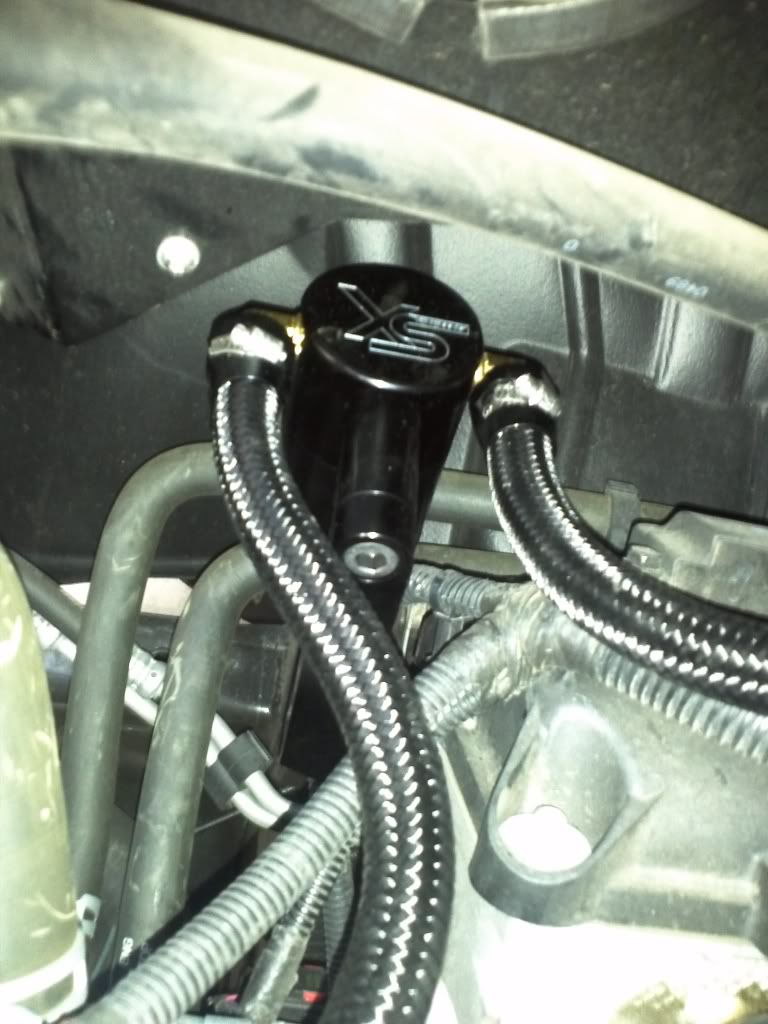
Here is a picture of what a mass produce catch can looks like. Mine looks very similar, but not as slick.
As far as power increase I really wasn't expecting any, but was pleasantly surprised. I think the reason for the power has something to do with the oil being in the combustion causing the ECM to make changes or adjustments to timing. The ECM may retard timing due to the thicker oil not burning the same as the gasoline does. Not 100% certain, maybe someone more knowledgeable will chime in.
I know you can go out and buy catch cans for just about every performance vehicle out there, but personally I didn't feel like spending $100+ on an experiment. I did some research and found many articles about guys making their own. The Mustang guys used an mini oil/water separator for a compressor plus the hoses and fittings to do the trick. I tried that since I have an oil/water separator lying around from my compressor. So I bought the fittings, hoses and set it up, and it did catch some oil, but one problem arose. Compressors put out pressure and the intake uses vacuum, two different animals. I found the separator would spring an air leak and not function properly. This could be why Ram One never got any oil if there was an outside air leak. So I researched a bit more and found a few people making their own.
So I looked around and had plenty of left over parts to make my own. I used 1.5" ABS pipe, the fittings I previously purchased for the separator, the hoses, and some caps for the ends of the pipe. I also modified the designs I read to improve performance. I placed a divider inside the ABS pipe so the flow would be diverted allowing time for oil to settle out of the air, and a crumpled up piece of old window screen to catch the oil mist as it flows through. I just wanted clean air, no oil. I epoxied everything together (to be certain there is no outside air intrusion), painted it black and mounted it to the firewall by the pcv valve. All total I probably spent less than $10. I also drilled a small hole at the bottom and placed a screw in it to act as a drain. Today I decided to see if there was any oil in it and while nothing flowed out the drain screw did have some oily residue (which was not there before). So if it works, I'll have a recipe you all can follow if you wish, and if it fails I didn't waste anything since it was a thought provoking experiment.
I didn't take pics as I was doing it since I didn't know if it would work. If this thread is still alive, I'll take pics as I make the next one if it's a worthwhile project to pursue. I was hoping someone else had one of these.
Here is a picture of what a mass produce catch can looks like. Mine looks very similar, but not as slick.
Captain
Do you have a link to how you built it? Thats a very good explanation but I don't know what half that stuff is so I have no idea what that means, I need pictures 
Quote:
The most accurate device ever, the old butt Dyno. Originally Posted by J415
Moreover, how exactly did you come up with 1-2 horsepower?

Quote:
On my 318 the PCV allows air to be sucked directly into the plenum, not the TB like on newer motors. So after you fix your plenum, you don't want oil being sucked into your clean plenum through a different route. So I would say yes, it is a good investment. Like I said, every guy is different. If you want a really fancy, slick one, there are many after market ones you can buy and dress up your engine bay. If you are a cheap SOB like me, you can make your own for pennies.Originally Posted by chadhager03
So after reading this I started researching it and I'm making a long list of things to do when changing my plenum and this seems to be a good investment so I don't have to buy seafoam every other month or so, do you think it's worth it? And is it necessary if the plenums fixed? Thanks
I have no link since I didn't think this far ahead. This was just a fun experiment, I didn't think anyone would really care. I figured most people would poopoo my idea and say they would prefer to buy an after market one. All the stuff I used was just left over pipes you can get at Home Depot. ABS pipe is the black pipe for your sinks (PVC sprinkler pipe will also do, but I already had the ABS). I already had some left over 1.5" pipe from a sink I put in. The divider was just a piece of vinyl trim. The End caps you can also get in the plumbing dept where they sell the ABS pipe. Cost me 20 cents each, one for top and one for bottom. The fittings are the connectors for the hoses. I'll take a few pics tomorrow and hope that helps you all out.

Champion
Quote:
Ahh, of course..you sure it wasn't just gas? Maybe an upset stomach?Originally Posted by Ram15002ndGen
The most accurate device ever, the old butt Dyno.