


Antifreeze?


Legend


Joined: Jun 2009
Posts: 8,025
Likes: 72
From: orangeville ontario

in pretty much any vehicle you get there should be about a 50/50 mix of antifreeze and water unless you live where it gets extremely cold where you may want to use even more anti freeze than water. i would guess if the system was completely empty it might take 3-4 containers of pure anti freeze and 3-4 containers of water.

Retired Moderator - RIP
Joined: May 2008
Posts: 18,729
Likes: 17
From: NH


Professional
Joined: Nov 2011
Posts: 189
Likes: 0
From: Canada
50:50 is good to about -35F which is fine for most people. I need to take it a bit further so I go higher to get protection down to at least -40F, preferably just a bit lower.
But don't do that if you don't need it; antifreeze doesn't flow quite as well as water and it's better to use the right mix for the lowest temperature you're likely to see. Look up a long-term weather low for your area or where you expect to travel in winter; don't go by "last year". Give yourself a little safety margin but you don't have to get carried away.
If you don't need to go down to -35F or whatever a 50:50 mix provides with the exact product you're using, you can use a 40:60 (40 antifreeze 60 water), etc. as long as the manual says it's OK. That will provide better cooling; just be sure you don't dilute it so much that you lose corrosion protection.
Last edited by Johnny2Bad; Mar 9, 2012 at 09:22 AM.

Record Breaker
Joined: Jul 2007
Posts: 1,636
Likes: 1
From: Miracle Valley, AZ
When I was in mechanic school way back when, one of our instructors said he had worked on the Northern part of the Alaska pipeline and stayed and worked at Point Barrow for several years thereafter. He said, and I don't know, that 100% grain alcohol is what they used during the winter up there for all there equipment. He said it was corrosive and they had to drain it as soon as it would start the spring thaw, but 100% grain alcohol was the only thing back in the 70's and early 80's they had they wouldn't slush up. Just an aside.
Trending Topics

Professional
Joined: Nov 2011
Posts: 189
Likes: 0
From: Canada
When I was in mechanic school way back when, one of our instructors said he had worked on the Northern part of the Alaska pipeline and stayed and worked at Point Barrow for several years thereafter. He said, and I don't know, that 100% grain alcohol is what they used during the winter up there for all there equipment. He said it was corrosive and they had to drain it as soon as it would start the spring thaw, but 100% grain alcohol was the only thing back in the 70's and early 80's they had they wouldn't slush up. Just an aside.
Looks like the all-time record lows for Barrow are in the 55F/48C range; I've worked in those temps in the arctic. Last time I was in the far north it was -47C or colder every night for three weeks straight in February. We just use ethylene glycol @ 60~70% there; it was available in the 70's when I started driving.
Alcohol isn't really stable at 100% ... it will absorb moisture from the air until it's down to about 95% and then it will stay there. You're lucky if you can get it into a barrel at the factory above 95%.
If there were a lot of aircraft around ... and I can't imagine there wasn't ... the airplanes might have used alcohol so maybe it was more of a supply issue; the alcohol was available so they used it. It's also cheap in industrial quantity; way cheaper than antifreeze. Apparently the Russians used (and maybe still do use) alcohol instead of glycol; there's no doubt it works.
I can tell you that somewhere around -42C or so everything starts to act funny; propane gels, diesel fuel is useless without a conditioner, metal gets very brittle ... you learn to think twice before reaching for a hammer if you're repairing something in the field ... and plastic may as well be made of oreo cookies. "Soft" polyethylene is like glass; half the stuff under the hood in a modern car will be broken before spring if you have to touch it.
The natives up there rip about 30% of the stuff under the hood on their trucks off the week they buy them because they know they're just going to break anyway come winter time. You haven't a hope of getting the cover off a fuse box underhood without throwing it over your shoulder into the bush two minutes later. For some reason it gets worse with every degree drop after the low -40's ... you can about predict the temperature just by noting how brittle everything is compared to yesterday.
Windows in your truck will just snap and there will be a crack half way across the glass for no apparent reason; things like that. Antifreeze wasn't our biggest worry.
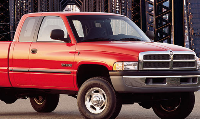
I do have to tell you though ... there are a lot of Ram trucks in service up there. 10 years ago they would all have been GMC and Chevy; it's a mix of both now. Seeing how they performed on the jobsite is a big part of why I bought one six months ago. There's a particular dealer that gives credit to natives on the reserve so they run a lot of Fords but you never see one in service up there as a work truck. The natives are starting to buy Rams now so maybe in five years the Fords will be extinct in the real cold.
Last edited by Johnny2Bad; Mar 9, 2012 at 12:22 PM.