


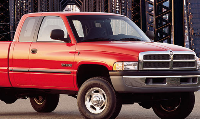
canadian made trucks


Professional
Joined: Nov 2011
Posts: 189
Likes: 0
From: Canada

Is it Canada manufactured and originally sold in the US or built for the Canada market? (That's the first question you need to answer; in this case I don't believe there were any Rams made in Canada at that time).
If it's been previously registered in the US it might be way simpler. If not, do some research.
There are differences between Transport Canada and US DOT specifications. Emissions will be 49-state EPA equivalent, although I haven't imported a Diesel engine vehicle so check that for non-gasoline to be sure. Broadly speaking the things that are different shouldn't be an issue in the US, but check anyway. Also heavy vehicles tend to have slacker emissions ... that's why Ford dropped the F100 from the lineup and replaced it with the F150, to avoid emissions. Easiest way would be to look at whomever regulates importing vehicles in the US and see if the Canada market model you're looking at can be imported without modifications.
Canada has stricter regulations on a few items than the US rather than the other way around. For example Canada had 5 mph bumper regs (for about 40 years now) when the US was at 2.5 (I think it's 5 now in the US), window glass must be stronger, lighting is different (daytime running lights mandatory for 30 years now). Might be worth your while to get a build sheet (or insist the seller does) and make sure the equipment list is what you expect for a similar package truck in the US.
Because of pricing differences due to currencies, regulations, and smaller market in Canada making distribution and advertising comparatively more expensive on a per-unit basis, standard equipment on US market vehicles tends to be more feature laden. Canada market vehicles require optional trim levels to get some features you might have had on a bare-bones unit in the US. Don't assume the trim level indicates the exact same set of standard and optional equipment that you would have found on a US lot at the time.
Exactly where is this truck? If it hasn't been previously registered in the US you are essentially importing the vehicle. Assuming it's the same going from Canada-US as US-Canada, that MUST be done by physically admitting the vehicle from Canada to the US at a border crossing, or possibly if the truck is sitting in Bond in the US. You can't normally buy a Canada-plated and registered vehicle that is physically resident in the US if it hasn't been formally imported yet. I personally would want proof the vehicle has been legally imported even if currently carrying a US tag.
One area that could be different is airbags. Canada had mandatory seat-belt legislation at a time when the US didn't nearly as much so airbags are more elaborate on 90's era US market vehicles. 96 will have drivers' but passenger might have been optional in Canada around then, and that option might be associated with a higher trim level than the US market vehicle. Find out if passenger airbags were mandated in 96 US market or were also optional (drivers' by about 93-ish were mandatory in Canada; I believe it was 90 or possibly earlier for US market).
Just my overall experiences; I've imported a few vehicles from the US and my employer still does. The heavier the vehicle the less differences; for example buses and tractor-trailer units are no problem at all, passenger cars differ quite a bit.
Bottom line though is check with whomever regulates importing in the US and see what they say and be specific to the vehicle you're asking about. Could be anything from no problem as is to requiring you to swap parts ... I say that because I don't have any experience going the other way. There probably also is a vehicle age where a non-compliant vehicle can still be imported since it eventually becomes exempt.
I know in Canada there are some US market vehicles that are basically illegal since the cost to make them Transport Canada compliant involves replacing all the glass, all the bumpers and parts behind that, lighting and possibly electronic management equipment, that kind of thing. Immobilizers have been mandatory in Canada for about 5 years now and making that vehicle compliant can be expensive or impossible since the entire vehicle's electronics are part of the system and tied to the VIN.
All of the above only really applies to vehicles you intend to actually drive; if you want to import as parts-only (that VIN won't probably be allowed to be registered) then anything goes.
If it's been previously registered in the US it might be way simpler. If not, do some research.
There are differences between Transport Canada and US DOT specifications. Emissions will be 49-state EPA equivalent, although I haven't imported a Diesel engine vehicle so check that for non-gasoline to be sure. Broadly speaking the things that are different shouldn't be an issue in the US, but check anyway. Also heavy vehicles tend to have slacker emissions ... that's why Ford dropped the F100 from the lineup and replaced it with the F150, to avoid emissions. Easiest way would be to look at whomever regulates importing vehicles in the US and see if the Canada market model you're looking at can be imported without modifications.
Canada has stricter regulations on a few items than the US rather than the other way around. For example Canada had 5 mph bumper regs (for about 40 years now) when the US was at 2.5 (I think it's 5 now in the US), window glass must be stronger, lighting is different (daytime running lights mandatory for 30 years now). Might be worth your while to get a build sheet (or insist the seller does) and make sure the equipment list is what you expect for a similar package truck in the US.
Because of pricing differences due to currencies, regulations, and smaller market in Canada making distribution and advertising comparatively more expensive on a per-unit basis, standard equipment on US market vehicles tends to be more feature laden. Canada market vehicles require optional trim levels to get some features you might have had on a bare-bones unit in the US. Don't assume the trim level indicates the exact same set of standard and optional equipment that you would have found on a US lot at the time.
Exactly where is this truck? If it hasn't been previously registered in the US you are essentially importing the vehicle. Assuming it's the same going from Canada-US as US-Canada, that MUST be done by physically admitting the vehicle from Canada to the US at a border crossing, or possibly if the truck is sitting in Bond in the US. You can't normally buy a Canada-plated and registered vehicle that is physically resident in the US if it hasn't been formally imported yet. I personally would want proof the vehicle has been legally imported even if currently carrying a US tag.
One area that could be different is airbags. Canada had mandatory seat-belt legislation at a time when the US didn't nearly as much so airbags are more elaborate on 90's era US market vehicles. 96 will have drivers' but passenger might have been optional in Canada around then, and that option might be associated with a higher trim level than the US market vehicle. Find out if passenger airbags were mandated in 96 US market or were also optional (drivers' by about 93-ish were mandatory in Canada; I believe it was 90 or possibly earlier for US market).
Just my overall experiences; I've imported a few vehicles from the US and my employer still does. The heavier the vehicle the less differences; for example buses and tractor-trailer units are no problem at all, passenger cars differ quite a bit.
Bottom line though is check with whomever regulates importing in the US and see what they say and be specific to the vehicle you're asking about. Could be anything from no problem as is to requiring you to swap parts ... I say that because I don't have any experience going the other way. There probably also is a vehicle age where a non-compliant vehicle can still be imported since it eventually becomes exempt.
I know in Canada there are some US market vehicles that are basically illegal since the cost to make them Transport Canada compliant involves replacing all the glass, all the bumpers and parts behind that, lighting and possibly electronic management equipment, that kind of thing. Immobilizers have been mandatory in Canada for about 5 years now and making that vehicle compliant can be expensive or impossible since the entire vehicle's electronics are part of the system and tied to the VIN.
All of the above only really applies to vehicles you intend to actually drive; if you want to import as parts-only (that VIN won't probably be allowed to be registered) then anything goes.
Last edited by Johnny2Bad; Mar 30, 2012 at 08:13 PM.


Retired Moderator - RIP
Joined: May 2008
Posts: 18,729
Likes: 17
From: NH
Last edited by zman17; Mar 31, 2012 at 04:54 PM.
Trending Topics

Legend
Joined: Jul 2011
Posts: 8,259
Likes: 4
From: Austin, TX
That's why I previously posted asking 1st digit in VIN. Mine is Mexican made...didn't know they made these there until I got this one.
The only thing wron with that VIN decode sheet - a 4 in a VIN is Japan, unless my Yota is lying to me......
The only thing wron with that VIN decode sheet - a 4 in a VIN is Japan, unless my Yota is lying to me......