


Octane versus MPG


Thread Starter
|
Registered User
Joined: Jan 2010
Posts: 20
Likes: 0
 Octane versus MPG
So, I wanted to find out the effect on MPG using the three common octanes - see if there is really that much of a difference. Here is what I saw for my last six tanks:
Octane------------MPG
93----------------12.8
89----------------14.0
87----------------13.0
87----------------13.1
89----------------13.8
93----------------14.1
The driving habits and conditions were similar for all 6 tanks (75% highway / 25% city). I even bought the fuel at the same station for each run.
Well...it is apparent that octane has an effect. I am not sure why the first 93 octane MPG was so much lower - maybe a little heavier foot - but I was careful to note my speeds and such on the final tank so I am comfortable with saying that the final tank would be repeatable.
Did I notice more "peppiness" between the octanes - I would say that yes, the higher octanes made a difference. Did I get pinging or noticeably sluggish performance from the lower octanes - no I didn't.
I thought it interesting how similar the results were between the 89 and 93 octane tanks.
Based on my own results, it is hard to state that the gain in MPG is worth the extra cost. But, would I buy 89 over 87 - yes. 93 over 89? I don't see the point in doing so if MPG and performance are similar.
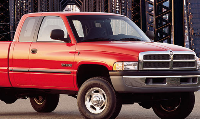
My truck - 1995 1500 4x4, 415,500 miles, stock everywhere except for an upgraded PCM and a CAI, I've done the little tweaks here and there such as relocate IAT, re-gap plugs (.040), etc...tires are a couple sizes bigger than stock - this last set has been a big drain on fuel. I lost 1 to 1.5 MPG just by going with the 285/75/16.
Cheers.
Octane------------MPG
93----------------12.8
89----------------14.0
87----------------13.0
87----------------13.1
89----------------13.8
93----------------14.1
The driving habits and conditions were similar for all 6 tanks (75% highway / 25% city). I even bought the fuel at the same station for each run.
Well...it is apparent that octane has an effect. I am not sure why the first 93 octane MPG was so much lower - maybe a little heavier foot - but I was careful to note my speeds and such on the final tank so I am comfortable with saying that the final tank would be repeatable.
Did I notice more "peppiness" between the octanes - I would say that yes, the higher octanes made a difference. Did I get pinging or noticeably sluggish performance from the lower octanes - no I didn't.
I thought it interesting how similar the results were between the 89 and 93 octane tanks.
Based on my own results, it is hard to state that the gain in MPG is worth the extra cost. But, would I buy 89 over 87 - yes. 93 over 89? I don't see the point in doing so if MPG and performance are similar.
My truck - 1995 1500 4x4, 415,500 miles, stock everywhere except for an upgraded PCM and a CAI, I've done the little tweaks here and there such as relocate IAT, re-gap plugs (.040), etc...tires are a couple sizes bigger than stock - this last set has been a big drain on fuel. I lost 1 to 1.5 MPG just by going with the 285/75/16.
Cheers.
Last edited by fromthisdesk; Aug 22, 2012 at 09:15 AM.

Champion
Joined: Aug 2010
Posts: 2,697
Likes: 3
From: Cape Carteret NC
You know what the compounds that comprise octane do, right?
There should be marginal if any added gains in mileage with higher rated octane fuel...
Quality of that fuel is another story.. time of week or day you pump plays a role more significant than octane rating, if your query is mileage..
There should be marginal if any added gains in mileage with higher rated octane fuel...
Quality of that fuel is another story.. time of week or day you pump plays a role more significant than octane rating, if your query is mileage..

Thread Starter
|
Registered User
Joined: Jan 2010
Posts: 20
Likes: 0
Yeah - 415k. Not bad for a gas engine. Especially considering that the tranny is original stock. Bought her brand new and except for two water pumps, three fuel pumps, and a pair of wheel hubs, everything else has been routine maintenance. Of course, I have been **** about the maintenance though.
As far as the octane - I read on this forum and others that some posters have received boosts in MPG up to 2-3 MPG from higher octane. As I have always ran super in mine due to the PCM I was curious if that could be proven. The tests I ran came over a two week period with the fuel being bought in the afternoon between 3-5 pm. I know this since the route I was taking was the exact same 120 miles each way - every other day. I just made it a point to get the fuel at the same station - at the same time since I typically left each location at the same time, each time. My average speed was 70-75 MPH. I keep it there because of the lifter tapping as I hit 2000 rpm which occurs at 76 MPH. Based on the results, in my opinion, the variables of time, location, etc... and octane type are much less of an impact to MPG than what the driving habits and traffic conditions would be.
As far as the octane - I read on this forum and others that some posters have received boosts in MPG up to 2-3 MPG from higher octane. As I have always ran super in mine due to the PCM I was curious if that could be proven. The tests I ran came over a two week period with the fuel being bought in the afternoon between 3-5 pm. I know this since the route I was taking was the exact same 120 miles each way - every other day. I just made it a point to get the fuel at the same station - at the same time since I typically left each location at the same time, each time. My average speed was 70-75 MPH. I keep it there because of the lifter tapping as I hit 2000 rpm which occurs at 76 MPH. Based on the results, in my opinion, the variables of time, location, etc... and octane type are much less of an impact to MPG than what the driving habits and traffic conditions would be.
Last edited by fromthisdesk; Aug 22, 2012 at 03:01 PM.

Legend


Joined: Jun 2009
Posts: 8,025
Likes: 72
From: orangeville ontario
so you change to octanes each time you fueled up? imo your results would not be very accurate that way. you almost need to run a whole month one grade then the next month on another and so on and so on.
as far as getting worse gas mileage with 93 octane in Canada i am pretty sure all 93 octane gas contains the 10% ethanol which get you that crappy mile where as the 89 only contains 5% and 91 usually contains none.
as far as getting worse gas mileage with 93 octane in Canada i am pretty sure all 93 octane gas contains the 10% ethanol which get you that crappy mile where as the 89 only contains 5% and 91 usually contains none.

Amateur
Joined: Nov 2010
Posts: 37
Likes: 0
From: MN
For what it's worth I run premium in my '95 318 shortbox AT; sometimes it's 92, sometimes it's 93 octane, depending on the station. If I really put my foot into it I average 15.5-16.5 hwy @ 60 mph. I have averaged as much as 25 mpg hwy when I baby it big time with the understanding that a medium acceleration rate is more efficient than trying to sip all the way up to cruise speed.

Record Breaker
Joined: Jan 2011
Posts: 1,849
Likes: 10
From: Texas
I find babing my Dakota like granny style uses more fuel than just moderately getting on the gas and accelerating. Engine seems to work alot harder using more fuel to get up to cruise speed driving like ol' grandma.. Putting my foot into it well of course uses more gas too..
Trending Topics

Veteran
Joined: Aug 2008
Posts: 487
Likes: 5
From: Philadelphia, PA
I find babing my Dakota like granny style uses more fuel than just moderately getting on the gas and accelerating. Engine seems to work alot harder using more fuel to get up to cruise speed driving like ol' grandma.. Putting my foot into it well of course uses more gas too..

Grand Champion
Joined: Aug 2009
Posts: 5,971
Likes: 45
From: MAINE
For what it's worth I run premium in my '95 318 shortbox AT; sometimes it's 92, sometimes it's 93 octane, depending on the station. If I really put my foot into it I average 15.5-16.5 hwy @ 60 mph. I have averaged as much as 25 mpg hwy when I baby it big time with the understanding that a medium acceleration rate is more efficient than trying to sip all the way up to cruise speed.
25 mpgs? You sure? I find that to be a bit exagerated since on xtreme 4x4 they did as much as they could to gain mpgs and their best was about 19-20 mpgs...if your gettin those mpgs then you have a one of a kind 2nd gen ram
Champion
Joined: Aug 2010
Posts: 2,697
Likes: 3
From: Cape Carteret NC
I once averaged over 70MPG for about twenty minutes, and directly following an hour straight of ~4.5MPG..
there was a mountain range and clear traffic coasting involved..

octane is simply a compound that makes gas more inert.. meaning less likely to go BOOM.. useful to keep it from going BOOM instead of burning, or going BOOM on the pistons compression stroke prior to spark being applied.. it isn't a special ingredient that makes a burn more powerful, it's express purpose is to control ignition and that alone.. it is required on higher compression engines where a single pre-det can blow things like gaskets if you're lucky, or bend/break piston rods, blow holes in piston faces, wreck wrists ect. if you're not..
movement is a scientific thing.. if your engine is running @ X RPM, and we know your gearing, we can figure precisely how fast you are going.. it's simple algebra.. if your going Y speed, we know your overall gearing and gear your using, we know whether your t/c is locked if it is a lockable t/c, we know your engine speed.. any other variant works too.. engine speed and wheel speed and gearing ratio are linked in mechanical and precise way..
fuel will determine how your engine responds, and whether you have to really load it up to achieve speed.. if you don't have to load it up (measurable somewhat with a vacuum gauge) you will increase economy..
TUNING is also important.. if you are running perfectly, maintaining an a/f ratio near stoich, and there is lessened drag on both your engine and drive train, your economy increases..
weight plays into this too.. it has direct bearing on engine load..
my questions to the original poster are:
how tuned is your engine?
how many different load ranges did you experience during your experiment?
how healthy are your trim devices such as o2's? IAT's? MAP? temp sensor?
what is the curb weight?
these can wreck even the most well planned experiment, and are hardly something you can control due to traffic, passengers, gear carried, tires inflation point, alignment, ect...
sorry, dude.. I don't buy octane saving fuel.. I blame environmental conditions and the condition of your truck...