


Front end pop/sharp turn


Thread Starter
|
Rookie
Joined: Oct 2013
Posts: 88
Likes: 0
 Front end pop/sharp turn
Hello all again...here with another Q before I diagnose.
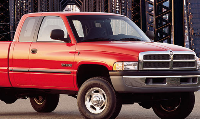
2001 Dodge Ram 2500 4x4(5.9 gas). Its heavy duty(8800) with tow/snow per Dodge build list. I'm getting a big POP/small walk(sometimes) when at lower speeds turning(mainly today). Its mostly right turn, driveway in and out. I've heard it prior to today, but never felt a (small jump), as I thought it was tools in the back. The walk I felt today was like 4x4 on dry....just once with a big snap/pop. Hard to tell what side.
Upfront has new 2014-now....mostly Moog. Shocks, balljoints, u joints, steer stable, complete tierods, and a new gearbox. I did do my own alignment at home with string lines.....but she never drove wrong, and drives fine after the gear box/tierod alignment I did. Tires wear fine, but hey I dont do chamber. I did all the work myself....and I am a carpenter/concrete guy....not a mechanic.
Looks like I have 2 bars left(sway and control?). One runs from the pass side axle to the drive side frame. Pivot bushing to a tierod style. 2nd runs thru pivot mount bushings on both sides of frame(in front of all steering components) to "taller" style tierod bushings to both sides on a forward bracket on the coil spring bottoms. The driver side (tierod style) is now shot (appears to be, broken boot and misaligned).
I gotta get her jacked up, and have a hand, turn her lock to lock, but am unsure if she will act up under "no load". Obviously I can check my work at the other spots....Tierods,BJ's. Just doesn't sound like a hub. I did reuse old hubs cause they are easy too do BUT expensive to replace .
.
What do you guys/gals think? Loud clunk/pop, low speed turn, and a pinch of a hop? I'm 90% its in the front. My steering is fine going anywhere, but slow turns. ONE note, this girl rides like a bronco. Any bump is brutal, tires hold well, but no "coffee for you". I absorb it all unless I have my plow on.
Thanks again....you guys/gals rock.
2001 Dodge Ram 2500 4x4(5.9 gas). Its heavy duty(8800) with tow/snow per Dodge build list. I'm getting a big POP/small walk(sometimes) when at lower speeds turning(mainly today). Its mostly right turn, driveway in and out. I've heard it prior to today, but never felt a (small jump), as I thought it was tools in the back. The walk I felt today was like 4x4 on dry....just once with a big snap/pop. Hard to tell what side.
Upfront has new 2014-now....mostly Moog. Shocks, balljoints, u joints, steer stable, complete tierods, and a new gearbox. I did do my own alignment at home with string lines.....but she never drove wrong, and drives fine after the gear box/tierod alignment I did. Tires wear fine, but hey I dont do chamber. I did all the work myself....and I am a carpenter/concrete guy....not a mechanic.
Looks like I have 2 bars left(sway and control?). One runs from the pass side axle to the drive side frame. Pivot bushing to a tierod style. 2nd runs thru pivot mount bushings on both sides of frame(in front of all steering components) to "taller" style tierod bushings to both sides on a forward bracket on the coil spring bottoms. The driver side (tierod style) is now shot (appears to be, broken boot and misaligned).
I gotta get her jacked up, and have a hand, turn her lock to lock, but am unsure if she will act up under "no load". Obviously I can check my work at the other spots....Tierods,BJ's. Just doesn't sound like a hub. I did reuse old hubs cause they are easy too do BUT expensive to replace
.What do you guys/gals think? Loud clunk/pop, low speed turn, and a pinch of a hop? I'm 90% its in the front. My steering is fine going anywhere, but slow turns. ONE note, this girl rides like a bronco. Any bump is brutal, tires hold well, but no "coffee for you". I absorb it all unless I have my plow on.
Thanks again....you guys/gals rock.

Administrator


Joined: Apr 2010
Posts: 87,394
Likes: 4,213
From: Clayton MI
Dry balljoint, or tie rod end. If they are greaseable, hit em all with a couple pumps, and run the steering lock to lock with no load. You are right, it probably won't pop with no weight on it.
Do you have to be moving? Or will it do it sitting still, in park? Applying the brakes make any difference?
Do you have to be moving? Or will it do it sitting still, in park? Applying the brakes make any difference?
Thread Starter
|
Rookie
Joined: Oct 2013
Posts: 88
Likes: 0
I hit everything with grease. My pass side lower ball never came with a grease(sealed)....funny my drive side did 2 years later????both Moog? It was the sway arm as I can tell. Drive side link was all but disconnected. Had to cut them both off, drive side popped out the socket when doing so.
Now my new problem. I decided to get bushings(aftermarket) as the drive side was pretty bad. You guessed it, broken bolt. Now I know I cant easy out it, as I just did the steer gear earlier this year....no go on the broken bolt(right next to the mount bolt). Its got a plow, so the plow mount is 1/4" thick so the broken bolt sticks out from the frame, but not enough to get anything on the stud in the punched out plow frame.
So i see it as 2 options....maybe 3. 1) bite the bullet and have a shop try to easy out/drill tap the hardened bolt(its been in salt for 15 years as a plow truck). 2) Put the cleaned original mount back on with a new bushing(I have new and cleaning mount/frame/bar) and tack weld the LOWER flange(one that the bolt broke). BTW the bar is till in the truck. I never messed with pass side mount....as a bolt broke on DS and it was OK, I cant trust any bolts on this rig.
Its just stupid....anything I do on this truck, bolts break. All good until they go into the frame. Everything feels tight otherwise. I'm running a temp sway bracket that bends easily. The links are new. Seems alot of pressure there(on the bar), so I dont wanna risk the bushing bracket by putting it on with 1 bolt(the aftermarket bends pretty bad).
Now my new problem. I decided to get bushings(aftermarket) as the drive side was pretty bad. You guessed it, broken bolt. Now I know I cant easy out it, as I just did the steer gear earlier this year....no go on the broken bolt(right next to the mount bolt). Its got a plow, so the plow mount is 1/4" thick so the broken bolt sticks out from the frame, but not enough to get anything on the stud in the punched out plow frame.
So i see it as 2 options....maybe 3. 1) bite the bullet and have a shop try to easy out/drill tap the hardened bolt(its been in salt for 15 years as a plow truck). 2) Put the cleaned original mount back on with a new bushing(I have new and cleaning mount/frame/bar) and tack weld the LOWER flange(one that the bolt broke). BTW the bar is till in the truck. I never messed with pass side mount....as a bolt broke on DS and it was OK, I cant trust any bolts on this rig.
Its just stupid....anything I do on this truck, bolts break. All good until they go into the frame. Everything feels tight otherwise. I'm running a temp sway bracket that bends easily. The links are new. Seems alot of pressure there(on the bar), so I dont wanna risk the bushing bracket by putting it on with 1 bolt(the aftermarket bends pretty bad).

Registered User
Joined: Jun 2015
Posts: 4
Likes: 0
I found the “KLUNK” in my 2000 Dodge Ram Van. No remedies from several mechanics and none from the Internet. I hope this revelation helps someone out there that may be experiencing the same problem, even though there are many situations that can cause “clunking and popping” from the steering and suspension areas.
My discovery happened accidentally-on-purpose:
In addition to reading hundreds of automotive articles from the WEB, I started the long painful and expensive process of buying and replacing everything related to the steering and front end suspension system on this vehicle.
As I finished the installation of ALL new MOOG tie rod ends from Rock Auto, I noticed “the clunk” was still alive and well, right where I left it before installing these latest parts... Most clunks were occurring during extreme slow right and left turning maneuvers, in and out of parking situations.
This whole nightmare was somewhat of a fluke that was not even my fault or even caused by any worn out or bad automotive parts. I think I've spent somewhere in the neighborhood of a thousand dollars in car parts on that stinking clunk, not to mention at least 100 hours of labor.
What happened was this: The last time I took the van into a shop for a front end alignment, the technician aligned it correctly, but as he finished tightening the tie rod adjustment sleeves, he left the adjusting sleeve bolt point up instead of down. This positioned the adjusting sleeve bolts RIGHT IN THAT PATH OF OTHER MOVING STEERING PARTS AS THE VEHICLE WAS MAKING SHARP TURNS. He didn't notice his error because as the car sat on his alignment lift, there would be no need for him to turn the wheels extremely left or right to complete the alignment... I accidentally spotted the problem while finishing the installation of the inner and outer tie rod ends when laying under the van and moving the steering system to the left and right to get the new parts in position. It didn't "clunk" earlier for some shops because the front end of the van was off the ground with no load to produce the "world famous clunk", but with the van on the ground I could see were the conflicting parts were coming into contact with each other as the steering went from left to right and vice versa.
So I guess we have to call this one an honest mistake by the alignment shop because when doing an alignment on most cars, those adjustment sleeve bolts can be left pointing up or down.
Fortunately, half of the parts that I installed were going to be due for preventative maintenance replacement in the next year or two.
My discovery happened accidentally-on-purpose:
In addition to reading hundreds of automotive articles from the WEB, I started the long painful and expensive process of buying and replacing everything related to the steering and front end suspension system on this vehicle.
As I finished the installation of ALL new MOOG tie rod ends from Rock Auto, I noticed “the clunk” was still alive and well, right where I left it before installing these latest parts... Most clunks were occurring during extreme slow right and left turning maneuvers, in and out of parking situations.
This whole nightmare was somewhat of a fluke that was not even my fault or even caused by any worn out or bad automotive parts. I think I've spent somewhere in the neighborhood of a thousand dollars in car parts on that stinking clunk, not to mention at least 100 hours of labor.
What happened was this: The last time I took the van into a shop for a front end alignment, the technician aligned it correctly, but as he finished tightening the tie rod adjustment sleeves, he left the adjusting sleeve bolt point up instead of down. This positioned the adjusting sleeve bolts RIGHT IN THAT PATH OF OTHER MOVING STEERING PARTS AS THE VEHICLE WAS MAKING SHARP TURNS. He didn't notice his error because as the car sat on his alignment lift, there would be no need for him to turn the wheels extremely left or right to complete the alignment... I accidentally spotted the problem while finishing the installation of the inner and outer tie rod ends when laying under the van and moving the steering system to the left and right to get the new parts in position. It didn't "clunk" earlier for some shops because the front end of the van was off the ground with no load to produce the "world famous clunk", but with the van on the ground I could see were the conflicting parts were coming into contact with each other as the steering went from left to right and vice versa.
So I guess we have to call this one an honest mistake by the alignment shop because when doing an alignment on most cars, those adjustment sleeve bolts can be left pointing up or down.
Fortunately, half of the parts that I installed were going to be due for preventative maintenance replacement in the next year or two.


