


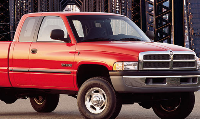
Can someone explain to me the huge HP difference between stock 360 and crate 360?


Administrator


Joined: Apr 2010
Posts: 87,482
Likes: 4,223
From: Clayton MI

I suspect that their information isn't quite correct. Stock engines NEVER made 300 horsepower...... so either the number is wrong, or, the statement that 'everything is stock' is wrong.....

Professional
Joined: Aug 2004
Posts: 209
Likes: 5
From: Laquey, MO
My $0.02 - take it for what it's worth...
You need to compare apples to apples, A "Stock Replacement Engine" will be built to the exact manufacturer's specifications and come pretty close to the factory power ratings. A "Crate" engine is tweaked here and there to improve performance over a stock engine on the dyne. Drop it back into a stock application with factory intake, exhaust, emissions, and programming and you'll see improvement over factory, but it likely won't be making the advertised power. That's because most dyno pulls I've seen are done with ideal tuning conditions and no smog control equipment.
As for your question about why people are able to make better power after pulling all the factory stuff off and going back to carburetor, the answer is the elimination of all factory smog controls. Smog controls will be a bucket of cold water on performance on this generation of engines no matter what you do. Modern systems are so much better at controlling things than they were in the 90's and don't hit so performance so hard. The down side of this is when (and eventually most places will) it has to be certified compliant with the appropriate emissions regulations. Technically, removal of factory emissions controls is a violation of Federal law, but since very few people are ever charged, no one really pays attention to it. Don't think I'm a tree-hugger here as I've a truck from another manufacturer that only has the factory EFI left on it and it runs great. Just be aware that there is a potential issue depending on where you live to going back to a carb.
You need to compare apples to apples, A "Stock Replacement Engine" will be built to the exact manufacturer's specifications and come pretty close to the factory power ratings. A "Crate" engine is tweaked here and there to improve performance over a stock engine on the dyne. Drop it back into a stock application with factory intake, exhaust, emissions, and programming and you'll see improvement over factory, but it likely won't be making the advertised power. That's because most dyno pulls I've seen are done with ideal tuning conditions and no smog control equipment.
As for your question about why people are able to make better power after pulling all the factory stuff off and going back to carburetor, the answer is the elimination of all factory smog controls. Smog controls will be a bucket of cold water on performance on this generation of engines no matter what you do. Modern systems are so much better at controlling things than they were in the 90's and don't hit so performance so hard. The down side of this is when (and eventually most places will) it has to be certified compliant with the appropriate emissions regulations. Technically, removal of factory emissions controls is a violation of Federal law, but since very few people are ever charged, no one really pays attention to it. Don't think I'm a tree-hugger here as I've a truck from another manufacturer that only has the factory EFI left on it and it runs great. Just be aware that there is a potential issue depending on where you live to going back to a carb.

Thread Starter
|
Veteran


Joined: Jun 2014
Posts: 412
Likes: 26
My $0.02 - take it for what it's worth...
You need to compare apples to apples, A "Stock Replacement Engine" will be built to the exact manufacturer's specifications and come pretty close to the factory power ratings. A "Crate" engine is tweaked here and there to improve performance over a stock engine on the dyne. Drop it back into a stock application with factory intake, exhaust, emissions, and programming and you'll see improvement over factory, but it likely won't be making the advertised power. That's because most dyno pulls I've seen are done with ideal tuning conditions and no smog control equipment.
As for your question about why people are able to make better power after pulling all the factory stuff off and going back to carburetor, the answer is the elimination of all factory smog controls. Smog controls will be a bucket of cold water on performance on this generation of engines no matter what you do. Modern systems are so much better at controlling things than they were in the 90's and don't hit so performance so hard. The down side of this is when (and eventually most places will) it has to be certified compliant with the appropriate emissions regulations. Technically, removal of factory emissions controls is a violation of Federal law, but since very few people are ever charged, no one really pays attention to it. Don't think I'm a tree-hugger here as I've a truck from another manufacturer that only has the factory EFI left on it and it runs great. Just be aware that there is a potential issue depending on where you live to going back to a carb.
You need to compare apples to apples, A "Stock Replacement Engine" will be built to the exact manufacturer's specifications and come pretty close to the factory power ratings. A "Crate" engine is tweaked here and there to improve performance over a stock engine on the dyne. Drop it back into a stock application with factory intake, exhaust, emissions, and programming and you'll see improvement over factory, but it likely won't be making the advertised power. That's because most dyno pulls I've seen are done with ideal tuning conditions and no smog control equipment.
As for your question about why people are able to make better power after pulling all the factory stuff off and going back to carburetor, the answer is the elimination of all factory smog controls. Smog controls will be a bucket of cold water on performance on this generation of engines no matter what you do. Modern systems are so much better at controlling things than they were in the 90's and don't hit so performance so hard. The down side of this is when (and eventually most places will) it has to be certified compliant with the appropriate emissions regulations. Technically, removal of factory emissions controls is a violation of Federal law, but since very few people are ever charged, no one really pays attention to it. Don't think I'm a tree-hugger here as I've a truck from another manufacturer that only has the factory EFI left on it and it runs great. Just be aware that there is a potential issue depending on where you live to going back to a carb.
I for one wouldn't trade my efi for a carb for 70 horse as it's my all year DD and I love being able to remote start the thing in the winter haha! So I wasn't implying the carb was superior, just baffled by the power difference.
Thread Starter
|
Veteran
Joined: Jun 2014
Posts: 412
Likes: 26
You can get a power increase like that with a set of good heads
Post #19 for the dyno sheet
https://dodgeforum.com/forum/2nd-gen...installed.html
Post #19 for the dyno sheet
https://dodgeforum.com/forum/2nd-gen...installed.html
Thread Starter
|
Veteran
Joined: Jun 2014
Posts: 412
Likes: 26
Possibly

Grand Champion

Joined: Feb 2015
Posts: 7,435
Likes: 578
I am more interested generally speaking in why I read so much about guys yanking fuel injection off of motors, bolting on a carb, and picking up big power. It seems counter-intuitive.
Administrator
Joined: Apr 2010
Posts: 87,482
Likes: 4,223
From: Clayton MI
Valid points. The advertised numbers are generally peak numbers. I can build a motor and get truly stupid horsepower and torque numbers out of it, but, it will be completely useless in a truck, and not anything even remotely resembling "streetable"...... So, it isn't just how much, WHERE the engine develops power is actually even more important. 1200 horsepower at 6100 RPM won't do you any good at all.

Professional
Joined: Jan 2017
Posts: 199
Likes: 1
From: vancouver, wa
all i had to do was google his name...
posted it and changed my mind... he's seems like a very nice and most likely private guy.
cool shop though and mopars everywhere, even has his own wrecking yard lol. david was right though... bfe
Last edited by brian102; Oct 6, 2017 at 11:51 PM.
Thread Starter
|
Veteran
Joined: Jun 2014
Posts: 412
Likes: 26
how bout his address and phone number?
all i had to do was google his name...
posted it and changed my mind... he's seems like a very nice and most likely private guy.
cool shop though and mopars everywhere, even has his own wrecking yard lol. david was right though... bfe
all i had to do was google his name...
posted it and changed my mind... he's seems like a very nice and most likely private guy.
cool shop though and mopars everywhere, even has his own wrecking yard lol. david was right though... bfe
Thread Starter
|
Veteran
Joined: Jun 2014
Posts: 412
Likes: 26
What is the stock throttle body rated(CFM)? 500 if recall correctly. Most guys are going to put on a larger cfm carb than 500. The stock kegger is better for low rpm power so removing it and replacing it will bring up the power band. Stock tune in the pcm is another issue.
Valid points. The advertised numbers are generally peak numbers. I can build a motor and get truly stupid horsepower and torque numbers out of it, but, it will be completely useless in a truck, and not anything even remotely resembling "streetable"...... So, it isn't just how much, WHERE the engine develops power is actually even more important. 1200 horsepower at 6100 RPM won't do you any good at all.
Thanks guys.