


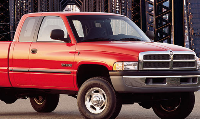
Softening Ride Of 2001 Off Road Edition


Administrator


Joined: Apr 2010
Posts: 87,483
Likes: 4,223
From: Clayton MI

Replacing the rear springs with springs that are softer, but still provide the same ride height would be a solution as well. You could pull a leaf, and have the re-arched, or, simply get springs that will provide the correct height, but, a softer spring rate.

Thread Starter
|
Veteran


Joined: Jun 2014
Posts: 412
Likes: 26
Perhaps soft leaf springs and a set of firestone airbags would be the ticket


Champion
Joined: Feb 2007
Posts: 3,103
Likes: 109
From:
Wow, someone got up on the wrong side of the bed. Sheesh. Either accept help or graciously decline it. You seem to not want any though and are convinced in your own ignorance.
RS5000 have always been cheap shocks and they just recently added the "x" model which just says "gas-charged" and nothing more. RS9000 were always known as Rancho's Nitrogen true gas version. Whoopie, you bought one notch above bottom of the barrel. So forgive my 20 years experience with these trucks being that I don't visit Rancho's website every day looking for new products. Secondly, while Rancho is a big name, they are the Walmart of shocks. Good grief they come stock on Chevy's so maybe a look at a good monotube from a reputable company like Bilstein or Fox is worth 2 seconds of your time on google. Thirdly, you obviously haven't searched shocks much because they are built for a huge range of truck sizes and there are plenty of options for a mild 2" lift which is all the ORE has from the factory. Summit Racing alone lists over 25 options. Again, maybe 2 more seconds of your time. Fourthly, I was in too much of a hurry and should have typed "monotube" gas shock. Not long ago, there were crap "gas" stock shocks like Monroe, Gabriel, etc. that all vehicles use from the factory and you can grab at any Vatozone. Yes, these are gas but nothing up to snuff for real trucks. One could compress them with one hand. The aftermarket options were hydro, aka water, or gas monotube, commonly just called "gas" because nobody was implying someone replace factory gas crappers with factory gas crappers. So understand aftermarket gas is referring to quality monotube Bilstein 5100, Skyjacker M95, etc. Fifthly, Cooper tires are among the cheapest and worst tires made. Discount Tire actually paid me back to replace them with BFGs. And I've had two different sets on my truck alone and both were terrible. But you'll figure this out eventually. And finally, it really sounds like you just are unhappy with your truck. There have been plenty of good suggestions on here already but you shoot them down defending your anger against the ride of a thirty-year-old design. Maybe the new "ram" with its car suspension is what should be in your driveway. I'm done.
RS5000 have always been cheap shocks and they just recently added the "x" model which just says "gas-charged" and nothing more. RS9000 were always known as Rancho's Nitrogen true gas version. Whoopie, you bought one notch above bottom of the barrel. So forgive my 20 years experience with these trucks being that I don't visit Rancho's website every day looking for new products. Secondly, while Rancho is a big name, they are the Walmart of shocks. Good grief they come stock on Chevy's so maybe a look at a good monotube from a reputable company like Bilstein or Fox is worth 2 seconds of your time on google. Thirdly, you obviously haven't searched shocks much because they are built for a huge range of truck sizes and there are plenty of options for a mild 2" lift which is all the ORE has from the factory. Summit Racing alone lists over 25 options. Again, maybe 2 more seconds of your time. Fourthly, I was in too much of a hurry and should have typed "monotube" gas shock. Not long ago, there were crap "gas" stock shocks like Monroe, Gabriel, etc. that all vehicles use from the factory and you can grab at any Vatozone. Yes, these are gas but nothing up to snuff for real trucks. One could compress them with one hand. The aftermarket options were hydro, aka water, or gas monotube, commonly just called "gas" because nobody was implying someone replace factory gas crappers with factory gas crappers. So understand aftermarket gas is referring to quality monotube Bilstein 5100, Skyjacker M95, etc. Fifthly, Cooper tires are among the cheapest and worst tires made. Discount Tire actually paid me back to replace them with BFGs. And I've had two different sets on my truck alone and both were terrible. But you'll figure this out eventually. And finally, it really sounds like you just are unhappy with your truck. There have been plenty of good suggestions on here already but you shoot them down defending your anger against the ride of a thirty-year-old design. Maybe the new "ram" with its car suspension is what should be in your driveway. I'm done.
Last edited by Ramman18; Nov 25, 2019 at 10:53 AM.


Legend


Joined: Nov 2014
Posts: 8,098
Likes: 318
I run an off road shop and reading this thread here is what you need but be ready to spend some money.
For the rear: get softer leafs that maintain the ride and install airbags. You can cheap out by not getting on board air. You will have 5000lbs load capacity (2nd gen 1500 is at MAX 2600lbs). Just be mindful with the airbags inflated even loaded it will be rougher then it is not unloaded.
For the front: Spacers will make the ride worse even with softer springs. Now just using softer springs will be trial and error as some won't be high enough or some will be to high especially after they settle.
Now onto shocks whether you believe this or not you need Bilsteins, Fox, Carli, or any big name. Fox and Bilsteins will actually build them for your truck or you can get ones you can adjust yourself. Now after all this you will see it still rides rough, that's because it has solid axles and the suspension setup isn't the best with short control arms.
Don't believe go drive a new Power Wagon (has a soft suspension from the factory) even that will ride as rough as your 2nd gen and the Cummins is worse.
For the rear: get softer leafs that maintain the ride and install airbags. You can cheap out by not getting on board air. You will have 5000lbs load capacity (2nd gen 1500 is at MAX 2600lbs). Just be mindful with the airbags inflated even loaded it will be rougher then it is not unloaded.
For the front: Spacers will make the ride worse even with softer springs. Now just using softer springs will be trial and error as some won't be high enough or some will be to high especially after they settle.
Now onto shocks whether you believe this or not you need Bilsteins, Fox, Carli, or any big name. Fox and Bilsteins will actually build them for your truck or you can get ones you can adjust yourself. Now after all this you will see it still rides rough, that's because it has solid axles and the suspension setup isn't the best with short control arms.
Don't believe go drive a new Power Wagon (has a soft suspension from the factory) even that will ride as rough as your 2nd gen and the Cummins is worse.
Thread Starter
|
Veteran
Joined: Jun 2014
Posts: 412
Likes: 26
First, I'm not the least bit upset, nor am I convinced I have it all figured out (I wouldn't be asking for help if I did). I am merely discerning in what/who I take advice from. If you were confident in your own opinions you wouldn't be insulted by this because you'd be able to back them up. The number of armchair quarterbacks with bad information on car forums is absolutely stunning. Over the years I've received a TON of bad advice that led me to wasting thousands of dollars and lots of time. For instance, years ago, the "consensus" on the LS1Tech forum used to be (and may still be) that running a 4000rpm stall converter in a daily driven street car was awesome. I'd never owned a car with a stall before, so I listened to them and put one in when I did the cam swap, and it absolutely ruined the experience of driving that car. Not only did I **** away a bunch of money and time on the converter, but I knew I was going to run that converter so I threw in a cam that was too large for the stock converter, and therefore I was stuck with it unless I wanted to tear everything back apart again. Many dollars wasted, and I ended up selling the car because it was an annoying pain in the *** to drive. It was fast, but the driveability was terrible.
So again, you'll understand if I don't jump sheepishly at every single piece of advice haphazardly thrown out by random strangers on the internet. The RATIONALE must be convincing.
I also never said Rancho shocks are the best there, but they're functional shock absorbers. You're making the argument that simply replacing functioning shocks with a different brand of functioning shock will solve the issue, but you fail to acknowledge that the springs are sufficiently stiff to prevent ANY shock from doing much, particularly on the rear end when unloaded. My experience, as well as MANY MANY people's experiences are that the difference between brands of FUNCTIONING shock absorbers is minimal in stock applications. I would agree with fj5gtx above when he said the difference is longevity.
Again, one might evaluate exactly how tire specifications impact ride quality. The factors include sidewall thickness, sidewall diameter, and overall weight. A softer sidewall will absorb more shock than a stiff one, well, my C load range coopers have a softer sidewall than BFG's AT's, so they will absorb more shock and ride better. The sidewall diameter would be constant among the same tire size, which leaves weight. A Cooper AT3 is a slightly lighter tire than a BFG AT (by 5-10lbs) thus reducing unsprung mass and making for...again...a better ride.
Stop with the brand loyalty marketing garbage and THINK.
And finally, it really sounds like you just are unhappy with your truck. There have been plenty of good suggestions on here already but you shoot them down defending your anger against the ride of a thirty-year-old design. Maybe the new "ram" with its car suspension is what should be in your driveway. I'm done.
Look man, my intention here really isn't to be an *******. I appreciate you taking the time to post a reply and engage people on the forum, but if you're going to give ****ty, illogical advice then you're not actually helping people.
Do you see me being this blunt and rebuking other commenters? No, because they've actually backup up their suggestions rather than making overly simplistic suggestions and then getting offended.
I run an off road shop and reading this thread here is what you need but be ready to spend some money.
For the rear: get softer leafs that maintain the ride and install airbags. You can cheap out by not getting on board air. You will have 5000lbs load capacity (2nd gen 1500 is at MAX 2600lbs). Just be mindful with the airbags inflated even loaded it will be rougher then it is not unloaded.
For the front: Spacers will make the ride worse even with softer springs. Now just using softer springs will be trial and error as some won't be high enough or some will be to high especially after they settle.
Now onto shocks whether you believe this or not you need Bilsteins, Fox, Carli, or any big name. Fox and Bilsteins will actually build them for your truck or you can get ones you can adjust yourself. Now after all this you will see it still rides rough, that's because it has solid axles and the suspension setup isn't the best with short control arms.
Don't believe go drive a new Power Wagon (has a soft suspension from the factory) even that will ride as rough as your 2nd gen and the Cummins is worse.
For the rear: get softer leafs that maintain the ride and install airbags. You can cheap out by not getting on board air. You will have 5000lbs load capacity (2nd gen 1500 is at MAX 2600lbs). Just be mindful with the airbags inflated even loaded it will be rougher then it is not unloaded.
For the front: Spacers will make the ride worse even with softer springs. Now just using softer springs will be trial and error as some won't be high enough or some will be to high especially after they settle.
Now onto shocks whether you believe this or not you need Bilsteins, Fox, Carli, or any big name. Fox and Bilsteins will actually build them for your truck or you can get ones you can adjust yourself. Now after all this you will see it still rides rough, that's because it has solid axles and the suspension setup isn't the best with short control arms.
Don't believe go drive a new Power Wagon (has a soft suspension from the factory) even that will ride as rough as your 2nd gen and the Cummins is worse.
Could you give me a little insight into why/how the spacers make the ride worse? I seem to be seeing the opposite from what I'm reading. If I'm just thinking about how a coil spring functions, I can't logically think of why adding a 1-2" spacer on the end of it would change it's function at all. It's still got it's normal compression range and it's still supporting the same weight (spacers weigh basically nothing).
Are there any guidelines for how much a spring will settle with time?
Still waiting for someone to explain to me HOW changing out functional shock absorbers is going to make a difference in this instance. The issue is low speed harshness and jarring when hitting potholes. The best way I can describe this is that if I am driving my brothers truck and hit a pothole at 20mph, you still feel it, but it feels like the suspension is actually moving and cycling to absorb some of the shock. In my truck, it's as if the force being applied upwards on the tire is all transferred up to the frame and the body of the truck actually lifts up more than his does, indicating that the suspension isn't compressing to the same degree his is.
It seems very logical to me that with no weight in the bed, when the tire hits the pothole, it's just throwing the *** in the air and not actually cycling the suspension very far. Again, it explains why the ride is so much nicer with weight in the bed, that weight resists the force from the pothole and forces the suspension to do a little more work.
I totally agree that swapping some springs or shocks or something isn't going to make it ride like a Town Car, but that's not what I'm looking for. I'm looking to make it a bit better, and a bit less harsh. It's a big 4 wheel drive truck with solid axles, I expect it to ride like one.
Thanks.
Legend
Joined: Nov 2014
Posts: 8,098
Likes: 318
Alright, I'll play along. Maybe this will be helpful to you.
First, I'm not the least bit upset, nor am I convinced I have it all figured out (I wouldn't be asking for help if I did). I am merely discerning in what/who I take advice from. If you were confident in your own opinions you wouldn't be insulted by this because you'd be able to back them up. The number of armchair quarterbacks with bad information on car forums is absolutely stunning. Over the years I've received a TON of bad advice that led me to wasting thousands of dollars and lots of time. For instance, years ago, the "consensus" on the LS1Tech forum used to be (and may still be) that running a 4000rpm stall converter in a daily driven street car was awesome. I'd never owned a car with a stall before, so I listened to them and put one in when I did the cam swap, and it absolutely ruined the experience of driving that car. Not only did I **** away a bunch of money and time on the converter, but I knew I was going to run that converter so I threw in a cam that was too large for the stock converter, and therefore I was stuck with it unless I wanted to tear everything back apart again. Many dollars wasted, and I ended up selling the car because it was an annoying pain in the *** to drive. It was fast, but the driveability was terrible.
So again, you'll understand if I don't jump sheepishly at every single piece of advice haphazardly thrown out by random strangers on the internet. The RATIONALE must be convincing.
Well, by your logic Bilstein is garbage too because they were OEM equipment on the millions and millions of Z71 silverados/sierras that GM made for decades. Again, your credibility/rationality isn't looking too hot here.
I didn't say there weren't, I said SPECIFICALLY sized and valved. No-one can seem to decide just exactly how much taller an ORE truck is over a standard 4x4, whether it's 1", 1.5", 2" or 2.5". Rancho explicitly states that this shock is made for Rams with the ORE package, so they figured out the height and valved them accordingly. Will others work? Sure, but this was easy insurance.
I also never said Rancho shocks are the best there, but they're functional shock absorbers. You're making the argument that simply replacing functioning shocks with a different brand of functioning shock will solve the issue, but you fail to acknowledge that the springs are sufficiently stiff to prevent ANY shock from doing much, particularly on the rear end when unloaded. My experience, as well as MANY MANY people's experiences are that the difference between brands of FUNCTIONING shock absorbers is minimal in stock applications. I would agree with fj5gtx above when he said the difference is longevity.
Again, do you have data to support this conclusion, or even a logical argument? I've mounted, balanced, and repaired thousands of tires, and driven/ridden in many vehicles pre/post tire change. I do prefer BFG(and their parent company Michelin) personally, but Cooper makes good tires, particularly the AT3's. The truck had BFG's on it when I bought it, and I put the Coopers on it, again, no discernible different in ride quality.
Again, one might evaluate exactly how tire specifications impact ride quality. The factors include sidewall thickness, sidewall diameter, and overall weight. A softer sidewall will absorb more shock than a stiff one, well, my C load range coopers have a softer sidewall than BFG's AT's, so they will absorb more shock and ride better. The sidewall diameter would be constant among the same tire size, which leaves weight. A Cooper AT3 is a slightly lighter tire than a BFG AT (by 5-10lbs) thus reducing unsprung mass and making for...again...a better ride.
Stop with the brand loyalty marketing garbage and THINK.
Ah, finally, we come to the straw man argument. I want to make improvements to my truck and don't like your advice, so I must hate my truck. Again, logic would dictate that if I hated my truck, I'd sell it and go buy a new ram with "car suspension". I have not done that.
Look man, my intention here really isn't to be an *******. I appreciate you taking the time to post a reply and engage people on the forum, but if you're going to give ****ty, illogical advice then you're not actually helping people.
Do you see me being this blunt and rebuking other commenters? No, because they've actually backup up their suggestions rather than making overly simplistic suggestions and then getting offended.
So you're advocating that the airbags should essentially be deflated completely, or minimally inflated when not loaded? I guess that makes sense, just let the softer springs and shocks do the work when unloaded and then use the airbags to re-gain capacity when loaded. I find air suspension kinda confusing to be honest because it's used in 2 different situations to 2 different effects. Of course you have airbags on very heavy trucks to increase capacity, which would make the ride even more stiff, but you also have airbags on luxury cars and the systems really make the cars ride like they are floating. I kinda had it in my mind that the airbags might be used on a truck and just partially inflated to give a cushy ride. Anyway, any further insight you could provide here would be much appreciated.
Could you give me a little insight into why/how the spacers make the ride worse? I seem to be seeing the opposite from what I'm reading. If I'm just thinking about how a coil spring functions, I can't logically think of why adding a 1-2" spacer on the end of it would change it's function at all. It's still got it's normal compression range and it's still supporting the same weight (spacers weigh basically nothing).
Are there any guidelines for how much a spring will settle with time?
Still waiting for someone to explain to me HOW changing out functional shock absorbers is going to make a difference in this instance. The issue is low speed harshness and jarring when hitting potholes. The best way I can describe this is that if I am driving my brothers truck and hit a pothole at 20mph, you still feel it, but it feels like the suspension is actually moving and cycling to absorb some of the shock. In my truck, it's as if the force being applied upwards on the tire is all transferred up to the frame and the body of the truck actually lifts up more than his does, indicating that the suspension isn't compressing to the same degree his is.
It seems very logical to me that with no weight in the bed, when the tire hits the pothole, it's just throwing the *** in the air and not actually cycling the suspension very far. Again, it explains why the ride is so much nicer with weight in the bed, that weight resists the force from the pothole and forces the suspension to do a little more work.
I totally agree that swapping some springs or shocks or something isn't going to make it ride like a Town Car, but that's not what I'm looking for. I'm looking to make it a bit better, and a bit less harsh. It's a big 4 wheel drive truck with solid axles, I expect it to ride like one.
Thanks.
First, I'm not the least bit upset, nor am I convinced I have it all figured out (I wouldn't be asking for help if I did). I am merely discerning in what/who I take advice from. If you were confident in your own opinions you wouldn't be insulted by this because you'd be able to back them up. The number of armchair quarterbacks with bad information on car forums is absolutely stunning. Over the years I've received a TON of bad advice that led me to wasting thousands of dollars and lots of time. For instance, years ago, the "consensus" on the LS1Tech forum used to be (and may still be) that running a 4000rpm stall converter in a daily driven street car was awesome. I'd never owned a car with a stall before, so I listened to them and put one in when I did the cam swap, and it absolutely ruined the experience of driving that car. Not only did I **** away a bunch of money and time on the converter, but I knew I was going to run that converter so I threw in a cam that was too large for the stock converter, and therefore I was stuck with it unless I wanted to tear everything back apart again. Many dollars wasted, and I ended up selling the car because it was an annoying pain in the *** to drive. It was fast, but the driveability was terrible.
So again, you'll understand if I don't jump sheepishly at every single piece of advice haphazardly thrown out by random strangers on the internet. The RATIONALE must be convincing.
Well, by your logic Bilstein is garbage too because they were OEM equipment on the millions and millions of Z71 silverados/sierras that GM made for decades. Again, your credibility/rationality isn't looking too hot here.
I didn't say there weren't, I said SPECIFICALLY sized and valved. No-one can seem to decide just exactly how much taller an ORE truck is over a standard 4x4, whether it's 1", 1.5", 2" or 2.5". Rancho explicitly states that this shock is made for Rams with the ORE package, so they figured out the height and valved them accordingly. Will others work? Sure, but this was easy insurance.
I also never said Rancho shocks are the best there, but they're functional shock absorbers. You're making the argument that simply replacing functioning shocks with a different brand of functioning shock will solve the issue, but you fail to acknowledge that the springs are sufficiently stiff to prevent ANY shock from doing much, particularly on the rear end when unloaded. My experience, as well as MANY MANY people's experiences are that the difference between brands of FUNCTIONING shock absorbers is minimal in stock applications. I would agree with fj5gtx above when he said the difference is longevity.
Again, do you have data to support this conclusion, or even a logical argument? I've mounted, balanced, and repaired thousands of tires, and driven/ridden in many vehicles pre/post tire change. I do prefer BFG(and their parent company Michelin) personally, but Cooper makes good tires, particularly the AT3's. The truck had BFG's on it when I bought it, and I put the Coopers on it, again, no discernible different in ride quality.
Again, one might evaluate exactly how tire specifications impact ride quality. The factors include sidewall thickness, sidewall diameter, and overall weight. A softer sidewall will absorb more shock than a stiff one, well, my C load range coopers have a softer sidewall than BFG's AT's, so they will absorb more shock and ride better. The sidewall diameter would be constant among the same tire size, which leaves weight. A Cooper AT3 is a slightly lighter tire than a BFG AT (by 5-10lbs) thus reducing unsprung mass and making for...again...a better ride.
Stop with the brand loyalty marketing garbage and THINK.
Ah, finally, we come to the straw man argument. I want to make improvements to my truck and don't like your advice, so I must hate my truck. Again, logic would dictate that if I hated my truck, I'd sell it and go buy a new ram with "car suspension". I have not done that.
Look man, my intention here really isn't to be an *******. I appreciate you taking the time to post a reply and engage people on the forum, but if you're going to give ****ty, illogical advice then you're not actually helping people.
Do you see me being this blunt and rebuking other commenters? No, because they've actually backup up their suggestions rather than making overly simplistic suggestions and then getting offended.
So you're advocating that the airbags should essentially be deflated completely, or minimally inflated when not loaded? I guess that makes sense, just let the softer springs and shocks do the work when unloaded and then use the airbags to re-gain capacity when loaded. I find air suspension kinda confusing to be honest because it's used in 2 different situations to 2 different effects. Of course you have airbags on very heavy trucks to increase capacity, which would make the ride even more stiff, but you also have airbags on luxury cars and the systems really make the cars ride like they are floating. I kinda had it in my mind that the airbags might be used on a truck and just partially inflated to give a cushy ride. Anyway, any further insight you could provide here would be much appreciated.
Could you give me a little insight into why/how the spacers make the ride worse? I seem to be seeing the opposite from what I'm reading. If I'm just thinking about how a coil spring functions, I can't logically think of why adding a 1-2" spacer on the end of it would change it's function at all. It's still got it's normal compression range and it's still supporting the same weight (spacers weigh basically nothing).
Are there any guidelines for how much a spring will settle with time?
Still waiting for someone to explain to me HOW changing out functional shock absorbers is going to make a difference in this instance. The issue is low speed harshness and jarring when hitting potholes. The best way I can describe this is that if I am driving my brothers truck and hit a pothole at 20mph, you still feel it, but it feels like the suspension is actually moving and cycling to absorb some of the shock. In my truck, it's as if the force being applied upwards on the tire is all transferred up to the frame and the body of the truck actually lifts up more than his does, indicating that the suspension isn't compressing to the same degree his is.
It seems very logical to me that with no weight in the bed, when the tire hits the pothole, it's just throwing the *** in the air and not actually cycling the suspension very far. Again, it explains why the ride is so much nicer with weight in the bed, that weight resists the force from the pothole and forces the suspension to do a little more work.
I totally agree that swapping some springs or shocks or something isn't going to make it ride like a Town Car, but that's not what I'm looking for. I'm looking to make it a bit better, and a bit less harsh. It's a big 4 wheel drive truck with solid axles, I expect it to ride like one.
Thanks.
The simplest I can make it with spacers is this. And it can go to ways depending on the vehicle. Either to much weight or not enough. When you add a spacer you are actually compressing the coil somewhat which now amplifies the force pushing down. And will somewhat push the axle back towards the cab (mind you very minimal) and with short arms that will amplify the harshness. Each brand coil spring will settle differently some are .05" and some are 2". Now when loaded with spacers and you get that nose high look now you don't have enough weight up front and the suspension isn't working.
Shocks make a difference but each one has its advantages and disadvantages. Some are made for mostly on road (hitting bumps slow and somewhat fast) others are made to hit bumps as fast as the vehicle will go. Go to Thuren and he has a great write up on his different level of shocks. And explains it very well.
Here is the setup I run on my 2500 and it rides amazing but is also expensive.
Long arms up front
Then 7.25" lift coils
AirRide Air Bags
4 link rear suspension
4 link front suspension (no pan hard bar)
And Fox Shocks custom tuned for my truck
If you would anymore information I'll gladly try and help you.
Thread Starter
|
Veteran
Joined: Jun 2014
Posts: 412
Likes: 26
Air bags unloaded should have at minimum 5psi but every manufacturer is different and will tell you in the manual what to run. Air bag suspension vehicles only use airbags no springs what so ever so it makes them ride nice. How an air bag fully inflated (or close to it) will make it more rough because now you have 2 points (4 total) on each side trying to push the axle down.
The simplest I can make it with spacers is this. And it can go to ways depending on the vehicle. Either to much weight or not enough. When you add a spacer you are actually compressing the coil somewhat which now amplifies the force pushing down. And will somewhat push the axle back towards the cab (mind you very minimal) and with short arms that will amplify the harshness. Each brand coil spring will settle differently some are .05" and some are 2". Now when loaded with spacers and you get that nose high look now you don't have enough weight up front and the suspension isn't working.
Shocks make a difference but each one has its advantages and disadvantages. Some are made for mostly on road (hitting bumps slow and somewhat fast) others are made to hit bumps as fast as the vehicle will go. Go to Thuren and he has a great write up on his different level of shocks. And explains it very well.
Here is the setup I run on my 2500 and it rides amazing but is also expensive.
Long arms up front
Then 7.25" lift coils
AirRide Air Bags
4 link rear suspension
4 link front suspension (no pan hard bar)
And Fox Shocks custom tuned for my truck
If you would anymore information I'll gladly try and help you.
The simplest I can make it with spacers is this. And it can go to ways depending on the vehicle. Either to much weight or not enough. When you add a spacer you are actually compressing the coil somewhat which now amplifies the force pushing down. And will somewhat push the axle back towards the cab (mind you very minimal) and with short arms that will amplify the harshness. Each brand coil spring will settle differently some are .05" and some are 2". Now when loaded with spacers and you get that nose high look now you don't have enough weight up front and the suspension isn't working.
Shocks make a difference but each one has its advantages and disadvantages. Some are made for mostly on road (hitting bumps slow and somewhat fast) others are made to hit bumps as fast as the vehicle will go. Go to Thuren and he has a great write up on his different level of shocks. And explains it very well.
Here is the setup I run on my 2500 and it rides amazing but is also expensive.
Long arms up front
Then 7.25" lift coils
AirRide Air Bags
4 link rear suspension
4 link front suspension (no pan hard bar)
And Fox Shocks custom tuned for my truck
If you would anymore information I'll gladly try and help you.
Makes sense with the air bags.
I'm still not sure the spacer thing makes sense, how exactly are you compressing the spring by adding a spacer? The spring is compressed by the weight of the vehicle, which in this case would not change. The amount a spring will compress under a given weight isn't going to change with a spacer added either.
Man, that's a wide range for settling.
Sounds like you've got a great setup. Glad you have a good riding truck. I know the 2500s are way rougher in stock form than the half tons.

Captain
Joined: Jan 2016
Posts: 593
Likes: 8
From: Shawnee, KS
Wight in the back would help a lot and there's any number of ways you could do it. Not necessarily unsightly sand bags. I built a box with 2x4's on edge sandwiched with two pieces of treated plywood and then filled it and screwed the top on. Worked great but i took it out to work on other things on the truck including 2" drop shackles which those alone helped with harshness of the ride. Still wanting to put some weigh back in it and probably not as much, but not sure how I wanna do it yet.
Administrator
Joined: Apr 2010
Posts: 87,483
Likes: 4,223
From: Clayton MI
Thanks for the extra info.
Makes sense with the air bags.
I'm still not sure the spacer thing makes sense, how exactly are you compressing the spring by adding a spacer? The spring is compressed by the weight of the vehicle, which in this case would not change. The amount a spring will compress under a given weight isn't going to change with a spacer added either.
Man, that's a wide range for settling.
Sounds like you've got a great setup. Glad you have a good riding truck. I know the 2500s are way rougher in stock form than the half tons.
Makes sense with the air bags.
I'm still not sure the spacer thing makes sense, how exactly are you compressing the spring by adding a spacer? The spring is compressed by the weight of the vehicle, which in this case would not change. The amount a spring will compress under a given weight isn't going to change with a spacer added either.
Man, that's a wide range for settling.
Sounds like you've got a great setup. Glad you have a good riding truck. I know the 2500s are way rougher in stock form than the half tons.
Thread Starter
|
Veteran
Joined: Jun 2014
Posts: 412
Likes: 26
If I could find coil springs with the exact same installed height as my current coils, but with a softer spring rate, I'd do that and not use spacers.