


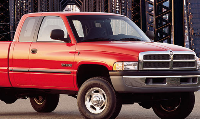
My truck has an antifreeze leak.


Thread Starter
|
Registered User
Joined: Nov 2022
Posts: 19
Likes: 0
 My truck has an antifreeze leak.
Mi camioneta tiene fuga de anticongelante.
Bueno, una fuga sería quedarse corto, más bien una cascada.
Me dicen que es un tapón del congelador y está justo detrás del motor al lado de la caja de cambios (no sé dónde está exactamente) y quisiera saber qué sería más factible para reemplazarlo.
baja la caja de cambios, sube y quita el motor o tal vez conozcas una manera de reemplazarlo.
Si pudieras darme la medida del tapón del congelador.
Es una ram 1998 single cab magnum 360/5.9 automática
Este post está traducido con Google, probablemente tenga algún
error
Bueno, una fuga sería quedarse corto, más bien una cascada.
Me dicen que es un tapón del congelador y está justo detrás del motor al lado de la caja de cambios (no sé dónde está exactamente) y quisiera saber qué sería más factible para reemplazarlo.
baja la caja de cambios, sube y quita el motor o tal vez conozcas una manera de reemplazarlo.
Si pudieras darme la medida del tapón del congelador.
Es una ram 1998 single cab magnum 360/5.9 automática
Este post está traducido con Google, probablemente tenga algún
error

Champion


Joined: Sep 2012
Posts: 4,869
Likes: 434
From: Central VA
There are a couple of freeze plugs on the back of the block. You will need to remove the transmission to access those freeze plugs. They should be 1-5/8" diameter freeze plugs. When replacing freeze plugs, if I plan to keep the truck awhile, I use brass deep cup freeze plugs, as they don't rust and the deep cup style plugs are resistant to blow-out. While you're at it, check the other freeze plugs on both sides of the block, as they may have issues soon. They are also 1-5/8" in diameter.


Grand Champion


Joined: May 2019
Posts: 5,158
Likes: 724
From: S.W. Indiana
Translation<<<My truck has an antifreeze leak.
Well, a leak would be short, rather a waterfall.
They tell me that it is a freezer cap and is just behind the engine next to the gearbox (I don't know where it is exactly) and I would like to know what would be more feasible to replace it.
Lower the gearbox, raise and remove the engine or you may know a way to replace it.
If you could give me the measure of the freezer cap.
It is a 1998 RAM Single Cab Magnum 360/5.9 automatic>>>
For myself, I would pull the engine if it's not your only driver. If one plug in leaking, the others are probably not far behind. I would pull the engine and replace all of them. You can get a full set of expansion plugs. If you have over 100,000 miles (!60,000 kilometers) I'd pull the water pump and timing cover and replace the timing chain. Anything else difficult to do in the engine bay can be done while you have it out. Maybe drop the oil pan and clean it out too.
<<<Traducción al español, para mí, tiraría del motor si no es su único conductor. Si se enciende una fuga, los otros probablemente no estén muy lejos. Tiraría del motor y los reemplazaría todos. Puede obtener un conjunto completo de enchufes de expansión. Si tiene más de 100,000 millas (! 60,000 kilómetros) tiraría de la bomba de agua y la cubierta de sincronización y reemplazaría la cadena de distribución. Se puede hacer cualquier otra cosa que sea difícil de hacer en el bahía del motor mientras lo tiene fuera. Tal vez deje caer la bandeja de aceite y limpiarla también.>>>
Well, a leak would be short, rather a waterfall.
They tell me that it is a freezer cap and is just behind the engine next to the gearbox (I don't know where it is exactly) and I would like to know what would be more feasible to replace it.
Lower the gearbox, raise and remove the engine or you may know a way to replace it.
If you could give me the measure of the freezer cap.
It is a 1998 RAM Single Cab Magnum 360/5.9 automatic>>>
For myself, I would pull the engine if it's not your only driver. If one plug in leaking, the others are probably not far behind. I would pull the engine and replace all of them. You can get a full set of expansion plugs. If you have over 100,000 miles (!60,000 kilometers) I'd pull the water pump and timing cover and replace the timing chain. Anything else difficult to do in the engine bay can be done while you have it out. Maybe drop the oil pan and clean it out too.
<<<Traducción al español, para mí, tiraría del motor si no es su único conductor. Si se enciende una fuga, los otros probablemente no estén muy lejos. Tiraría del motor y los reemplazaría todos. Puede obtener un conjunto completo de enchufes de expansión. Si tiene más de 100,000 millas (! 60,000 kilómetros) tiraría de la bomba de agua y la cubierta de sincronización y reemplazaría la cadena de distribución. Se puede hacer cualquier otra cosa que sea difícil de hacer en el bahía del motor mientras lo tiene fuera. Tal vez deje caer la bandeja de aceite y limpiarla también.>>>
Thread Starter
|
Registered User
Joined: Nov 2022
Posts: 19
Likes: 0
Thanks for the response, I'm going to look for the freeze plug and change it mid-week.
As for the translation...
supossely Yes you paste the translated text and then translate the website sends the wrong text
As for the translation...
supossely Yes you paste the translated text and then translate the website sends the wrong text

Grand Champion

Joined: Feb 2015
Posts: 7,435
Likes: 578
If you are just going to replace the rears drop the the trans. If you pull the motor you can do a lot more than just replace the plugs. Freeze plugs come in steel and brass, If you plan on keeping it put the brass ones in and never have to worry about them rusting out.
Grand Champion
Joined: May 2019
Posts: 5,158
Likes: 724
From: S.W. Indiana
Also, keep the antifreeze up to snuff. Never add straight water, except in an emergency and replace the coolant every 5 years or less. That's what rots the expansion plugs out.
Trending Topics
Thread Starter
|
Registered User
Joined: Nov 2022
Posts: 19
Likes: 0
hello again could you give me a tutorial on how to safely lower the transmission, i.e. without breaking any wires and put the lever guide back in place. if there is any other more detailed conversation about removing and placing the transmission I would appreciate a link (video and pictures).

