


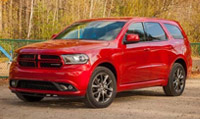
Antennas: Fin vs. post


Thread Starter
|
Captain

Joined: Apr 2013
Posts: 602
Likes: 1
From: Arnold, Maryland
 Antennas: Fin vs. post
Most later model cars are using the shark fin antenna versus the older post style, presumably for stylistic reasons. However, my recent unscientific test clearly favors the post antenna over the shark fin regarding reception.
My '12 Crew has the post and my wife's '14 Avalon has the fin, we're both subscribers to Sirius and we both listen to the same stations. And we both frequently travel the same routes in and around Annapolis, Maryland. I recently drove her car along some familiar routes and was amazed at the clear and unequivocal differences in the Avalon's reception. While the differences could be attributed to the manufacturers' specifications, I suspect that most the stuff is off-the-shelf industry-wide equipment, i.e. no proprietary secret stuff. So any anomalies could rightly (for us non-technical guys, anyway) be attributed to the antenna.
Here was the test: open road, clear suburbs, forested suburbs, and city.
OPEN ROAD: Both had excellent reception. However, when going under an overpass the post maintained reception during the entire event but the fin would often loose reception underneath but regain it when it re-emerged.
SUBURBAN: "Open" suburban areas; the post had no disruptions while the fin had very good reception with only occasional disruptions. In forested suburban areas the differences were clear -- the fin was disrupted noticeably more often than the post and for longer periods. On a suburban road with a moderate tree canopy the post again outperformed the fin, having fewer and shorter disruptions. On a suburban road with a heavy tree canopy the post suffered 2-3 reception losses of 3-5 seconds, while the fin lost reception at least 50 percent of the time.
CITY: As expected, reception is diminished in relation to the height of the buildings, but again the post clearly provided good reception where the fin often cut in and out.
All of which probably proves nothing, I guess.
Anybody here with a fin antenna suffering from unintended or prolonged reception disruption due to natural and man-made obstacles?
My '12 Crew has the post and my wife's '14 Avalon has the fin, we're both subscribers to Sirius and we both listen to the same stations. And we both frequently travel the same routes in and around Annapolis, Maryland. I recently drove her car along some familiar routes and was amazed at the clear and unequivocal differences in the Avalon's reception. While the differences could be attributed to the manufacturers' specifications, I suspect that most the stuff is off-the-shelf industry-wide equipment, i.e. no proprietary secret stuff. So any anomalies could rightly (for us non-technical guys, anyway) be attributed to the antenna.
Here was the test: open road, clear suburbs, forested suburbs, and city.
OPEN ROAD: Both had excellent reception. However, when going under an overpass the post maintained reception during the entire event but the fin would often loose reception underneath but regain it when it re-emerged.
SUBURBAN: "Open" suburban areas; the post had no disruptions while the fin had very good reception with only occasional disruptions. In forested suburban areas the differences were clear -- the fin was disrupted noticeably more often than the post and for longer periods. On a suburban road with a moderate tree canopy the post again outperformed the fin, having fewer and shorter disruptions. On a suburban road with a heavy tree canopy the post suffered 2-3 reception losses of 3-5 seconds, while the fin lost reception at least 50 percent of the time.
CITY: As expected, reception is diminished in relation to the height of the buildings, but again the post clearly provided good reception where the fin often cut in and out.
All of which probably proves nothing, I guess.
Anybody here with a fin antenna suffering from unintended or prolonged reception disruption due to natural and man-made obstacles?
Last edited by Orin500XL; Jul 23, 2015 at 01:09 PM. Reason: shorten

Record Breaker


Joined: Feb 2015
Posts: 1,131
Likes: 55
From: Iowa
I'm not sure what the antenna gain numbers are between the post and fin antennas. The ground plane, antenna matching, and, probably of most significance, receiver gain of the head unit could all play a role. Even differences in weather (cloud cover, humidity, time of day/interferers/traffic) could have a pretty significant impact. So, as you noted, there are a lot more factors involved here than just the geometry of the antenna.
If you were to swap out your post antenna for a fin antenna available for a Durango (not sure if they ever were on the Durango) and try the test again, that would make the antenna and the weather the only major variables.
-Rod
If you were to swap out your post antenna for a fin antenna available for a Durango (not sure if they ever were on the Durango) and try the test again, that would make the antenna and the weather the only major variables.
-Rod

Veteran
Joined: Dec 2007
Posts: 268
Likes: 0
From: Joliet, IL
I'm not sure what the antenna gain numbers are between the post and fin antennas. The ground plane, antenna matching, and, probably of most significance, receiver gain of the head unit could all play a role. Even differences in weather (cloud cover, humidity, time of day/interferers/traffic) could have a pretty significant impact. So, as you noted, there are a lot more factors involved here than just the geometry of the antenna.
If you were to swap out your post antenna for a fin antenna available for a Durango (not sure if they ever were on the Durango) and try the test again, that would make the antenna and the weather the only major variables.
-Rod
If you were to swap out your post antenna for a fin antenna available for a Durango (not sure if they ever were on the Durango) and try the test again, that would make the antenna and the weather the only major variables.
-Rod

Chris

Rookie
Joined: Nov 2014
Posts: 98
Likes: 0
personally, I like the post antenna on my '11 Crew. if I had an R/T without roof rails maybe I'd go for the fin over the post. but on mine with the rails the stubby black post fits right in. and I do get very good reception.

Registered User
Joined: Mar 2015
Posts: 17
Likes: 0
From: Campbell CA,
hey Orin, just so you know, the "fin" vs "stub" only affects FM reception. the Sirius antenna is a separate antenna, at the base and is essentially the same antenna used with both styles. (fin or stub) its really hard to compare satellite reception between different vehicles. you would have to spend a lot of time in both vehicles, driving the the same route often to get a "feel" for the reception. the actual reception is always changing at any given moment due to the satellites being in orbit and always moving.

Professional
Joined: Aug 2012
Posts: 143
Likes: 0

... the actual reception is always changing at any given moment due to the satellites being in orbit and always moving.
.
.
Registered User
Joined: Mar 2015
Posts: 17
Likes: 0
From: Campbell CA,
from the research i did a few years ago, that is true for XM, but not for Sirius. XM satellites are geostationary, and Sirius are geosynchronous.