


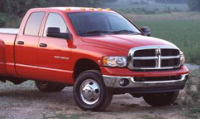
Towing Mirrors: Wind Resistance Negligible on MPG?


Thread Starter
|
Rookie
Joined: May 2007
Posts: 84
Likes: 0
From:
 Towing Mirrors: Wind Resistance Negligible on MPG?
Hey guys. I'm slowlygetting used to driving my new QC Sport after taking a break from Trucks for a year and opting for an affordable Scion while paying down the credit cards.
Well...to quote a certain oil magnate..."Mission Accomplished!!!"
I'mbeyondhappyto be the owner of my big blue dream truck, and I'm truly loving my new Dodge and enjoying the break-in period, but my God the thing is huge man! LOL!
The size of this beast makes my former 2003 SVT Lightning look small in comparison!I'm slowly gaining more and more confidence in changing lanes on the highway, pulling out in Miami traffic, and basically getting used to being in such a beast of a truck and enjoying every second of it too!
In an attempt to avoid a full on collision I inverted the towing mirrors and actually like them in the tow position much more than the standard fold down position. I find I like the wide angle mirror this way and can negotiate lane changes with more confidence.
My question is... do you think the added wind resistance with the mirrors going vertical is negligible on the overall MPG?
I plan to change them up for the ride home and watch the average mpg on the screen, but I doubt it's going tohave much of an effect. Thoughts?
Well...to quote a certain oil magnate..."Mission Accomplished!!!"
I'mbeyondhappyto be the owner of my big blue dream truck, and I'm truly loving my new Dodge and enjoying the break-in period, but my God the thing is huge man! LOL!
The size of this beast makes my former 2003 SVT Lightning look small in comparison!I'm slowly gaining more and more confidence in changing lanes on the highway, pulling out in Miami traffic, and basically getting used to being in such a beast of a truck and enjoying every second of it too!
In an attempt to avoid a full on collision I inverted the towing mirrors and actually like them in the tow position much more than the standard fold down position. I find I like the wide angle mirror this way and can negotiate lane changes with more confidence.
My question is... do you think the added wind resistance with the mirrors going vertical is negligible on the overall MPG?
I plan to change them up for the ride home and watch the average mpg on the screen, but I doubt it's going tohave much of an effect. Thoughts?

Champion
Joined: Aug 2005
Posts: 3,313
Likes: 8
RE: Towing Mirrors: Wind Resistance Negligible on MPG?
Do your mirrors look something like this?

I don't have enough official information
on the aero of your model year
(Chrysler quit releasing those numbers when it got embarassing)
to make an estimate for you of the MPG effect
...but if you will tell me what highway mph speed you usually travel
and measure the angle the mirrors 'lean back'
and the height, width
of both the mirror body and its support arm
I will use the software program called
Fuel Economy Calculator
to make an educated guess as to how much the MPG would improve
if you had no mirrors at all.
On a 1995 Ram 1500
with standard chrome 'elephant ears' mirrors
the wind resistance of the mirrors takes away about
1 MPG.

if you want to see some mirrors with special "lips" to reduce wind resistance look at the latest Mercedes ML500 SUV, especially the underside.
Navistar was granted a US patent a few years ago on a large towing mirror with much less wind resistance:
http://freepatentsonline.com/6010222.html
I don't have enough official information
on the aero of your model year
(Chrysler quit releasing those numbers when it got embarassing)
to make an estimate for you of the MPG effect
...but if you will tell me what highway mph speed you usually travel
and measure the angle the mirrors 'lean back'
and the height, width
of both the mirror body and its support arm
I will use the software program called
Fuel Economy Calculator
to make an educated guess as to how much the MPG would improve
if you had no mirrors at all.
On a 1995 Ram 1500
with standard chrome 'elephant ears' mirrors
the wind resistance of the mirrors takes away about
1 MPG.
if you want to see some mirrors with special "lips" to reduce wind resistance look at the latest Mercedes ML500 SUV, especially the underside.
Navistar was granted a US patent a few years ago on a large towing mirror with much less wind resistance:
http://freepatentsonline.com/6010222.html
Thread Starter
|
Rookie
Joined: May 2007
Posts: 84
Likes: 0
From:
RE: Towing Mirrors: Wind Resistance Negligible on MPG?
Hey HankL. Yep! I have the same mirrors in the first photo with the mirrors in the vertical tow position
Average drive during the week is as follows:
42 Miles on three major highways one way. (84 miles round trip)
Average speed for 90% of the trip: 75 (50% on cruise control)
Drive is 5 days a week. (420 miles per week)
Hope this is enough to gauge it. I'm at the office and can't measure the angles of the mirror base though.
Thanks for your help!
~ J.
Average drive during the week is as follows:
42 Miles on three major highways one way. (84 miles round trip)
Average speed for 90% of the trip: 75 (50% on cruise control)
Drive is 5 days a week. (420 miles per week)
Hope this is enough to gauge it. I'm at the office and can't measure the angles of the mirror base though.
Thanks for your help!
~ J.

Champion
Joined: Aug 2005
Posts: 3,313
Likes: 8
RE: Towing Mirrors: Wind Resistance Negligible on MPG?
If someone wanted to start a small business
selling devices that really improve highway MPG on pickups
they could come up with a retro-fit kit
that does away with traditional outside mirrors
and replaces them with small video cameras
mounted near the front corner of the truck.
These also eliminate the 'blind spot'
so the kit could also be considered a safety improvement.
It is also likely the noise heard in the cab would go down
and stereos could be heard better with less noise.
Pep Boys is selling a video camera and display that mounts
at the rear license plate for less than $100 so a kit with 2
cameras and block off plates for where the old mirrors were
should be able to be sold for less than $300
The DaimlerChrysler show car called the 'Boxfish'
eliminated the mirrors and used video cameras:

selling devices that really improve highway MPG on pickups
they could come up with a retro-fit kit
that does away with traditional outside mirrors
and replaces them with small video cameras
mounted near the front corner of the truck.
These also eliminate the 'blind spot'
so the kit could also be considered a safety improvement.
It is also likely the noise heard in the cab would go down
and stereos could be heard better with less noise.
Pep Boys is selling a video camera and display that mounts
at the rear license plate for less than $100 so a kit with 2
cameras and block off plates for where the old mirrors were
should be able to be sold for less than $300
The DaimlerChrysler show car called the 'Boxfish'
eliminated the mirrors and used video cameras:
Thread Starter
|
Rookie
Joined: May 2007
Posts: 84
Likes: 0
From:
RE: Towing Mirrors: Wind Resistance Negligible on MPG?
Well I returned them back to the regular position and made the drive to work. MPG varied from 14 - 15, so the difference is negligible after all. 13.9 - 14.5 mpg dependant on the wind conditions.

Veteran
Joined: Mar 2006
Posts: 281
Likes: 0
From:
RE: Towing Mirrors: Wind Resistance Negligible on MPG?
Dude don't dwell on it, I keep mine in that position even when I tow...the angle of view is actually better!.....The mpg difference is sooooo minimal, yours could have been affected by mere temperatuer or barometric pressure...if you like em down, drive with em down!
Trending Topics
Champion
Joined: Aug 2005
Posts: 3,313
Likes: 8
RE: Towing Mirrors: Wind Resistance Negligible on MPG?
If you are going to do a MPG test
looking for a sensitive difference
like mirror position
use your zip code and a website like this:
http://www.wunderground.com/
to find what the wind speed was on the days you tested.
Slight differences in head, tail
...and side winds especially
can affect the MPG more than the mirror position.
The 'gold standard' way to test for MPG
is to find a fellow Rammer who will test with you "convoy style"
and then compare the difference between the MPG of the two trucks.
The other Ram pickup does not have to be identical to you or even have the same mirrors....although it is better the closer the two trucks are.
Note this is similar to how the Mythbusters TV show tested identical Ford F150s with tailgates up and down.
This is because Ford Engineers
(following Society of Automotive Engineers rules)
advised the Mythbusters to test that way
to cancel out winds, temperatures, road conditions and so forth.
looking for a sensitive difference
like mirror position
use your zip code and a website like this:
http://www.wunderground.com/
to find what the wind speed was on the days you tested.
Slight differences in head, tail
...and side winds especially
can affect the MPG more than the mirror position.
The 'gold standard' way to test for MPG
is to find a fellow Rammer who will test with you "convoy style"
and then compare the difference between the MPG of the two trucks.
The other Ram pickup does not have to be identical to you or even have the same mirrors....although it is better the closer the two trucks are.
Note this is similar to how the Mythbusters TV show tested identical Ford F150s with tailgates up and down.
This is because Ford Engineers
(following Society of Automotive Engineers rules)
advised the Mythbusters to test that way
to cancel out winds, temperatures, road conditions and so forth.

Champion
Joined: May 2006
Posts: 4,616
Likes: 0
From: San Diego
RE: Towing Mirrors: Wind Resistance Negligible on MPG?
do 1 tank of gas with them up. do the next with them down. simple as that. takes a 2 week test in my case. i dunno how often you fill up. make sure the gas you use is the same and drive the same. i think that would be the best way to figure it all out. no? also, make sure you reset your mpg screen after the fill ups.
Champion
Joined: Aug 2005
Posts: 3,313
Likes: 8
RE: Towing Mirrors: Wind Resistance Negligible on MPG?
Even the best sharpshooters have a 'grouping'
of bullet holes on the target.
Would you fault a sniper
who had a 2.44 inch wide group at 300 yards?
The trainned and experienced sniper might truthfully tell you he tried to do everything the same, but the wind, temperature, weight of the bullet, amount of powder in the cartridge, all lead to 'scatter.'
Just like holes in the target,
normal MPG will vary by at least 2.44 for a Ram
even if you drive the same route
in the same truck
with gasoline bought from the same station
and if you fill to the same spot
after shaking the truck to get air bubbles out of tank.
Am I guessing at this?
No, I learned the hard way from this experiment in year 2000:
-----
Here's the results of several tanks of gasoline I kept track of with the OD
either on or off in city driving. After each tank fill up, I alternated
keeping the OD on or off.
I have since made 3 more 300 mile long mpg tests in city driving since i
posted the original 6 tests. My test results now look like this:
-----------
OD turned off runs:
7-19-00 14.32 mpg Amoco87
7-29-00 15.17 mpg Amoco87
8-08-00 14.23 mpg Amoco87
9-08-00 13.53 mpg Amoco87
---------------------------------
average 14.31 mpg
OD turned on runs:
(these were run inbetween the runs above)
7-12-00 14.16 mpg Exxon87
8-17-00 14.25 mpg Amoco87
8-24-00 15.49 mpg Amoco87
9-01-00 15.03 mpg Amoco87
9-12-00 14.35 mpg Amoco87
-------------------------------
average 14.66 mpg
As you can see, so far the OD on/off difference seems to be small with a
slight 0.3 MPG edge to leaving OD on while in city driving. That is about a 2% difference.
Note also how much the MPG jumps around.
All real world tests have 'random variation.'
If I had done just two tests, and had by chance gotten the low 14.16 for the
OD on, and the high 15.17 for OD off, I would have falsely concluded that OD on really hurts in city driving.
The average of all 9 tanks is 14.50 MPG
and the standard deviation is 0.61
so in terms of finding MPG differences from a modification
anything less than a 1.22 difference either high or low
is gonna be lost in the natural 'scatter' from
13.3 to 15.7
of bullet holes on the target.
Would you fault a sniper
who had a 2.44 inch wide group at 300 yards?
The trainned and experienced sniper might truthfully tell you he tried to do everything the same, but the wind, temperature, weight of the bullet, amount of powder in the cartridge, all lead to 'scatter.'
Just like holes in the target,
normal MPG will vary by at least 2.44 for a Ram
even if you drive the same route
in the same truck
with gasoline bought from the same station
and if you fill to the same spot
after shaking the truck to get air bubbles out of tank.
Am I guessing at this?
No, I learned the hard way from this experiment in year 2000:
-----
Here's the results of several tanks of gasoline I kept track of with the OD
either on or off in city driving. After each tank fill up, I alternated
keeping the OD on or off.
I have since made 3 more 300 mile long mpg tests in city driving since i
posted the original 6 tests. My test results now look like this:
-----------
OD turned off runs:
7-19-00 14.32 mpg Amoco87
7-29-00 15.17 mpg Amoco87
8-08-00 14.23 mpg Amoco87
9-08-00 13.53 mpg Amoco87
---------------------------------
average 14.31 mpg
OD turned on runs:
(these were run inbetween the runs above)
7-12-00 14.16 mpg Exxon87
8-17-00 14.25 mpg Amoco87
8-24-00 15.49 mpg Amoco87
9-01-00 15.03 mpg Amoco87
9-12-00 14.35 mpg Amoco87
-------------------------------
average 14.66 mpg
As you can see, so far the OD on/off difference seems to be small with a
slight 0.3 MPG edge to leaving OD on while in city driving. That is about a 2% difference.
Note also how much the MPG jumps around.
All real world tests have 'random variation.'
If I had done just two tests, and had by chance gotten the low 14.16 for the
OD on, and the high 15.17 for OD off, I would have falsely concluded that OD on really hurts in city driving.
The average of all 9 tanks is 14.50 MPG
and the standard deviation is 0.61
so in terms of finding MPG differences from a modification
anything less than a 1.22 difference either high or low
is gonna be lost in the natural 'scatter' from
13.3 to 15.7