


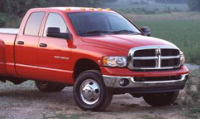
turbo vs. supercharger


Thread Starter
Joined: Jul 2007
Posts: 10
Likes: 0
From:
 turbo vs. supercharger
I have been looking at GS Motorsports Supercharger. However, I have noticed that more people have the STS Turbo. I was wondering what are the major differences especially motor life. This is my daily. I was also wondering what has to be added to the STS to get the fuel right. The GS kit comes with fuel curve and an option for bigger injectors and up to 12 lbs. of boost or so. Also which one has the better outcome as far as longevity goes. Thanks.

All Star
Joined: May 2005
Posts: 946
Likes: 1
From:
RE: turbo vs. supercharger
A stock hemi can handle around 7lbs, that's it, safely.
It doesn't matter what you use for boost, so longectivity is the same with either.
The GSM uses additional injectors in the intake tube and the fuel doesn't mix well because our intakes are not designed to be wet (fuel added into the intake).
The STS guys use the SMT-6 hemi tuner kit from srt10kllr. It includes the smt-6 tuner, larger injectors and a 2 bar map sensor. We all use it and it works great.
It doesn't matter what you use for boost, so longectivity is the same with either.
The GSM uses additional injectors in the intake tube and the fuel doesn't mix well because our intakes are not designed to be wet (fuel added into the intake).
The STS guys use the SMT-6 hemi tuner kit from srt10kllr. It includes the smt-6 tuner, larger injectors and a 2 bar map sensor. We all use it and it works great.
Thread Starter
Joined: Jul 2007
Posts: 10
Likes: 0
From:
RE: turbo vs. supercharger
What are the fail safes of getting the turbo to not spike out past 7lbs. I remember in a PM you said that you dont push yours because it is your daily. I can understand that. I am however younger and will be getting into my truck probably on a regular bases. Turbos are not new to me. There is always a spike somewhere. Also what has to be done to boost over 7lbs.

Record Breaker
Joined: May 2007
Posts: 1,152
Likes: 2
From: Milledgeville, GA
RE: turbo vs. supercharger
Why is a boost spike guaranteed? With a proper controller, even manual, it should be rock steady. I've had enough turbo cars to make my own parade, none of them stock, so I'm quite familiar with them as well.
Going over 7 psi will require the usual buildup of engine internals. When you're at that stage you'll also need to address the tranny because at that kind of power it isn't going to last long in stock configuration. Ya gotta pay to play!
Going over 7 psi will require the usual buildup of engine internals. When you're at that stage you'll also need to address the tranny because at that kind of power it isn't going to last long in stock configuration. Ya gotta pay to play!


 RE: turbo vs. supercharger
The turbo's are making quite a bit more power than the superchargers on the market right now. I'm interested in the Procharger numbers, they ought to be pretty good.
As for boost spikes, you'll get a spike during the transmission upshifts because the engine load changes for a brief second. It's not an "engine load boost spike" though so it's not been an issue.
With these heavy trucks, folks have been getting better off the line response with 4.56 gears and a tq converter.
So far, the turbo folks are the only ones that have a surving transmission. Because turbo's build power based off engine load, during the 2nd gear prime downshifts we go to a 0 load state at the downshift. Once the clutches fully engage boost will then build. The downshifts have been the killer on n/a and supercharged engines because they are making full flywheel power during the downshifts causing the clutches to slip at the time they engage. BlueTurboHemi is the only turbo truck we've seen on the forums and talked to that has a failed transmission. Ended up being a badTCM (he has an '03)which was causing 0 line pressurein different driving conditions!!!
As for boost spikes, you'll get a spike during the transmission upshifts because the engine load changes for a brief second. It's not an "engine load boost spike" though so it's not been an issue.
With these heavy trucks, folks have been getting better off the line response with 4.56 gears and a tq converter.
So far, the turbo folks are the only ones that have a surving transmission. Because turbo's build power based off engine load, during the 2nd gear prime downshifts we go to a 0 load state at the downshift. Once the clutches fully engage boost will then build. The downshifts have been the killer on n/a and supercharged engines because they are making full flywheel power during the downshifts causing the clutches to slip at the time they engage. BlueTurboHemi is the only turbo truck we've seen on the forums and talked to that has a failed transmission. Ended up being a badTCM (he has an '03)which was causing 0 line pressurein different driving conditions!!!

Professional
Joined: Nov 2006
Posts: 193
Likes: 0
From: Maricopa, Arizona
RE: turbo vs. supercharger
Where would someone go to fine prices and details about the different chargers available? Is STS the only turbo maker...
I guess what i'm asking is can someone post links to the available turbo's and supers currently available on the market please?
-R
I guess what i'm asking is can someone post links to the available turbo's and supers currently available on the market please?
-R
Trending Topics

Champion
Joined: Jul 2007
Posts: 3,130
Likes: 0
From: Hamilton, Ontario
RE: turbo vs. supercharger
Having some turbo knowledge, I can tell you that aslong as it's done right, there is no danger with turbos. You NEED fuel management with ANY boost though, whether it's turbo or sc. And you can use the same fuel management for either type of power adder, which means no, you are not stuck with extra injectors with a super charger, you can use the tuner and bigger injectors just like the turbo guys.
As for boost spikes, that is not a problem, that's what wastegates are for. When the pressure in the charge pipe exeeds your desired psi, such as when you close the throttle, the wastegate opens and the exhaust no longer spools the turbo until the wastegate closes again. A blowwoff valve also helps with that.
A turbo kit is much more involved though, and requires alot more work, so keep that in mind. Where an sc just bolts up like an alternator, the turbo requires exhaust modifications, lots of space(they get hot enough to glow), etc.
Either way, do not do it yourself unless you research ALOT, or have someone experienced lined up that can do it for you.
As for boost spikes, that is not a problem, that's what wastegates are for. When the pressure in the charge pipe exeeds your desired psi, such as when you close the throttle, the wastegate opens and the exhaust no longer spools the turbo until the wastegate closes again. A blowwoff valve also helps with that.
A turbo kit is much more involved though, and requires alot more work, so keep that in mind. Where an sc just bolts up like an alternator, the turbo requires exhaust modifications, lots of space(they get hot enough to glow), etc.
Either way, do not do it yourself unless you research ALOT, or have someone experienced lined up that can do it for you.
All Star
Joined: May 2005
Posts: 946
Likes: 1
From:
RE: turbo vs. supercharger
Turbos are used in most diesel truck and work boat motors and have put 100's of thousands of miles on them.
The sts system is no harder to install than a centrifical supercharger. It mounts where the muffler used to mount, so the heat is not under the hood.
I am an sts dealer, so for prices, etc, contact me.
Nofrag is right about the wastegate and blow off valve.
The wg along with the boost controller control the amount of boost that goes into the engine. If the boost goes higher they will exhaust it to atmoshpere and keep it from the engine. The bov is used as a safety valve. Usually set to a little above the highest boost you intend to run and will exhaust the boost to atmosphere if something goes wrong with the wg/bc or vac/boost lines.
There is another type of bov that is used something like a wg, but we don't have that.
In either case, a spike will not damage the engine, it would take a sustained detonation.
The sts system is no harder to install than a centrifical supercharger. It mounts where the muffler used to mount, so the heat is not under the hood.
I am an sts dealer, so for prices, etc, contact me.
Nofrag is right about the wastegate and blow off valve.
The wg along with the boost controller control the amount of boost that goes into the engine. If the boost goes higher they will exhaust it to atmoshpere and keep it from the engine. The bov is used as a safety valve. Usually set to a little above the highest boost you intend to run and will exhaust the boost to atmosphere if something goes wrong with the wg/bc or vac/boost lines.
There is another type of bov that is used something like a wg, but we don't have that.
In either case, a spike will not damage the engine, it would take a sustained detonation.

Professional
Joined: Aug 2004
Posts: 117
Likes: 1
From: 33.43.342, 84.21.602
RE: turbo vs. supercharger
one more thing about a turbo. . .it requires very little actual engine power to turn one. . .infact the only loss from a turbo is the increased backpressure, and that in itself is minimal from the stand point of the power gain. a supercharger requires a good bit of power from the crank to turn it, therefore there is a good bit of loss due to that.
I realy dont know alot about the Hemi, but I do know for gasses that have a turbo kit installed, lugging the engine with boost will cause problems, pre-detonation, and possably nukeing a hole from the engine running to lean.
turbo's on gassers are there mainly to increase performance of the engine, turbo's on diesels are there to mainly help keep the engine cool, a side effect of the extra air being fed into the engine is increased power
I realy dont know alot about the Hemi, but I do know for gasses that have a turbo kit installed, lugging the engine with boost will cause problems, pre-detonation, and possably nukeing a hole from the engine running to lean.
turbo's on gassers are there mainly to increase performance of the engine, turbo's on diesels are there to mainly help keep the engine cool, a side effect of the extra air being fed into the engine is increased power

