


poor mans CAI ...


Thread Starter
|
Record Breaker
Joined: Mar 2006
Posts: 2,165
Likes: 2
From: Alberta
 poor mans CAI ...
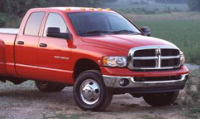
I have nothing better to do, so I addeda small ice pack ( froazen ) inside my stock air box under the air filter, but not in the way of the air intake on the fender and went for a drive.
This is a old trick hot rodders use, adding a bag of ice on the intake manifold, So it should work..
Any way's I really did not notice any great increase's in mpg or performance and the clips on the hemi air box are a P in the A, But I thinking on a hot day, thier might be a increase in performnace and with a little more improvement, this could be a great idea !!!

Thread Starter
|
Record Breaker
Joined: Mar 2006
Posts: 2,165
Likes: 2
From: Alberta
RE: poor mans CAI ...
No, you cn't really drive with a bag of ice on your intake, but if you could cool the air entering theair box and keep it cool with a ice pack, or even a froazen water botle, this should do the same as a CAI, any issue being you have to swap out the ice packs.

Record Breaker
Joined: May 2007
Posts: 1,152
Likes: 2
From: Milledgeville, GA
RE: poor mans CAI ...
The air flows too quickly to be cooled. It's the same reason why wrapping the intake tube doesn't do anything -- the air just isn't there long enough to gain or lose heat.
Remember, air is a poor thermal conductor.
Remember, air is a poor thermal conductor.

Registered User
Joined: Apr 2007
Posts: 20
Likes: 0
From: Titletown, USA
Trending Topics

V6 Ram Moderator
Joined: Jan 2008
Posts: 1,961
Likes: 0
From: Chicago
RE: poor mans CAI ...
^^
no, he just has a more blunt way of saying, "hey, cai's really don't do that much". face it, even a 400 cai will only get you like a few hp. he said air is a 'poor' thermal conductor...not a 'non' thermal conductor.
i got yo back john m
no, he just has a more blunt way of saying, "hey, cai's really don't do that much". face it, even a 400 cai will only get you like a few hp. he said air is a 'poor' thermal conductor...not a 'non' thermal conductor.
i got yo back john m

Record Breaker
Joined: Aug 2007
Posts: 1,041
Likes: 0
From: Central NY
RE: poor mans CAI ...
The "cold" air coming into a CAI is ambient temp, versus air that has been warmed by the engine. The colder the ambient temp that day, the more effective it will be. Sticking a bag of ice in the intake box doesn't work because of the lack of surface area. Think of turbocharger intercoolers - they have thousands of fins, hundreds and hundreds of square inches, to effectively cool the incoming air.
You're not going to get much with a hunk of ice in the intake. Heat transfer depends on the temperature difference between the two materials, the surface area contacting both fluids, and the heat transfer coefficient. In the case of intake air and ice...you have a favorable temp difference, but a poor heat transfer coefficient...so you have to make up for it with lots of area.
You're not going to get much with a hunk of ice in the intake. Heat transfer depends on the temperature difference between the two materials, the surface area contacting both fluids, and the heat transfer coefficient. In the case of intake air and ice...you have a favorable temp difference, but a poor heat transfer coefficient...so you have to make up for it with lots of area.


