


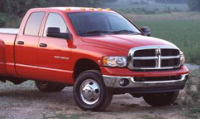
Ram Hemi fuel economy in the winter


Thread Starter
|
Registered User
Joined: Mar 2008
Posts: 15
Likes: 0
 Ram Hemi fuel economy in the winter
So what is your fuel economy in the cold of winter compared to the hot summer months? I hear some people have a lot worse in the cold winter. I have been told by a mechanic to rig up something to heat the intake air for normal no load highway cruising. Anyone else heard of this?

Champion
Joined: Aug 2005
Posts: 3,313
Likes: 8
the gain from heated intake air in winter
will be pretty small
it comes from the fact that heated air has less oxygen
so the throttle blades have to open slightly more
and this creates a higher MAP ( same thing as lower vacuum)
and this decreases 'pumping losses' at part throttle
however, the work of compressing a hot gas mixture
somewhat off-sets this
Your engine already gets a similar effect
when the EGR system kicks in
puts oxygen-less gas into the manifold
and also raises MAP and lowers pumping losses
Take a real close look at your factory air inlet.
Notice it is designed to feed the engine
hot air from the engine compartment
when the truck is stopped and idling.
Hot air at idle does slightly reduce fuel consumption per hour
at a time when your pickup is getting 0 MPG while not moving
will be pretty small
it comes from the fact that heated air has less oxygen
so the throttle blades have to open slightly more
and this creates a higher MAP ( same thing as lower vacuum)
and this decreases 'pumping losses' at part throttle
however, the work of compressing a hot gas mixture
somewhat off-sets this
Your engine already gets a similar effect
when the EGR system kicks in
puts oxygen-less gas into the manifold
and also raises MAP and lowers pumping losses
Take a real close look at your factory air inlet.
Notice it is designed to feed the engine
hot air from the engine compartment
when the truck is stopped and idling.
Hot air at idle does slightly reduce fuel consumption per hour
at a time when your pickup is getting 0 MPG while not moving


Professional
Joined: Dec 2007
Posts: 140
Likes: 2
From:
Winter gas mix screws everything up. Cold air is dense air a/f ratio should be the same so mileage should be better. Some other things to consider.
9 reasons your winter fuel economy bites
1. More idling
This should be a no-brainer, yet parked idling cars are a common sight in cold weather. Resist the temptation to idle your car to warm it up. An idling engine gets 0 mpg. Consider also that idling the engine does nothing to warm up the tires and drivetrain.
Even in the coldest weather, you can begin driving after 30 seconds from a cold start - keep speeds low/moderate and use gentle acceleration until the temperature gauge starts to climb (source).
2. Low tire pressure
Of course you're smart enough to keep up your tire pressure as the temperature drops, right? A 10-degree (F) change in ambient temperature equates to a 1 psi change in tire pressure (source). Fuel economy declines 0.4 percent for every 1 psi drop (source).
3. Increased rolling resistance
Even if you're completely attentive to proper tire pressure, cold ambient temperatures will still cause your tires to return worse mileage. That's because a tire's shape isn't completely round - the sidewall bulges out at the bottom, and where the tread meets the road the small contact patch is actually flat. As the tire rotates, it constantly deforms to this shape, and this deformation requires more energy when the rubber is cold and hard. Rolling resistance at 0 degrees F is 20% greater than at 80 degrees (source 1, source 2).
4. Crappy road conditions
It's increased rolling resistance of another kind: driving through slush and snow. And then there's its wasteful polar (no pun intended) opposite: no friction at all! (A.K.A. wheelspin on ice.)
5. Lower average engine temperature
In the winter, an engine takes longer to reach operating temperature and cools off faster when shut off. Since the engine management system orders up a richer mixture when cold (proportionately more fuel in the air/fuel combination), more fuel is being burned overall.
A block heater can offset this problem (improving fuel economy by 10% in sub-zero conditions - source), as can garage parking, and combining trips (to minimize the number of cold/hot cycles).
Also related...
6. Higher average lubricant viscosity
Engine oil thickens as it cools. So does transmission and differential fluids and even bearing grease. Significantly more energy is needed to overcome the added drag these cold lubricants cause.
Using synthetic fluids can address this problem, since their viscosity changes less at extreme temperatures than traditional mineral fluids.
7. Weaker gasoline
Gasoline doesn't vaporize readily at very cold temperatures. So oil companies formulate fuel differently for cold-weather markets in the winter. Unfortunately, the changes that provide better cold vaporization characteristics also result in less available energy for combustion. You won't get as far on a liter of winter gas as you will on a liter of summer gas. (Source.)
8. Higher electrical loads
In colder temps, you use electrical accessories more often:
- lights (in higher lattitudes it's darker in the winter)
- rear window defroster (because it's easier than using the ice scraper, right?)
- heater blower motor (I don't have a/c, so this isn't balanced out during warm conditions); heated seats/mirrors
- windshield washer pump (because it's easier than using the ice scraper, right? And for frequently cleaning off dirty road spray.)
9. More aerodynamic drag
No, I'm not referring to the layer of snow you're too lazy to brush off the top of the car (though that would hurt mpg too).
A vehicle’s aerodynamic drag is proportional to air density, and the density increases as temperature drops. For every 10 degree F drop in temperature, aerodynamic drag increases by 2% (source). http://www.metrompg.com/posts/winter-mpg.htm
Rick
9 reasons your winter fuel economy bites
1. More idling
This should be a no-brainer, yet parked idling cars are a common sight in cold weather. Resist the temptation to idle your car to warm it up. An idling engine gets 0 mpg. Consider also that idling the engine does nothing to warm up the tires and drivetrain.
Even in the coldest weather, you can begin driving after 30 seconds from a cold start - keep speeds low/moderate and use gentle acceleration until the temperature gauge starts to climb (source).
2. Low tire pressure
Of course you're smart enough to keep up your tire pressure as the temperature drops, right? A 10-degree (F) change in ambient temperature equates to a 1 psi change in tire pressure (source). Fuel economy declines 0.4 percent for every 1 psi drop (source).
3. Increased rolling resistance
Even if you're completely attentive to proper tire pressure, cold ambient temperatures will still cause your tires to return worse mileage. That's because a tire's shape isn't completely round - the sidewall bulges out at the bottom, and where the tread meets the road the small contact patch is actually flat. As the tire rotates, it constantly deforms to this shape, and this deformation requires more energy when the rubber is cold and hard. Rolling resistance at 0 degrees F is 20% greater than at 80 degrees (source 1, source 2).
4. Crappy road conditions
It's increased rolling resistance of another kind: driving through slush and snow. And then there's its wasteful polar (no pun intended) opposite: no friction at all! (A.K.A. wheelspin on ice.)
5. Lower average engine temperature
In the winter, an engine takes longer to reach operating temperature and cools off faster when shut off. Since the engine management system orders up a richer mixture when cold (proportionately more fuel in the air/fuel combination), more fuel is being burned overall.
A block heater can offset this problem (improving fuel economy by 10% in sub-zero conditions - source), as can garage parking, and combining trips (to minimize the number of cold/hot cycles).
Also related...
6. Higher average lubricant viscosity
Engine oil thickens as it cools. So does transmission and differential fluids and even bearing grease. Significantly more energy is needed to overcome the added drag these cold lubricants cause.
Using synthetic fluids can address this problem, since their viscosity changes less at extreme temperatures than traditional mineral fluids.
7. Weaker gasoline
Gasoline doesn't vaporize readily at very cold temperatures. So oil companies formulate fuel differently for cold-weather markets in the winter. Unfortunately, the changes that provide better cold vaporization characteristics also result in less available energy for combustion. You won't get as far on a liter of winter gas as you will on a liter of summer gas. (Source.)
8. Higher electrical loads
In colder temps, you use electrical accessories more often:
- lights (in higher lattitudes it's darker in the winter)
- rear window defroster (because it's easier than using the ice scraper, right?)
- heater blower motor (I don't have a/c, so this isn't balanced out during warm conditions); heated seats/mirrors
- windshield washer pump (because it's easier than using the ice scraper, right? And for frequently cleaning off dirty road spray.)
9. More aerodynamic drag
No, I'm not referring to the layer of snow you're too lazy to brush off the top of the car (though that would hurt mpg too).
A vehicle’s aerodynamic drag is proportional to air density, and the density increases as temperature drops. For every 10 degree F drop in temperature, aerodynamic drag increases by 2% (source). http://www.metrompg.com/posts/winter-mpg.htm
Rick
Last edited by whiteonrice; Aug 22, 2008 at 12:50 AM.

3rd gen Ram, Newbies
Joined: May 2008
Posts: 3,815
Likes: 0
From: Chicago
good post. never thought about all the factors. but i know when i was in school all the extra idling kicked my *** since all i made was short trips. it makes a really big difference.
Trending Topics

Veteran
Joined: Feb 2006
Posts: 387
Likes: 0
From: Northern New Jersey
Whiteonrice provided a comprehensive summary on the effects of winter driving. I have found item number 5 to have the greatest effect. My around town driving will produce a 1 - 2 mpg decrease, however my highway driving loss is much smaller. Guessing that the engine operating temperature is reached, the tires have warmed up and the denser air offsets some of the other variables. Synthetic fluids and more frequent tire checks is your best bet.