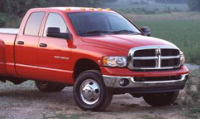
MDS: on or off - how do you know?


Thread Starter
|
Rookie
Joined: Jan 2008
Posts: 50
Likes: 0
From: Connecticut
 MDS: on or off - how do you know?
Only have 600 miles on my '08 1500 QC HEMI and lovin' it so far. Just wondering if anyone can tell me how to know when the MDS kicks in? Does it only happen at cruising speeds? Is there a way you can tell it's in 4 cyl mode? I did a search for "MDS" and saw questions about deactivating MDS and another that says Tow Mode stops MDS from kicking in but nothing about letting you know when it's working.

Admin formally known as 94rt10ohio
Joined: Apr 2005
Posts: 9,025
Likes: 3
From: Curtice, OH
There is not a light if that is what you are asking.
Someone will chime in but the manual may mention between what speeds it will kick in. I do know at 70+ it deactivates.
Put on a aftermarket exhaust, then you will know when it is on.
Someone will chime in but the manual may mention between what speeds it will kick in. I do know at 70+ it deactivates.
Put on a aftermarket exhaust, then you will know when it is on.

All Star
Joined: May 2008
Posts: 770
Likes: 0
From: Massachusetts
The brochure I have from Dodge says at speeds of 18mph and up it can activate. I believe it activates when you are maintaining constant speed and are on level ground. There has been at least one person on here that has added a light to tell them when MDS is activated. Check out the DIY section, it might be in there. Personally, I have never noticed MDS kicking in.

Record Breaker
Joined: Jun 2007
Posts: 1,338
Likes: 0
From: Upstate, NY
Get an aftermarket exhaust and you will totally know when it kicks on.
MDS allows the Hemi to transition from eight cylinders to four in just 40 milliseconds, which is quicker than the blink of an eye. The switch takes place when there’s little or no load on the engine, such as cruising the Interstate where engineers say it only takes about 20 or 30 horsepower to keep a vehicle moving. Long hauls on open roads with a steady speed should result in the most noticeable savings. Despite the promise that “customers will experience fuel economy gains of up to 20 percent under certain driving conditions,” Dodge didn’t change the EPA estimated fuel economy ratings for the 2006 Hemi-power Ram 1500 pickup. The 2005 and 2006 press materials state the EPA numbers as 14 city/18 highway for the 2-wheel-drive models and 13/17 for the 4WD trucks.
The MDS operation is very smooth. Unlike the Honda Odyssey minivan, which has a similar system that cuts out three of the engine’s six cylinders while cruising, there is no indicator on the dash to let the driver know how many of the Hemi’s cylinders are firing. Trying to determine when MDS kicks in or out is futile, even with the quieter noise levels in the cab. Stabbing the throttle off cruising speed offers normal acceleration and transmission kickdown.
The on-board engine-management computer controls the MDS. The four cylinders that can be deactivated are numbers 1,4,6 and 7. That includes the two inner cylinders on one back and the two outer cylinders on the opposing bank. By shutting down these specific cylinders at once, the engine can maintain regular 180-degree firings as a V4. Hemi engineers designed the cylinder block with a specific oil circuit to support MDS. Four solenoids control oil pressure to eight specially designed hydraulic-roller lifters that control the intake and exhaust valves in the cylinders to be deactivated. When the solenoids are activated, high-pressure oil is fed to the lifters. A pin in each lifter is moved, disconnecting the outer portion of the lifter from the inner. The outer portion of the lifter continues to ride along the camshaft lobes but the inner portion, which supports the pushrod, remains still. With both valves closed, the engine computer also shuts off the spark and fuel to those cylinders.
MDS allows the Hemi to transition from eight cylinders to four in just 40 milliseconds, which is quicker than the blink of an eye. The switch takes place when there’s little or no load on the engine, such as cruising the Interstate where engineers say it only takes about 20 or 30 horsepower to keep a vehicle moving. Long hauls on open roads with a steady speed should result in the most noticeable savings. Despite the promise that “customers will experience fuel economy gains of up to 20 percent under certain driving conditions,” Dodge didn’t change the EPA estimated fuel economy ratings for the 2006 Hemi-power Ram 1500 pickup. The 2005 and 2006 press materials state the EPA numbers as 14 city/18 highway for the 2-wheel-drive models and 13/17 for the 4WD trucks.
The MDS operation is very smooth. Unlike the Honda Odyssey minivan, which has a similar system that cuts out three of the engine’s six cylinders while cruising, there is no indicator on the dash to let the driver know how many of the Hemi’s cylinders are firing. Trying to determine when MDS kicks in or out is futile, even with the quieter noise levels in the cab. Stabbing the throttle off cruising speed offers normal acceleration and transmission kickdown.
The on-board engine-management computer controls the MDS. The four cylinders that can be deactivated are numbers 1,4,6 and 7. That includes the two inner cylinders on one back and the two outer cylinders on the opposing bank. By shutting down these specific cylinders at once, the engine can maintain regular 180-degree firings as a V4. Hemi engineers designed the cylinder block with a specific oil circuit to support MDS. Four solenoids control oil pressure to eight specially designed hydraulic-roller lifters that control the intake and exhaust valves in the cylinders to be deactivated. When the solenoids are activated, high-pressure oil is fed to the lifters. A pin in each lifter is moved, disconnecting the outer portion of the lifter from the inner. The outer portion of the lifter continues to ride along the camshaft lobes but the inner portion, which supports the pushrod, remains still. With both valves closed, the engine computer also shuts off the spark and fuel to those cylinders.

Record Breaker
Joined: Jan 2007
Posts: 2,451
Likes: 0
From: CA
Speed isn't as much of a factor as throttle position and engine load. The top deactivating speed varies depending on those factors...i've had my MDS active while going close to 80 with a tailwind. I've also had it struggle to stay engaged going under 70 with a hard headwind.

Rookie
Joined: May 2008
Posts: 65
Likes: 0
Thread Starter
|
Rookie
Joined: Jan 2008
Posts: 50
Likes: 0
From: Connecticut
Wow, thanks everyone! Thats more info than I was looking for but definitely informative. Actually I am about ready to pull the trigger on a cat-back exhaust system. I've narrowed it down to either a Magnaflow or Gibson system. Since were on the topic, does anyone know if there is a significant noise level difference between a single or dual outlet?? I am thinking about sticking with a single tailpipe exit behind the pass. rear tire just like the stock system to keep it simple. Also getting a Airaid CAI to go along with it!