


Motor is HOOOPEDDD!!!


Thread Starter
|
Veteran
Joined: Dec 2008
Posts: 373
Likes: 0
 Motor is HOOOPEDDD!!!

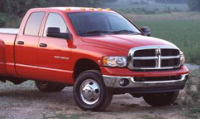
Started it up at work today and have the worst rod knock and lifter tick ever...
welll u know what that means.!

oh and by the way Everyone on the v6 forum..
my truck just rolled over onto 19,000 Miles.. this is proof that BOOSTING A V6 IS A BADDDD IDEA!

Thread Starter
|
Veteran
Joined: Dec 2008
Posts: 373
Likes: 0
got a brand new hemi crate sitting in the garage..
but has recently been deem'd "stolen" and the vins wont match.. so cant use it anymore..


Record Breaker
Joined: Aug 2007
Posts: 1,041
Likes: 0
From: Central NY
That post awesome. And off base, and on amphetamines. Reciprocating internal combstion engines are better engineered than ever before. They are not throwaway. They are not cheap junk. Things lasted longer in the past because the science and engineering of failure probability was inaccurate. So, "When in doubt, make it stout" was the order of the day. Thicken those cylinder walls by 10% just to make sure.
Nowadays, engineers are amazingly good at predicting failure. It's literally what makes aircraft travel possible. Knowing when an engine will give up, or start exhibiting component failure, enables you to eliminate extra material (aka cost) wherever possible. The result? A strong engine that costs less.
Now if an engine costs less, then the break-even point between a labor intensive repair and a replacement drops. A new Hemi might cost Chrysler $2000 for round numbers. A week in the shop to rebuild a motor that threw a rod might be twice that in warranty claims.
These "throwaway motors" are actually engineering marvels that cost everyone...consumer, garage, and manufacturer, less in the end. If there is ANYTHING a large auto company does NOT want to do, it's under-design an engine that loses money on warranty work and catastrophic failures.
Know what the design has to do. Design it to those exact specs. Test the crap out of it and know how and when it will fail. Reduce cost where possible. Test again. Repeat until the design is optimized. That is true mechanical engineering.
Nowadays, engineers are amazingly good at predicting failure. It's literally what makes aircraft travel possible. Knowing when an engine will give up, or start exhibiting component failure, enables you to eliminate extra material (aka cost) wherever possible. The result? A strong engine that costs less.
Now if an engine costs less, then the break-even point between a labor intensive repair and a replacement drops. A new Hemi might cost Chrysler $2000 for round numbers. A week in the shop to rebuild a motor that threw a rod might be twice that in warranty claims.
These "throwaway motors" are actually engineering marvels that cost everyone...consumer, garage, and manufacturer, less in the end. If there is ANYTHING a large auto company does NOT want to do, it's under-design an engine that loses money on warranty work and catastrophic failures.
Know what the design has to do. Design it to those exact specs. Test the crap out of it and know how and when it will fail. Reduce cost where possible. Test again. Repeat until the design is optimized. That is true mechanical engineering.

Registered User
Joined: Sep 2009
Posts: 7
Likes: 0
From: Tennessee
how?
So could anyone describe to me exactly what happened to make it die like that? I don't get it.
Trending Topics

Rookie
Joined: Aug 2009
Posts: 97
Likes: 0
From: Dallas TX
in short, it went like this...
High comp motor + boost = MUCH more stress on stock internals and possible bent rod with premature engine failure.
No, this is proof that boosting a STOCK V6 is a bad idea.
High comp motor + boost = MUCH more stress on stock internals and possible bent rod with premature engine failure.
No, this is proof that boosting a STOCK V6 is a bad idea.
Last edited by xanadu62; Oct 3, 2009 at 10:16 PM.
