


Torque Wrench for Lugs


Rookie
Joined: Apr 2009
Posts: 85
Likes: 0
From: CA

why? ive never had ANYTHING come loose or break on me. look at all these guys using a torque wrench yet they dont even know what spec is....that does a lot of good. but wait, they used a torque wrench! theyll be fine

Moderate User


Joined: Oct 2008
Posts: 17,003
Likes: 21
From: Albany, NY
Another important factor in wheel maintenance is lug nut torque. Torque is important for 2 reasons. The main one is that you don't want the wheel coming off the truck. The second reason is wheel warpage. My pet peeve has always been tire places running the lug nuts on with an impact wrench so tight that I couldn't get them loose to change a tire. There must have been a rash of law suits against tire stores. The store I go to really takes torquing the bolts seriously. They have a couple of torque wrenches that are calibrated weekly and communicate wirelessly to a computer that documents each bolt's torque on a customer's car. These Cepek wheels are getting torqued to 115 ft lbs. Then they make you sign off saying that the work was done and that you will being the vehicle back for a retorque after 50 miles.
According to GT/ Cepek; new aluminum wheels have some crush value left in them they should be retorqued at 50, 100 and 200 miles. After that they should hold their torque.
 When I mount any kind of aluminum wheel on a steel hub I paint antisieze on the hub. This keeps the 2 dissimilar metals from welding together over time. The picture shows wheel corrosion on the back of an aluminum wheel.
Contrary to my belief the tire store told me not to put antisieze on the lug bolts. Evidently this causes incorrect torque measurements. From what I gather it would be ok to use it if you were going to retorque your wheel bolts 3 or more times after the wheels were mounted.
And another one
WHY EVERYONE SHOULD TORQUE Every vehicle has a particular amount of torque, or force, to tighten a lug or bolt when installing a wheel on a car. These numbers are recommended by the manufacturer and can easily be found in any vehicles’ owner’s manual. It is very important to tighten lugs or bolts correctly on the car. If the wheel is not tight enough it will cause vibrations and wobbling of the wheel. On the other hand, if the wheel lug or bolt is too tight, this will but excessive force on the brake assembly and may cause brake damage.
Although it is not required, we strongly recommend that you purchase a high quality torque wrench. The torque wrench will provide you with accuracy up to two-percent clockwise and four-percent counterclockwise. The digital display will show you the torque ranges between five and one hundred ft. and lbs. and will give you the choice of three units of measure between lb., ft. lb., and Nm.

TORQUE TIPS It is recommended that you re-torque your wheels after you break them in, this period is the first 50 to 100 miles they are driven on. During that period the rims may compress slightly allowing the lugs to lose some torque. Below are the usual torque requirements depending on the size of the hardware. The hardware is simply the lug or the bolt for the wheel. And the size is imprinted on the metal of the hardware.
Hardware Size
Torque in FT/LB
10 mm 45-55
12 mm 70-80
14mm 85-90
7/16” 70-80
½” 75-85
9/16” 135-145
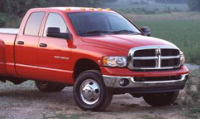
Rams have 9/16" studs
Rams have 9/16" studs
Last edited by dirtydog; Jul 23, 2009 at 12:36 PM.
