


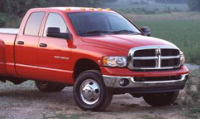
HELP CAI HEMI 5.7 RAM OPINIONS PLEASE


Thread Starter
|
Professional
Joined: Oct 2005
Posts: 212
Likes: 0
 HELP CAI HEMI 5.7 RAM OPINIONS PLEASE
Hi,
I just bought a 2005 dodge ram hemi. I have researched cold air intakes and still no decision. Everyone I contact has a different opinion. Some say AEM, Airaid, K&N, Volant, AFE. Personally the volant seems to stock looking for me. I have had an airaid that was ok. But what about the AEM and K&N? I was told the AEM is the only tube that is 4 inch. But the dyno's on their website arent that great compared to the K&N. If you have a CAI, please let me know what you have. Also, will a throttle body spacer work with the particular intake you have? Please let me know what everyone has so I can purchase one asap. Thanks.
I just bought a 2005 dodge ram hemi. I have researched cold air intakes and still no decision. Everyone I contact has a different opinion. Some say AEM, Airaid, K&N, Volant, AFE. Personally the volant seems to stock looking for me. I have had an airaid that was ok. But what about the AEM and K&N? I was told the AEM is the only tube that is 4 inch. But the dyno's on their website arent that great compared to the K&N. If you have a CAI, please let me know what you have. Also, will a throttle body spacer work with the particular intake you have? Please let me know what everyone has so I can purchase one asap. Thanks.

Record Breaker
Joined: Jul 2005
Posts: 1,421
Likes: 0
From: Orlando, FL
RE: HELP CAI HEMI 5.7 RAM OPINIONS PLEASE
K&N and Volant are the best! Everything else is crap! Volants looks really nice but to make it a ram air you have to take out a foglight...which sucks! I love my K&N...it looks nice, sounds nice and is a prefect fit. Good luck picking.
Edit-I've heard Mopar makes a CAI...but I've never seen one. I'm sure its nice too.
Edit-I've heard Mopar makes a CAI...but I've never seen one. I'm sure its nice too.

Rookie
Joined: Aug 2005
Posts: 91
Likes: 0
From:
RE: HELP CAI HEMI 5.7 RAM OPINIONS PLEASE
Don't overlook the Mopar CAI. I have one, love it so far and I was skeptical about dropping a CAI into my truck. What's nice about the Mopar one is it's not supposed to void your factory warranty.


Joined: Aug 2005
Posts: 22
Likes: 0
From:
RE: HELP CAI HEMI 5.7 RAM OPINIONS PLEASE
I got the Mopar CAI and am very happy with it. A friend put a $40.00 cheapo cai on his from ebay, it helped but nothing like the Mopar kit.
You will feel the difference above 3500 rpm. About a hour or so to install and the instructions were complete and easy.
If you have 17's on your truck you DO NOT have to remove the right front wheel. Lay the fender liner on top of the tire. You will have enough room to install the filter. Not happening with the 20"s though.
Paid $324.50 at my dealer over the counter.
[IMG]local://upfiles/19850/8F2C30256851453DAC57481476A4A2C3.jpg[/IMG]
You will feel the difference above 3500 rpm. About a hour or so to install and the instructions were complete and easy.
If you have 17's on your truck you DO NOT have to remove the right front wheel. Lay the fender liner on top of the tire. You will have enough room to install the filter. Not happening with the 20"s though.
Paid $324.50 at my dealer over the counter.
[IMG]local://upfiles/19850/8F2C30256851453DAC57481476A4A2C3.jpg[/IMG]
Thread Starter
|
Professional
Joined: Oct 2005
Posts: 212
Likes: 0
RE: HELP CAI HEMI 5.7 RAM OPINIONS PLEASE
THanks for the replies. I have 22 inch wheels. I do not need money to worry about gas either, so making my own isnt going to be an option. I am still thinking I want the AEM or K&N. Is there one better than the other? Or just the name and looks? The AEM doesnt seem to have a true seal to the hood? The K&N does have a true seal. The AEM seems to be closer to the front of the truck, seemingly getting more cool air. Although, the Dyno results on the AEM only show 6HP improvement, is that rear wheel HP inprovement or what? Also, the K&N website shows max dyno HP improvement of 10? Also, if everyone says the TBS is a waste or money, why does AEM include one with their package? They say they dont include them unless they show positive results on their dyno tests. It is included with the kit for the hemi, so it must be statistically proven to work? How does the K&N sound? I had an airaid once that was rather loud, but I like that sound. Will the K&N and AEM be similar in sound?

Professional
Joined: Aug 2005
Posts: 236
Likes: 0
From: effingham illinois
RE: HELP CAI HEMI 5.7 RAM OPINIONS PLEASE
i got a K&N best 115 bucks i ever spent on my truck picked it up on ebay last min bid brand new un opened
Trending Topics

Champion
Joined: Aug 2005
Posts: 3,313
Likes: 8
RE: HELP CAI HEMI 5.7 RAM OPINIONS PLEASE
There has been lots of careful scientific testing of all kinds of air intakes
and the result is that they neither increase/decrease MPG on gasoline engines.
But you can also reliably predict that if 100 customers buy an air intake that
DOES ABSOLUTELY NOTHING
and then these customers check their next tank to see if it improves MPG,
then 50 of these customers will see an improvement,
50 customers will see a decrease,
and ONLY if you could collect and average all 100 of the next tanks
of gasolines would you find a true average of zero.
If less restrictive air inlet system improved MPG,
after the last 20 yrs of C.A.F.E.
(Corporate Average Fuel Economy)
government MPG standards,
you would now see massive air intakes with 2 foot high by 4 foot wide
openings - even on the smallest 4 cyl compact.
Honda in a spirit of fierce pride, told its student engineers to do everything
possible on the Insight
Hybrid to get the greatest possible MPG - they were in a competition with Audi
CEO and
Porsche's grandson Ferdinand Piech who was having his engineers build the A3
aluminum body/3 cyl diesel as the world's highest MPG car.
Honda used every known trick in the gasoline engineering book to get over 70
MPG to beat Audi's fuel economy of 3 liters per 100 km on diesel. Notice that
Honda was starting out about 20% behind because they were trying to make a
gasoline engine powered vehicle beat a diesel power vehicle for 'world
bragging rights.'
Go look at the air intake of a Honda Insight.
What do you see?
If you don't want to trust just the Honda,
go check out the Toyota Prius, Lexus 400H and Ford Escape Hybrid air intakes.
See a trend?
A properly designed air intake can give modest increases of torque and
horsepower at wide open throttle - but sometimes this comes at the cost of
increased noise or filters that get clogged with bugs and dirt faster.
But if you want a real answer you can trustabout an air intake design,
then.......
Go down to Sears and buy one of the $30-70 multimeters with the temperature
probe. Sometimes they are on sale for $19
http://www.sears.com/sr/javasr/produ...26+Accessories

Then buy one of these $30 gauges that can measure low pressures and buy a
length of plastic tubing about 10 feet long to attach to it:
http://flw.com/olash2.htm#1490
Get the 30/30" pressure model.
If you don't want to spend this money you can also make a simple "U tube
manometer" with just a 20 foot length of clear plastic tubing and a yardstick:

Now drill small 1/16 th inch diameter holes in your stock air filter housing
and air inlet tubing,
like at:
1. at the begining of the inlet tube
2. in front of the air filter element
3. behind the air filter element
4. near the throttle body connection
Put a fresh new air filter element in your stock filter box. Go out on a road
with little traffic and measure the temperature and pressures at your small
hole test points of the stock system when the engine is at wide open throttle
through the 2000 to 6000 rpm range.
If you find between two points that the temperature goes up, then the air is
picking up heat in that length between the two points. (i predict you won't
find much heat pickup)
If you find that the pressures go down between two points then there is
restriction in that section, like across the filter element ( i predict you
will only find a small restriction across the paper element of the filter)
Now try moving the air inlet to the stock filter box from its stock location
to other places - like the grille top or bottom. Look for a place where the
pressure is highest and the temperature is lowest. (I predict you will find
that the cavity behind the firewall and below the windshield will be best -
this is also where your air vents pick up air to ventilate the truck's cabin)
Now, if you are a bit more adventurous try the following experiment:
With all the stock air system in place, put the truck in 2nd gear and measure
with a stop watch how many seconds it takes to accelerate from 3000 rpm to
6000 rpm with wide open throttle. Do this test 3 times and average the
result.
Now if you are a little more daring and have found a clean road with little
dust in the air, think about doing the following 2 tests (it is optional but
informative)
Do the same test from 3000 to 6000 rpm, but with the paper air filter removed
from the box, and the box closed back up. This is the 'no filter but cool air
pickup' test.
Then do the same test, but with the air intake system removed and the throttle
body opening sucking the hot air from underneath the hood. This is the 'no
filter hot air pickup test.'
{The above tests sound dangerous without an air filter, but I can tell you
that many highway patrol officers removed the air filters on their cars in the
1970s. I have personally seen people pour uncooked rice down carburetors to
scour out carbon deposits. Lack of an air filter over long periods will cause
the bore walls and piston rings to wear out much quicker, but a quick test has
little effect unless you are unlucky enough to get a large chunk of something
down the throttle. If you are worried you can cover the throttle opening with
some eighth inch hole window screen material or mesh stocking}
Now go order the aftermarket air inlet systems of your choice and repeat the
pressure, temperature and 3000-6000 rpm acceleration tests in 2nd gear. Send
back the systems that don't do as well as the best for a refund of your money.
Report your results to Dodge truck forums.
You will be a hero to some,
the worst possible news to others selling junk.
Don't want to do all this testing?
Well, in a nutshell just remount your stock air box so that it will suck air
out of the cavity behind the firewall and below the windshield where your air
vents presently get their air. This spot will give you cooler air, higher
pressure air, and it will not pickup bugs/road grit as badly as an inlet near
the front grill.
Why didn't Dodge suck air from this spot in the first place?
Because with the interior cab air vent inlets there it allows A LOT of NOISE
to go into the
truck's cabin.
As a matter of fact, most aftermarket air intakes JUST MAKE EXTRA NOISE. This
extra noise convinces most owners that they are making more horsepower - no
kidding.
If you read enough truck postings you come to the conclusion that many young
truck owners are really after 'Excitement' not true vehicle performance you
can time with a stopwatch. The loud mufflers, the loud stereos, the
vibrations of hard shock absorbers, the unstable feeling while driving high
lifted suspensions - it is really more about excitement than performance. Note
many of these same vehicle owners are heavy players of video games.
Notice that I have not said to do dyno testing on your air intakes...I have
said do road tests.
Why?
Because you can't really test an aftermarket air intake system on a dyno where
the vehicle is not moving and an electric fan is blowing air at the radiator.
This makes it SO EASY TO CHEAT that you can make any air intake show a HP
increase on the dyno graph. Don't trust any dyno graph that claims to show an
aftermarket air intake horsepower gain. Realistic airflow around the vehicle
is critical to seeing whether it really works.
For examples about how one automotive enthusiast went about (imperfectly)
doing some home air filter element testing similar to that described above, go
to this link:
http://www.bobistheoilguy.com/airfilter/airtest2.htm
Also note that KN Filters lists how independent laboratories verify their air
flow claims and their performance claims, but there is not a link to where an
independent lab has verified any MPG improvement claim. That is because the
engineers at KN Filters know that any MPG gain or loss that a customer reports
is really just 'random variation.' But that does not keep KN from quotes such
as 'Customers report 1-2 better MPG.' Note how that is 'literally true' but
not 'scientifically valid.' Those are known as 'Weasel Words' in the
advertising trade.
http://www.knfilters.com/testmethod.htm
http://www.knfilters.com/powertesting.htm
and the result is that they neither increase/decrease MPG on gasoline engines.
But you can also reliably predict that if 100 customers buy an air intake that
DOES ABSOLUTELY NOTHING
and then these customers check their next tank to see if it improves MPG,
then 50 of these customers will see an improvement,
50 customers will see a decrease,
and ONLY if you could collect and average all 100 of the next tanks
of gasolines would you find a true average of zero.
If less restrictive air inlet system improved MPG,
after the last 20 yrs of C.A.F.E.
(Corporate Average Fuel Economy)
government MPG standards,
you would now see massive air intakes with 2 foot high by 4 foot wide
openings - even on the smallest 4 cyl compact.
Honda in a spirit of fierce pride, told its student engineers to do everything
possible on the Insight
Hybrid to get the greatest possible MPG - they were in a competition with Audi
CEO and
Porsche's grandson Ferdinand Piech who was having his engineers build the A3
aluminum body/3 cyl diesel as the world's highest MPG car.
Honda used every known trick in the gasoline engineering book to get over 70
MPG to beat Audi's fuel economy of 3 liters per 100 km on diesel. Notice that
Honda was starting out about 20% behind because they were trying to make a
gasoline engine powered vehicle beat a diesel power vehicle for 'world
bragging rights.'
Go look at the air intake of a Honda Insight.
What do you see?
If you don't want to trust just the Honda,
go check out the Toyota Prius, Lexus 400H and Ford Escape Hybrid air intakes.
See a trend?
A properly designed air intake can give modest increases of torque and
horsepower at wide open throttle - but sometimes this comes at the cost of
increased noise or filters that get clogged with bugs and dirt faster.
But if you want a real answer you can trustabout an air intake design,
then.......
Go down to Sears and buy one of the $30-70 multimeters with the temperature
probe. Sometimes they are on sale for $19
http://www.sears.com/sr/javasr/produ...26+Accessories
Then buy one of these $30 gauges that can measure low pressures and buy a
length of plastic tubing about 10 feet long to attach to it:
http://flw.com/olash2.htm#1490
Get the 30/30" pressure model.
If you don't want to spend this money you can also make a simple "U tube
manometer" with just a 20 foot length of clear plastic tubing and a yardstick:
Now drill small 1/16 th inch diameter holes in your stock air filter housing
and air inlet tubing,
like at:
1. at the begining of the inlet tube
2. in front of the air filter element
3. behind the air filter element
4. near the throttle body connection
Put a fresh new air filter element in your stock filter box. Go out on a road
with little traffic and measure the temperature and pressures at your small
hole test points of the stock system when the engine is at wide open throttle
through the 2000 to 6000 rpm range.
If you find between two points that the temperature goes up, then the air is
picking up heat in that length between the two points. (i predict you won't
find much heat pickup)
If you find that the pressures go down between two points then there is
restriction in that section, like across the filter element ( i predict you
will only find a small restriction across the paper element of the filter)
Now try moving the air inlet to the stock filter box from its stock location
to other places - like the grille top or bottom. Look for a place where the
pressure is highest and the temperature is lowest. (I predict you will find
that the cavity behind the firewall and below the windshield will be best -
this is also where your air vents pick up air to ventilate the truck's cabin)
Now, if you are a bit more adventurous try the following experiment:
With all the stock air system in place, put the truck in 2nd gear and measure
with a stop watch how many seconds it takes to accelerate from 3000 rpm to
6000 rpm with wide open throttle. Do this test 3 times and average the
result.
Now if you are a little more daring and have found a clean road with little
dust in the air, think about doing the following 2 tests (it is optional but
informative)
Do the same test from 3000 to 6000 rpm, but with the paper air filter removed
from the box, and the box closed back up. This is the 'no filter but cool air
pickup' test.
Then do the same test, but with the air intake system removed and the throttle
body opening sucking the hot air from underneath the hood. This is the 'no
filter hot air pickup test.'
{The above tests sound dangerous without an air filter, but I can tell you
that many highway patrol officers removed the air filters on their cars in the
1970s. I have personally seen people pour uncooked rice down carburetors to
scour out carbon deposits. Lack of an air filter over long periods will cause
the bore walls and piston rings to wear out much quicker, but a quick test has
little effect unless you are unlucky enough to get a large chunk of something
down the throttle. If you are worried you can cover the throttle opening with
some eighth inch hole window screen material or mesh stocking}
Now go order the aftermarket air inlet systems of your choice and repeat the
pressure, temperature and 3000-6000 rpm acceleration tests in 2nd gear. Send
back the systems that don't do as well as the best for a refund of your money.
Report your results to Dodge truck forums.
You will be a hero to some,
the worst possible news to others selling junk.
Don't want to do all this testing?
Well, in a nutshell just remount your stock air box so that it will suck air
out of the cavity behind the firewall and below the windshield where your air
vents presently get their air. This spot will give you cooler air, higher
pressure air, and it will not pickup bugs/road grit as badly as an inlet near
the front grill.
Why didn't Dodge suck air from this spot in the first place?
Because with the interior cab air vent inlets there it allows A LOT of NOISE
to go into the
truck's cabin.
As a matter of fact, most aftermarket air intakes JUST MAKE EXTRA NOISE. This
extra noise convinces most owners that they are making more horsepower - no
kidding.
If you read enough truck postings you come to the conclusion that many young
truck owners are really after 'Excitement' not true vehicle performance you
can time with a stopwatch. The loud mufflers, the loud stereos, the
vibrations of hard shock absorbers, the unstable feeling while driving high
lifted suspensions - it is really more about excitement than performance. Note
many of these same vehicle owners are heavy players of video games.
Notice that I have not said to do dyno testing on your air intakes...I have
said do road tests.
Why?
Because you can't really test an aftermarket air intake system on a dyno where
the vehicle is not moving and an electric fan is blowing air at the radiator.
This makes it SO EASY TO CHEAT that you can make any air intake show a HP
increase on the dyno graph. Don't trust any dyno graph that claims to show an
aftermarket air intake horsepower gain. Realistic airflow around the vehicle
is critical to seeing whether it really works.
For examples about how one automotive enthusiast went about (imperfectly)
doing some home air filter element testing similar to that described above, go
to this link:
http://www.bobistheoilguy.com/airfilter/airtest2.htm
Also note that KN Filters lists how independent laboratories verify their air
flow claims and their performance claims, but there is not a link to where an
independent lab has verified any MPG improvement claim. That is because the
engineers at KN Filters know that any MPG gain or loss that a customer reports
is really just 'random variation.' But that does not keep KN from quotes such
as 'Customers report 1-2 better MPG.' Note how that is 'literally true' but
not 'scientifically valid.' Those are known as 'Weasel Words' in the
advertising trade.
http://www.knfilters.com/testmethod.htm
http://www.knfilters.com/powertesting.htm