


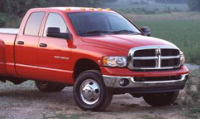
4.56 Gear Question


Thread Starter
|
Veteran
Joined: May 2005
Posts: 411
Likes: 0
From: San Diego, CA
 RE: 4.56 Gear Question
My question, who gives a $hit if you get 1 extra mile per gallon on a 300 mile drive by having 4.56's? Secondly, HankL mentioned something about AIR_RAM needing to do a proper mpg test by weighing his truck, checking windage, elevation, etc. WTF? If anyone does that in the real world, they need to trade in their truck and get a hybrid. Or, they need to get a job or teach blind kids with all that free time.
I think if someone is going to switch gears, it is a performance based decision - NOT AN ECONOMICAL ONE. If it was economical, you'd keep your stock gears and save the money of purchasing and installing them. Increasing my mpg NEVER crossed my mind when I thought of a gear swap. Hell, with a gear swap I know I'd be on the gas pedal more - not less. I am considering because of the increased performance and pressure it takes off of my drivetrain. Just my 2 cents.
I think if someone is going to switch gears, it is a performance based decision - NOT AN ECONOMICAL ONE. If it was economical, you'd keep your stock gears and save the money of purchasing and installing them. Increasing my mpg NEVER crossed my mind when I thought of a gear swap. Hell, with a gear swap I know I'd be on the gas pedal more - not less. I am considering because of the increased performance and pressure it takes off of my drivetrain. Just my 2 cents.


All Star
Joined: Jan 2005
Posts: 852
Likes: 4
From: EULESS TEXAS DFW
RE: 4.56 Gear Question
I appologize for getting off track.. I just pointed out that your FUEL economey will NOT suffer one bit and if anything you will gain better fuel economey... So in that since... if you can get the BLISTERING off the line launch and then get decent MPG to boot there is no reason NOT to go with the 4.56's.
SPEED SAFE, AIR RAM
SPEED SAFE, AIR RAM

Captain
Joined: Aug 2005
Posts: 560
Likes: 0
From:
RE: 4.56 Gear Question
I guess nobody here has ever rode a 10 speed bicycle. It's the SAME principle except your legs are the engine. Lower gears cause you to pedal faster (not necessarily harder) going up hill but it makes it easier for the work energy from your body to transfer to the road. How much energy you use depends on the demand the bicycle puts on your legs to maintain a certain speed at a certain grade. Now do the same switched into the higher gears. Now how much energy does it take to maintain the same speed on the same grade and you have to work harder but the pedaling slows down? The truck works the same way except instead of 10 gears it has 5 - unless you have the 4wd then basically it has 10.

Champion
Joined: Aug 2005
Posts: 3,313
Likes: 8
RE: 4.56 Gear Question
There is a tremendous amount that can be learned from riding bicycles.
You can learn about tire rolling resistance by trying different air pressures and swapping thin rib tires for fat knobby offroad treads.
You can learn about aerodynamics by coasting down hills with different body positions and helmets.
But human muscles are different than internal combustion engines.
With muscles it is all about the production of ATP out of the Mitochondria,
oxygen & carbohydrate transport into the Mitochondria,
and carrying away CO2 and waste products.
This is what sets the best contraction speed of your muscles and the 'endurance' rpm of your legs.
With an internal combustion engine
it is more about
maximizing high gas pressures inside the cylinder
expanding those high pressures down to low before the exhaust valve opens
at the same time as minimizing friction
generated by internal moving parts like piston rings and bearings.
But maybe in 15-20 years there will be enough fuel cell/electric motor vehicles that the similarities of muscles and fuel cells will indeed be close.
You can learn about tire rolling resistance by trying different air pressures and swapping thin rib tires for fat knobby offroad treads.
You can learn about aerodynamics by coasting down hills with different body positions and helmets.
But human muscles are different than internal combustion engines.
With muscles it is all about the production of ATP out of the Mitochondria,
oxygen & carbohydrate transport into the Mitochondria,
and carrying away CO2 and waste products.
This is what sets the best contraction speed of your muscles and the 'endurance' rpm of your legs.
With an internal combustion engine
it is more about
maximizing high gas pressures inside the cylinder
expanding those high pressures down to low before the exhaust valve opens
at the same time as minimizing friction
generated by internal moving parts like piston rings and bearings.
But maybe in 15-20 years there will be enough fuel cell/electric motor vehicles that the similarities of muscles and fuel cells will indeed be close.
