


Cold air intakes, air ram system,......


Thread Starter
|
Rookie
Joined: Apr 2006
Posts: 79
Likes: 0
From:
 Cold air intakes, air ram system,......
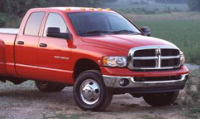
I was wondering if anyone could give me real experience on how much a CAI system or the air ram system would help a 2004 quad cab 4X4 hemi. I have the superchips flashpaq, but that's about it for performance mods. I hear numbers, but don't know if I should believe them. How much horsepower will I gain? How much torque? I have 3.92 gears, so it feels pretty torquey, but I would like more torque since I do alot of pulling. Anyone know of any other ways of adding some torque without sacrificing much horsepower or thousands of dollars?

Champion
Joined: Aug 2005
Posts: 3,313
Likes: 8
RE: Cold air intakes, air ram system,......
This post has more information rather than less.
It is designed to give you tools to spend money effectively.
If you have already made a purchase
there is a chance that reading this
may make you unhappy or emotional.
Don't blame the aftermarket air intake for not giving you a MPG increase.
There has been lots of careful scientific testing of all kinds of air intakes
and the result is that they neither increase/decrease MPG on gasoline engines.
But you can also reliably predict that if 100 customers buy an air intake that
DOES ABSOLUTELY NOTHING
and then these customers check their next tank to see if it improves MPG,
then 50 of these customers will see an improvement,
50 customers will see a decrease,
and ONLY if you could collect and average all 100 of the next tanks
of gasolines would you find a true average of zero.
If less restrictive air inlet system improved MPG,
after the last 20 yrs of C.A.F.E.
(Corporate Average Fuel Economy)
government MPG standards,
you would now see massive air intakes with 2 foot high by 4 foot wide
openings - even on the smallest 4 cyl compact.
Honda in a spirit of fierce pride, told its student engineers to do everything
possible on the Insight Hybrid to get the greatest possible MPG - they were
in a competition with Audi CEO and Porsche's grandson Ferdinand Piech
who was having his engineers build the A3
aluminum body/3 cyl diesel as the world's highest MPG car.
Honda used every known trick in the gasoline engineering book to get over 70
MPG to beat Audi's fuel economy of 3 liters per 100 km on diesel. Notice that
Honda was starting out about 20% behind because they were trying to make a
gasoline engine powered vehicle beat a diesel power vehicle for 'world
bragging rights.'
Go look at the air intake of a Honda Insight.
What do you see?
If you don't want to trust just the Honda,
go check out the Toyota Prius, Lexus 400H and Ford Escape Hybrid air intakes.
See a trend?
Check out the 2006 Corvette Z06 air intake for a 'ram air' design on a
vehicle that can reach 'only' 198 mph. You can bet several engineers
spent hours trying to tweak this inlet to get an extra 2 mph.
It would be easy to do a RELIABLE test of any two air intakes at the
dragstrip.
The way to do it would be to get two nearly identical trucks. They don't
have to be exactly identical but the closer the better.
The two trucks would line up against each other at least 4 times and
preferably 8 or more.
The first half of the runs one truck would have the air intake
and the other would have the stock air intake. After each pass
the drivers swap trucks. Then for the second half of the passes
the two trucks would swap intakes.
In making comparisons it is better to look at terminal speed rather than ET,
but subtracting 60 foot times from ET and comparing those is worthwhile too.
If the air intake really makes a average gain in terminal speed on both trucks
when installed that is pretty reasonable proof.
You might ask yourself:
Why doesn't each air intake maker hire an independent lab to do this and
verify that their intake is superior?
If you do 20 runs instead of 8,
and if the air intake makes a gain in terminal speed on 19 of those 20 runs,
then you are approaching the kind of proof scientists and MD's are supposed to
have before they 'publish' a fact in a magazine.
They wouldn't even have to hire a 'lab'.
Two of the following 'straight shooting' automotive writers (James Dulley,
Dan Neil, Steve Dulich, Rick Ehrenberg) have records that prove their
opinions can't be bought and could probably be paid a nominal
fee & travel expenses to face off against one another in a test.
A side benefit of the above test is that you could also settle bets as to
which of the two drivers was better, which can be fun. Killing two birds with
the same stone, so to speak.
A properly designed air intake can give modest increases of torque and
horsepower at wide open throttle - but sometimes this comes at the cost of
increased noise or filters that get clogged with bugs and dirt faster.
If you are willing to tolerate more noise, in nearly every case you can
build a better air intake than you can buy.
This post has a Part II about the cheapest way to test any air intake.
Don't want to do testing and want a shortcut toward an effective
air intake?
Well, in a nutshell just remount your stock air box so that it will suck air
out of the cavity behind the firewall and below the windshield where your air
vents presently get their air. This spot will give you cooler air, higher
pressure air, and it will not pickup bugs/road grit as badly as an inlet near
the front grill.
Why didn't your vehicle suck air from this spot in the first place?
Because with the interior cab air vent inlets there it allows A LOT of NOISE
to go into the vehicle's cabin.
As a matter of fact, most aftermarket air intakes
JUST MAKE EXTRA NOISE.
This extra noise convinces most owners
that they are making more horsepower - no kidding.
If you read enough auto postings you come to the conclusion that many young
owners are really after 'Excitement' not true vehicle performance you
can time with a stopwatch. The loud mufflers, the loud stereos, the
vibrations of hard shock absorbers, the unstable feeling while driving high
lifted suspensions - it is really more about excitement than performance. Note
many of these same vehicle owners are heavy players of video games.
In addition to the spot at the base of the windshield, at the front of the
radiator grille, and - surprise - a scoop at the top of the tire in the fender
interior are spots where high velocity air can be converted to high pressure.
Notice that I have NOT said to rely on dyno testing of air intakes...I have
said do road tests.
Why?
Because you can't really test an aftermarket air intake system on a dyno where
the vehicle is not moving and an electric fan is blowing air at the radiator.
This makes it SO EASY TO CHEAT that you can make any air intake show a HP
increase on the dyno graph. Don't trust any dyno graph that claims to show an
aftermarket air intake horsepower gain. Realistic airflow around the vehicle
is critical to seeing whether it really works.
Note that KN Filters lists how independent laboratories verify their air
flow claims and their performance claims, but there is not a link to where an
independent lab has verified any MPG improvement claim. That is because the
engineers at KN Filters know that any MPG gain or loss that a customer reports
is really just 'random variation.' But that does not keep KN from quotes such
as 'Customers report 1-2 better MPG.' Note how that is 'literally true' but
not 'scientifically valid.' Those are known as 'Weasel Words' in the
advertising trade.
http://www.knfilters.com/testmethod.htm
http://www.knfilters.com/powertesting.htm
Even with all the warnings about how easy it is to cheat or make mistakes in
dyno testing, this series of posts by Dodge 5.7 Hemi owners is worth reading.
Note how well the stock air inlet system worked.
http://www.lxforums.com/board/showthread.php?t=14140
For examples about how one lone automotive enthusiast went about (imperfectly)
doing some home air filter element testing similar to that described above, go
to this link:
http://www.bobistheoilguy.com/airfilter/airtest2.htm
If you have read this far and presently think that the author
'Hates Cold Air Intakes' or thinks not a single one provides any gain
you have misunderstood and are urge to reconsider.
The author would also like to state for the record that if the maker
of any aftermarket air intake would run the 'Two Truck Test'
described and publish the result - then this FAQ would name that
air intake and describe it as 'Better Tested than its Competitors'.
It is designed to give you tools to spend money effectively.
If you have already made a purchase
there is a chance that reading this
may make you unhappy or emotional.
Don't blame the aftermarket air intake for not giving you a MPG increase.
There has been lots of careful scientific testing of all kinds of air intakes
and the result is that they neither increase/decrease MPG on gasoline engines.
But you can also reliably predict that if 100 customers buy an air intake that
DOES ABSOLUTELY NOTHING
and then these customers check their next tank to see if it improves MPG,
then 50 of these customers will see an improvement,
50 customers will see a decrease,
and ONLY if you could collect and average all 100 of the next tanks
of gasolines would you find a true average of zero.
If less restrictive air inlet system improved MPG,
after the last 20 yrs of C.A.F.E.
(Corporate Average Fuel Economy)
government MPG standards,
you would now see massive air intakes with 2 foot high by 4 foot wide
openings - even on the smallest 4 cyl compact.
Honda in a spirit of fierce pride, told its student engineers to do everything
possible on the Insight Hybrid to get the greatest possible MPG - they were
in a competition with Audi CEO and Porsche's grandson Ferdinand Piech
who was having his engineers build the A3
aluminum body/3 cyl diesel as the world's highest MPG car.
Honda used every known trick in the gasoline engineering book to get over 70
MPG to beat Audi's fuel economy of 3 liters per 100 km on diesel. Notice that
Honda was starting out about 20% behind because they were trying to make a
gasoline engine powered vehicle beat a diesel power vehicle for 'world
bragging rights.'
Go look at the air intake of a Honda Insight.
What do you see?
If you don't want to trust just the Honda,
go check out the Toyota Prius, Lexus 400H and Ford Escape Hybrid air intakes.
See a trend?
Check out the 2006 Corvette Z06 air intake for a 'ram air' design on a
vehicle that can reach 'only' 198 mph. You can bet several engineers
spent hours trying to tweak this inlet to get an extra 2 mph.
It would be easy to do a RELIABLE test of any two air intakes at the
dragstrip.
The way to do it would be to get two nearly identical trucks. They don't
have to be exactly identical but the closer the better.
The two trucks would line up against each other at least 4 times and
preferably 8 or more.
The first half of the runs one truck would have the air intake
and the other would have the stock air intake. After each pass
the drivers swap trucks. Then for the second half of the passes
the two trucks would swap intakes.
In making comparisons it is better to look at terminal speed rather than ET,
but subtracting 60 foot times from ET and comparing those is worthwhile too.
If the air intake really makes a average gain in terminal speed on both trucks
when installed that is pretty reasonable proof.
You might ask yourself:
Why doesn't each air intake maker hire an independent lab to do this and
verify that their intake is superior?
If you do 20 runs instead of 8,
and if the air intake makes a gain in terminal speed on 19 of those 20 runs,
then you are approaching the kind of proof scientists and MD's are supposed to
have before they 'publish' a fact in a magazine.
They wouldn't even have to hire a 'lab'.
Two of the following 'straight shooting' automotive writers (James Dulley,
Dan Neil, Steve Dulich, Rick Ehrenberg) have records that prove their
opinions can't be bought and could probably be paid a nominal
fee & travel expenses to face off against one another in a test.
A side benefit of the above test is that you could also settle bets as to
which of the two drivers was better, which can be fun. Killing two birds with
the same stone, so to speak.
A properly designed air intake can give modest increases of torque and
horsepower at wide open throttle - but sometimes this comes at the cost of
increased noise or filters that get clogged with bugs and dirt faster.
If you are willing to tolerate more noise, in nearly every case you can
build a better air intake than you can buy.
This post has a Part II about the cheapest way to test any air intake.
Don't want to do testing and want a shortcut toward an effective
air intake?
Well, in a nutshell just remount your stock air box so that it will suck air
out of the cavity behind the firewall and below the windshield where your air
vents presently get their air. This spot will give you cooler air, higher
pressure air, and it will not pickup bugs/road grit as badly as an inlet near
the front grill.
Why didn't your vehicle suck air from this spot in the first place?
Because with the interior cab air vent inlets there it allows A LOT of NOISE
to go into the vehicle's cabin.
As a matter of fact, most aftermarket air intakes
JUST MAKE EXTRA NOISE.
This extra noise convinces most owners
that they are making more horsepower - no kidding.
If you read enough auto postings you come to the conclusion that many young
owners are really after 'Excitement' not true vehicle performance you
can time with a stopwatch. The loud mufflers, the loud stereos, the
vibrations of hard shock absorbers, the unstable feeling while driving high
lifted suspensions - it is really more about excitement than performance. Note
many of these same vehicle owners are heavy players of video games.
In addition to the spot at the base of the windshield, at the front of the
radiator grille, and - surprise - a scoop at the top of the tire in the fender
interior are spots where high velocity air can be converted to high pressure.
Notice that I have NOT said to rely on dyno testing of air intakes...I have
said do road tests.
Why?
Because you can't really test an aftermarket air intake system on a dyno where
the vehicle is not moving and an electric fan is blowing air at the radiator.
This makes it SO EASY TO CHEAT that you can make any air intake show a HP
increase on the dyno graph. Don't trust any dyno graph that claims to show an
aftermarket air intake horsepower gain. Realistic airflow around the vehicle
is critical to seeing whether it really works.
Note that KN Filters lists how independent laboratories verify their air
flow claims and their performance claims, but there is not a link to where an
independent lab has verified any MPG improvement claim. That is because the
engineers at KN Filters know that any MPG gain or loss that a customer reports
is really just 'random variation.' But that does not keep KN from quotes such
as 'Customers report 1-2 better MPG.' Note how that is 'literally true' but
not 'scientifically valid.' Those are known as 'Weasel Words' in the
advertising trade.
http://www.knfilters.com/testmethod.htm
http://www.knfilters.com/powertesting.htm
Even with all the warnings about how easy it is to cheat or make mistakes in
dyno testing, this series of posts by Dodge 5.7 Hemi owners is worth reading.
Note how well the stock air inlet system worked.
http://www.lxforums.com/board/showthread.php?t=14140
For examples about how one lone automotive enthusiast went about (imperfectly)
doing some home air filter element testing similar to that described above, go
to this link:
http://www.bobistheoilguy.com/airfilter/airtest2.htm
If you have read this far and presently think that the author
'Hates Cold Air Intakes' or thinks not a single one provides any gain
you have misunderstood and are urge to reconsider.
The author would also like to state for the record that if the maker
of any aftermarket air intake would run the 'Two Truck Test'
described and publish the result - then this FAQ would name that
air intake and describe it as 'Better Tested than its Competitors'.


All Star
Joined: Jan 2005
Posts: 852
Likes: 4
From: EULESS TEXAS DFW
RE: Cold air intakes, air ram system,......
The best aftermarket induction system will be worth 8-12HP across the RPM range. Many companies claim a SPIKE on the graph as there gain and that’s what throws most people off and thats why they do it. A spike of 30+lbs of torque can NOT be felt nor will you EVER notice it as its there for merely 100 RPM’s and in most cases the DYNO was the cause of the spike not the intake... The best thing do is exactly what your doing now, ask around on the forums and get answers from customers who actually OWN a 3rd Gen Ram and who have experience with the product your looking at. Hank does NOT fall into this category.... Also he's has pledged to deface the =AIR=RAM=> name for the last 2 years... Correct me if I’m wrong hank... I’m sure you will.
Hank drives a 2nd Gen Ram and has NO idea what works and does not work on a 3rd Gen Ram... So his post is more of an OPINION with ZERO hands on experience than an actual fact gained through personal experience on the 3rd Gen Ram... although he does his best to sound like he is informed, he is the last person you should listen to as far as advice goes. He has been CUTTING & PASTING that the same responses for the last 2-3 years.
Many people expect more from a CAI than they actually give, if you expect 8-12HP average across the RPM range then you will be very pleased.
Look at all the fastest HEMI Rams at the track... you will find they all have some sort of aftermarket induction system. They would NOT run as fast as they are if they ran the stock set up that Hank raves about. The fact is your resonator is restrictive, it sits on top of your engine and traps heat and is designed to MUFFLE the incoming air by causing turbulence. Anyone who tells you the resonator does not hurt performance has not spent much time on a DYNO or the TRACK.
The best system will have the largest volume for unrestricted air flow, and will draw the air in the coolest location. Just remember, Cold NON turbulent air makes the most power.
Now, if your looking for the biggest bang for the buck then you may want to look into gears. If you do some research you will find that 99% of the 3rd Gen Ram owners who have gone to a 4.56 gear have actually seen better fuel economy from 0MPH - 70MPH . And I don’t even have to mention the off the line grunt that you get with them either...
When I have customers who call me up and ask me about our system I try to find out what there goals are. If they spend most there highway time at 70-75MPH or below and tow alot or own a 4x4 I sugest 4.56 gears right off the bat. I would love to sell everyone our induction system BUT its not always what best for them at that time. In most cases I tell get the 4.56's and then come back for the =AIR=RAM=>... the gears are just that dame good of a mod and I want what’s best for our 3rd Gen Ram owners.
Again do your research and gather the FACTS and OPINIONS then sift threw them and make the best informed decision you can make. In my opinion, knowing you own a 4x4 I would say get the 4.56’s installed first. I know it’s a large investment but it will be one of the single best mods you do for your truck… our =AIR=RAM=> can NOT compete with a set of 4.56’s… and I mean it! But if you decide that gears are just not on your budget and you want an induction system, the =AIR=RAM=> will out perform ANY system on the market hands down…. And again don’t take my word for it… ask around.
SPEED SAFE, AIR RAM
Hank drives a 2nd Gen Ram and has NO idea what works and does not work on a 3rd Gen Ram... So his post is more of an OPINION with ZERO hands on experience than an actual fact gained through personal experience on the 3rd Gen Ram... although he does his best to sound like he is informed, he is the last person you should listen to as far as advice goes. He has been CUTTING & PASTING that the same responses for the last 2-3 years.
Many people expect more from a CAI than they actually give, if you expect 8-12HP average across the RPM range then you will be very pleased.
Look at all the fastest HEMI Rams at the track... you will find they all have some sort of aftermarket induction system. They would NOT run as fast as they are if they ran the stock set up that Hank raves about. The fact is your resonator is restrictive, it sits on top of your engine and traps heat and is designed to MUFFLE the incoming air by causing turbulence. Anyone who tells you the resonator does not hurt performance has not spent much time on a DYNO or the TRACK.
The best system will have the largest volume for unrestricted air flow, and will draw the air in the coolest location. Just remember, Cold NON turbulent air makes the most power.
Now, if your looking for the biggest bang for the buck then you may want to look into gears. If you do some research you will find that 99% of the 3rd Gen Ram owners who have gone to a 4.56 gear have actually seen better fuel economy from 0MPH - 70MPH . And I don’t even have to mention the off the line grunt that you get with them either...
When I have customers who call me up and ask me about our system I try to find out what there goals are. If they spend most there highway time at 70-75MPH or below and tow alot or own a 4x4 I sugest 4.56 gears right off the bat. I would love to sell everyone our induction system BUT its not always what best for them at that time. In most cases I tell get the 4.56's and then come back for the =AIR=RAM=>... the gears are just that dame good of a mod and I want what’s best for our 3rd Gen Ram owners.
Again do your research and gather the FACTS and OPINIONS then sift threw them and make the best informed decision you can make. In my opinion, knowing you own a 4x4 I would say get the 4.56’s installed first. I know it’s a large investment but it will be one of the single best mods you do for your truck… our =AIR=RAM=> can NOT compete with a set of 4.56’s… and I mean it! But if you decide that gears are just not on your budget and you want an induction system, the =AIR=RAM=> will out perform ANY system on the market hands down…. And again don’t take my word for it… ask around.
SPEED SAFE, AIR RAM

Professional
Joined: Jul 2005
Posts: 146
Likes: 0
From:
RE: Cold air intakes, air ram system,......
Well, I just put in a Volant CAI system. Pre CAI, my around town mileage according to the overhead computer was a pretty
consistent 15.4. Post CAI, I am now reading 16.3-4. I don't notice any changes in power, however.
consistent 15.4. Post CAI, I am now reading 16.3-4. I don't notice any changes in power, however.

Joined: May 2006
Posts: 25
Likes: 0
From:
RE: Cold air intakes, air ram system,......
Well, I have seen this on other forums for other cars. Seeing the referance to the new Z is funny. GM did not want it to go 200 or make more than 505 sae. New zs are tuned fatter than Z5 zs, and are way under cammed. I have seen them put down 498 with headers and tunes, and heck make 35 rwhp with a tune...
Bluff, cool air makes better HP, and anything to bring cooler air from outside helps. Yes, I will be adding a cai and a super chip, beacuse my buddies balzer SS needs to go down. Thanks for the posts.
Dave
Bluff, cool air makes better HP, and anything to bring cooler air from outside helps. Yes, I will be adding a cai and a super chip, beacuse my buddies balzer SS needs to go down. Thanks for the posts.
Dave
Trending Topics

Veteran
Joined: Mar 2006
Posts: 417
Likes: 0
From:
RE: Cold air intakes, air ram system,......
i agree with =AIR=Ram=> and HankL needs to STFU. He can either buy a 3rd gen or go home, i would personally prefer him to just go home, i think that if he did buy a 3rd gen, he'd still be full of crap.
Thread Starter
|
Rookie
Joined: Apr 2006
Posts: 79
Likes: 0
From:
RE: Cold air intakes, air ram system,......
Thanks for the help, guys. I am considering going to 4.56's. Hard to fit the budget right now, since I just bought a new set of 20" tires and a superchips flashpaq about a month ago. I currently have 3.92's.