


E85 in my truck?


Thread Starter
Joined: Dec 2005
Posts: 7
Likes: 0
From:
 E85 in my truck?
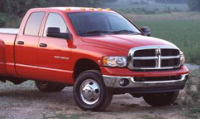
Im curious if I can run this in my truck and if it is really that cost beneficial to do it. The dealer says I can, but he also owns the gas staion. I have an 05 Hemi Quad Cab. I also heard you lose a lot of gas mileage and power from it. Seems like after doing a search on here people are 50/50 on that.

Captain
Joined: Apr 2006
Posts: 621
Likes: 0
RE: E85 in my truck?
ORIGINAL: 05HEMIQUAD
Im curious if I can run this in my truck and if it is really that cost beneficial to do it. The dealer says I can, but he also owns the gas staion. I have an 05 Hemi Quad Cab. I also heard you lose a lot of gas mileage and power from it. Seems like after doing a search on here people are 50/50 on that.
Im curious if I can run this in my truck and if it is really that cost beneficial to do it. The dealer says I can, but he also owns the gas staion. I have an 05 Hemi Quad Cab. I also heard you lose a lot of gas mileage and power from it. Seems like after doing a search on here people are 50/50 on that.

Record Breaker
Joined: May 2005
Posts: 2,415
Likes: 0
From: Wisconsin
RE: E85 in my truck?
No
The HEMI is not a flexible fuel motor. Only the 4.7 is an FFV motor, and you have to order it with an option to have that ability. You can cause harm to your fuel system by running E85 in a non-FFV system. It also does in fact reduce the gas mileage that your vehicle gets. It ends up costing you about the same. [&:] I don't see the benefit of it in the end really...other than you burning less oil and more corn, which is grown here in the United States.
Here's a list you can check for what vehicles are currently E85 ready: http://www.cleanairchoice.org/outdoo...elVehicles.asp
The HEMI is not a flexible fuel motor. Only the 4.7 is an FFV motor, and you have to order it with an option to have that ability. You can cause harm to your fuel system by running E85 in a non-FFV system. It also does in fact reduce the gas mileage that your vehicle gets. It ends up costing you about the same. [&:] I don't see the benefit of it in the end really...other than you burning less oil and more corn, which is grown here in the United States.
Here's a list you can check for what vehicles are currently E85 ready: http://www.cleanairchoice.org/outdoo...elVehicles.asp

Veteran
Joined: Mar 2006
Posts: 417
Likes: 0
From:
RE: E85 in my truck?
stay away from it, dont do it EVER!!! the problem with ethanol is that it is a chemical that raises octane since its close to race fuel but the probelm is that engine isnt made to run on something like that. It dilutes the mixture and ur engine doesnt know what to do with it. My truck has backfired 3 times since they started using this ****. Dont do it man, just bite ur lip and pay for the mid-grade.

Professional
Joined: May 2006
Posts: 156
Likes: 0
RE: E85 in my truck?
true it will get a bit worse mileage, but the o2 sensor uses lambda readings, not pure oxygen readings like the name suggests, and ethanol is much happier around a 10-11:1 Air/fuel ratio as opposed to a 14-15:1 AFR, so the fuel consumption is much less than most people think. Normally around 30% more. The problem with a non FFV is that if you get your truck set up for E (bigger injectors, no aluminum fuel lines, bigger fuel pump, possible computer recalibration), and you need to roam outside of E85 pump range, you have to keep all the stuff available to swap it back. I'm looking into a system for my 99 with a 5.9. The plan is to have two computers, one tuned for E, the other tuned to gas, and a fuel management unit that will pull pressure out of the line when I'm running gas. The nice thing is that in 1996 the EPA mandated that all fuel systems/contaniers (i.e. your plastic fuel tank, etc) be flex. fuel capable, so all of your lines *should* be good, but check them first. Stick a magnet to the metal lines, if it sticks, it's steel, you are good. If not, it's aluminum, replace it. I have a buddy who did an e-85 conversion in his subaru. With only bigger injectors his mileage went from 28 to 24 MPG, but his butt-dyno (seat of the pants) said he was making more power, and at $1.00 a gallon cheaper he's seen a savings of around $80 a month (granted he drives a bunch). Another benefit to eth is that, depending on the time of year, its octane is anywhere from 104-108, and burns about 30% cooler than gas, so with your ethanol computer calibration you can afford to tweak a ton of timing into it for a bit extra power without having to worry about any pinging. Just my $0.02. Unfortunatly there's no great "one fix" for this on the market yet, but I can tell you that it can work, but you may need to do a bit of research on your truck.
 RE: E85 in my truck?
If, you DO NOT have a flexible fuel vehicle----and you will know for sure if you do. D/C will not cover any damage to your engine if it was caused by E-85. The 4.7 is the only engine that has that capability, and it has to be equipted for it. Not all of them are.
I asked the dealer I bought mine from the same question and he told me---after a call to D/C----that the 5.7 cannot be run on E-85, and D/C has no plans to make it possible.
I asked the dealer I bought mine from the same question and he told me---after a call to D/C----that the 5.7 cannot be run on E-85, and D/C has no plans to make it possible.

Champion
Joined: Jun 2005
Posts: 2,621
Likes: 0
From: Maryland
RE: E85 in my truck?
You cant run it in your Hemi, and it would egt worse mileage if you could. Not really worth it to me [sm=smiley5.gif]
Trending Topics

All Star
Joined: May 2005
Posts: 946
Likes: 1
From:
RE: E85 in my truck?
Lets get some things straight.
Ethanol has about 60% of the octane that gas does. It is not race fuel. It can be race fuel if the motor is tuned properly for it, but for a motor that is set up for gas, it much less.
With 85% eth in your motor, it probably won't start.
Like was said. Your motor is not flex fuel. So your pcm cannot calibrate for it.
The only Dodge motors that are flex are the fleet vehicles.
Don't even think about it unless you are willing to spend a ton on changing out injectors, fuel pump and the pcm.
There is info about flex fuels in your manual.
Ethanol has about 60% of the octane that gas does. It is not race fuel. It can be race fuel if the motor is tuned properly for it, but for a motor that is set up for gas, it much less.
With 85% eth in your motor, it probably won't start.
Like was said. Your motor is not flex fuel. So your pcm cannot calibrate for it.
The only Dodge motors that are flex are the fleet vehicles.
Don't even think about it unless you are willing to spend a ton on changing out injectors, fuel pump and the pcm.
There is info about flex fuels in your manual.
Professional
Joined: May 2006
Posts: 156
Likes: 0
RE: E85 in my truck?
E85 has been repeatedly shown to produce more power than a comparable gasoline fuel, especially in engines that need high octane fuels to avoid detonation.[9] Ford Motor Company found that power typically increased approximately 5% with the switch to E85 [10]. Researchers working on the equivalent of E85 fuel for general aviation aircraft AGE-85 have seen the same results with an aircraft engine jumping from 600 hp on conventional 100LL av gas to 650 hp on the AGE-85. Recorded power increases range from 5% - 9% depending on the engine. [11][12]
The Indy Racing League is likewise moving to ethanol based fuels in 2006, with 10% ethanol 90% methanol fuel blend, and switching to a 100% ethanol fuel in the 2007 racing season.
wow... it's not a high performance fuel?
E85 has a considerably higher octane rating than gasoline — 105 — a difference significant enough that it does not burn as efficiently in traditionally-manufactured internal-combustion engines.
hmm... 60% LOWER octane?
At light load cruise, the turbocharged engine operates as a low compression engine. Under high load and high manifold boost pressures, such as accelerating to pass or merge onto a highway, it makes full use of the higher octane of E85. It appears that due to the better ignition timing and better engine performance on a fuel of 100 octane, the driver spends less time at high throttle openings, and can cruise in a higher gear and at lower throttle openings than is possible on 100% premium gasoline. In daily commute driving, mostly highway, 100% E85 in a turbocharged car can hit fuel mileages of over 90% of the normal gasoline fuel economy. Tests indicate approximately a 5% increase in engine performance is possible by switching to E85 fuel in high performance cars.
and the clincher... maybe you should be looking into this for your boosted truck, eh?
all quotes derived from a great article that is helping me do my conversion http://en.wikipedia.org/wiki/E85
please visit it before you start bashing a better, higher performance, cleaner, american job producing, reduce our dependency on foreign oil, fuel.
The Indy Racing League is likewise moving to ethanol based fuels in 2006, with 10% ethanol 90% methanol fuel blend, and switching to a 100% ethanol fuel in the 2007 racing season.
wow... it's not a high performance fuel?
E85 has a considerably higher octane rating than gasoline — 105 — a difference significant enough that it does not burn as efficiently in traditionally-manufactured internal-combustion engines.
hmm... 60% LOWER octane?
At light load cruise, the turbocharged engine operates as a low compression engine. Under high load and high manifold boost pressures, such as accelerating to pass or merge onto a highway, it makes full use of the higher octane of E85. It appears that due to the better ignition timing and better engine performance on a fuel of 100 octane, the driver spends less time at high throttle openings, and can cruise in a higher gear and at lower throttle openings than is possible on 100% premium gasoline. In daily commute driving, mostly highway, 100% E85 in a turbocharged car can hit fuel mileages of over 90% of the normal gasoline fuel economy. Tests indicate approximately a 5% increase in engine performance is possible by switching to E85 fuel in high performance cars.
and the clincher... maybe you should be looking into this for your boosted truck, eh?
all quotes derived from a great article that is helping me do my conversion http://en.wikipedia.org/wiki/E85
please visit it before you start bashing a better, higher performance, cleaner, american job producing, reduce our dependency on foreign oil, fuel.

Champion
Joined: Aug 2005
Posts: 3,313
Likes: 8
RE: E85 in my truck?
I agree with the information 556mfj has posted above.
Since the engines in the Ram pickups have a 'philosophy' of running very rich air to fuel ratios (around 11.5 to 1) to protect the catalytic converter and aluminum ring lands of the pistons there is definitely the possibility that using blends of E85 can bring the air to fuel ratio back closer to the 'best torque' level where gains of 5-10% could be found - BUT - this also means you could damage cats, pistons or any of the many materials in the fuel system that were not meant for high ethanol content.
Ram owners who want to experiment with E85 blending ought to consider installing an exhaust gas temperature gauge {maybe on both banks of the V8) and not venturing past about 1650 F unless they are willing to suffer the consequences.
My father has a FFV model year 2000 Grand Caravan with the 3.3 that now has about 60,000 miles with no problems other than an O2 sensor that failed a few months ago and a PCM computer that failed a few years ago.
http://www.allpar.com/mopar/33.html
If you are looking for some "free fun"
find a Nissan dealer that has one of the E85 capable Titan pickups
and do back to back comparison drives of the E85 FFV and gasoline versions of the 5.6V8
Pickups are selling so badly right now
that dealerships are more willing to let potential customers try unusual things on test drives - and the best salesmen are always interested in learning too.
This stuff is not new.
Your grandfathers were challenged by this is real 'life and death' struggles.
In the battle of Britain
the ME-109's were fuel injected Mercedes engines and fueled with high alcohol content aviation fuel made in coal synthetic fuel plants,
while the Spitfires were carbureted Rolls Royce Merlin engines and ran tetra-ethyl-lead 100 octane gasoline - much of which came from the 'neutral' oil fields of Texas.
The opposing pilots would try to get their enemy into situations where the two different engine systems would malfunction in some way.
Since the engines in the Ram pickups have a 'philosophy' of running very rich air to fuel ratios (around 11.5 to 1) to protect the catalytic converter and aluminum ring lands of the pistons there is definitely the possibility that using blends of E85 can bring the air to fuel ratio back closer to the 'best torque' level where gains of 5-10% could be found - BUT - this also means you could damage cats, pistons or any of the many materials in the fuel system that were not meant for high ethanol content.
Ram owners who want to experiment with E85 blending ought to consider installing an exhaust gas temperature gauge {maybe on both banks of the V8) and not venturing past about 1650 F unless they are willing to suffer the consequences.
My father has a FFV model year 2000 Grand Caravan with the 3.3 that now has about 60,000 miles with no problems other than an O2 sensor that failed a few months ago and a PCM computer that failed a few years ago.
http://www.allpar.com/mopar/33.html
If you are looking for some "free fun"
find a Nissan dealer that has one of the E85 capable Titan pickups
and do back to back comparison drives of the E85 FFV and gasoline versions of the 5.6V8
Pickups are selling so badly right now
that dealerships are more willing to let potential customers try unusual things on test drives - and the best salesmen are always interested in learning too.
This stuff is not new.
Your grandfathers were challenged by this is real 'life and death' struggles.
In the battle of Britain
the ME-109's were fuel injected Mercedes engines and fueled with high alcohol content aviation fuel made in coal synthetic fuel plants,
while the Spitfires were carbureted Rolls Royce Merlin engines and ran tetra-ethyl-lead 100 octane gasoline - much of which came from the 'neutral' oil fields of Texas.
The opposing pilots would try to get their enemy into situations where the two different engine systems would malfunction in some way.