


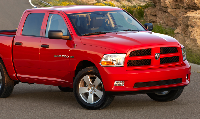
List of Hemi changes from 3rd Gen. to 4th Gen.


Thread Starter
|
Registered User
Joined: Mar 2010
Posts: 28
Likes: 0
From: Clinton, mo
 List of Hemi changes from 3rd Gen. to 4th Gen.
If anyone care below is the list changes.
2009 Revisions
Chrysler has made various revisions to the 5.7 L for the 2009 model year. The first for all applications is what Chrysler calls Variable Camshaft Timing or VCT. VCT (Essentially Variable Valve Timing) uses an oil control valve which controls oil flow to a unique camshaft sprocket which contains a phasing device, which depending on the operation of the oil control valve either advances or retards camshaft timing.
Cylinder heads have been revised to increase flow. Though the intake manifold has also been changed on all applications, it is however model specific. Dodge Ram, non-Hybrid Electric Vehicle (HEV) Chrysler Aspens, and non-HEV Dodge Durango utilize an active intake manifold with a short runner valve to optimize torque and horsepower. At lower engine RPM the valve is closed, resulting in improved low-end torque from the longer runners. At higher engine RPM the valve is opened, diverting the incoming air into the center of the manifold. The shorter runners results in improved horsepower. Passenger cars, Jeep vehicles, and HEV Chrysler Aspen & HEV Dodge Durango do not use this manifold, these vehicles utilize a passive intake manifold, which does not have a short runner valve.
Six-speed manual transmission and all Heavy Duty truck applications will differ by not having the Multiple Displacement System (MDS). The new version of the 5.7L has five different camshaft profiles. All will have VCT.
2009 Revisions
Chrysler has made various revisions to the 5.7 L for the 2009 model year. The first for all applications is what Chrysler calls Variable Camshaft Timing or VCT. VCT (Essentially Variable Valve Timing) uses an oil control valve which controls oil flow to a unique camshaft sprocket which contains a phasing device, which depending on the operation of the oil control valve either advances or retards camshaft timing.
Cylinder heads have been revised to increase flow. Though the intake manifold has also been changed on all applications, it is however model specific. Dodge Ram, non-Hybrid Electric Vehicle (HEV) Chrysler Aspens, and non-HEV Dodge Durango utilize an active intake manifold with a short runner valve to optimize torque and horsepower. At lower engine RPM the valve is closed, resulting in improved low-end torque from the longer runners. At higher engine RPM the valve is opened, diverting the incoming air into the center of the manifold. The shorter runners results in improved horsepower. Passenger cars, Jeep vehicles, and HEV Chrysler Aspen & HEV Dodge Durango do not use this manifold, these vehicles utilize a passive intake manifold, which does not have a short runner valve.
Six-speed manual transmission and all Heavy Duty truck applications will differ by not having the Multiple Displacement System (MDS). The new version of the 5.7L has five different camshaft profiles. All will have VCT.
- Active intake with MDS
- Active intake without MDS
- Passive intake with MDS
- Passive intake without MDS
- HEV Application (modified version of passive intake with MDS)
- 300C: 360 hp (268 kW), 390 lb·ft (529 N·m)
- Charger R/T: 368 hp (274 kW), 395 lb·ft (536 N·m)
- Challenger R/T 5 Speed Automatic: 372 hp (277 kW), 401 lb·ft (544 N·m)
- Challenger R/T 6 Speed Manual: 375 hp (280 kW), 410 lb·ft (556 N·m)
- Ram 1500 Truck: 390 hp (291 kW), 407 lb·ft (552 N·m)
- Ram 2500/3500 Truck: 383 hp (286 kW), 404 lb·ft (548 N·m)
- Jeep Grand Cherokee and Jeep Commander: 357 hp (266 kW), 389 lb·ft (527 N·m)
- Chrysler Aspen and Dodge Durango non-HEV: 376 hp (280 kW), 401 lb·ft (544 N·m)
- Chrylser Aspen and Dodge Durango HEV: 399 hp (298 kW), 390 lb·ft (529 N·m)
Last edited by superchargemyride; Apr 12, 2010 at 07:56 PM.