


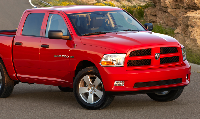
Fuel Octane Question and Break In


 Fuel Octane Question and Break In
I noticed in the manual that came with my new 2012 Ram 1500 it said to perfer 89 octane over 87 will this help my gas milage? and Im also wondering about breaking in the engine 5.7 Hemi can someone explain to me about the break in period, dealer didn't say much about it I have purt 200 miles on it so far.


Rookie
Joined: Jun 2012
Posts: 57
Likes: 0
Hey fellow new owner 
I too am at 200 miles and ready to put in some gas. The manual "recommends" 89 so I don't know what would happen with 87. Can't see it being much of a difference at low throttle.
I also have a Corvette that says to use 91 but will work with 87. Turns out on this car that the knock sensors detect knocking with low octane gas and retards the timing to prevent it. So the car will run but at reduced top end performance. From 87 to 91 is a good jump vs 87 to 89 so???
My theory is with a 20 gallon fill up it is only $2 to put the recommended grade in it so why risk it for 2 bucks.
I too am at 200 miles and ready to put in some gas. The manual "recommends" 89 so I don't know what would happen with 87. Can't see it being much of a difference at low throttle.
I also have a Corvette that says to use 91 but will work with 87. Turns out on this car that the knock sensors detect knocking with low octane gas and retards the timing to prevent it. So the car will run but at reduced top end performance. From 87 to 91 is a good jump vs 87 to 89 so???
My theory is with a 20 gallon fill up it is only $2 to put the recommended grade in it so why risk it for 2 bucks.

Champion
Joined: May 2009
Posts: 3,497
Likes: 1
From: MN
The truck manual says:
over regular gasoline in these engines.
I ran mine off 87 for the first 2 years and now that the 89 octane is the same price as 87 at the local station I use the 89. Havn't noticed any difference in milage or the way the truck drives.
The 5.7L engine is designed to meet all
emissions regulations and provide satisfactory
fuel economy and performance when
using high quality unleaded gasoline having
an octane range of 87 to 89. The manufacturer
recommends the use of 89 octane
for optimum performance. The use of premium gasoline
is not recommended, as it will not provide any benefit
emissions regulations and provide satisfactory
fuel economy and performance when
using high quality unleaded gasoline having
an octane range of 87 to 89. The manufacturer
recommends the use of 89 octane
for optimum performance. The use of premium gasoline
is not recommended, as it will not provide any benefit
over regular gasoline in these engines.
I ran mine off 87 for the first 2 years and now that the 89 octane is the same price as 87 at the local station I use the 89. Havn't noticed any difference in milage or the way the truck drives.

Legend


Joined: Jun 2009
Posts: 8,025
Likes: 72
From: orangeville ontario
it could just depend on where you live and what type of gas they serve at the pumps. here the 87octane contains 10% ethanol, the 89octane contains 5% ethanol and the 91octane contains no ethanol. my dad started running no ethanol 91 octane gas in his ford the other day and he is starting to notice the difference in gas mileage and power. i run ethanol free gas in all my trucks and they always runs great and seem to love the stuff.

Record Breaker
Joined: Jan 2010
Posts: 1,400
Likes: 5
From: San Pedro, California
Recommended and required are two different things. If we did everything the dealer recommended for service we'd go broke. I run both 87 and 89 and notice no difference on my stock truck. I run 89 when I tow or use the truck hard or when driving in summer high temps. I live by the southern California ocean where the temps are very moderate and humidity is usually fairly high so 87 is fine, I also am a very easy driver. In high altitudes, the air is less dense so the effective compression of an engine is lower, that's is why you can get away with lower octanes without pinging so the knock sensors don't even come into play when running 87.
Trending Topics

Administrator
Joined: Jul 2007
Posts: 24,686
Likes: 21
From: South Georgia/East Florida
This gets brought up every month so you may want to do a search. I run 93 octane but I'm tuned and have to. IMO (and there will be a host of guys who are of the opposite opinion on this) I'd run 89 - although there is sound logic in Pedro's high altitude and 87 opinion.
I've seen the inside of a couple of Hemi engines that failed and there is NO mistaking the signs of pre-detonation in the cylinder walls - despite the fact the operator stated they NEVER heard any knock or pinging - in cases where the operator acknowledged running 87 octane fuel over the life of the engine.
I've said it before - will the engine automatically fail or experience a shorter life because you run only 87 octane? -Nope- I know guys with 150,000 miles + on theirs who only run 87 octane BUT in almost every case that I've seen an engine go, if it wasn't caused by a broken valve spring - there were signs of pre-detonation. 89 is about a $4 per tank insurance policy IMO.
If it was my truck on a stock tune I'd run 89 octane either ethanol free or add an ethanol treatment to every tank - but that's just me...
I've seen the inside of a couple of Hemi engines that failed and there is NO mistaking the signs of pre-detonation in the cylinder walls - despite the fact the operator stated they NEVER heard any knock or pinging - in cases where the operator acknowledged running 87 octane fuel over the life of the engine.
I've said it before - will the engine automatically fail or experience a shorter life because you run only 87 octane? -Nope- I know guys with 150,000 miles + on theirs who only run 87 octane BUT in almost every case that I've seen an engine go, if it wasn't caused by a broken valve spring - there were signs of pre-detonation. 89 is about a $4 per tank insurance policy IMO.
If it was my truck on a stock tune I'd run 89 octane either ethanol free or add an ethanol treatment to every tank - but that's just me...

Record Breaker
Joined: Aug 2009
Posts: 1,264
Likes: 0
From: Ila Georgia
89 is not recommended by the dealer. Is says preferred by the engineers. You wont hear spark knock. The system tries its darnedest to stop pre ignition. I have heard late model suvs start to knock leaving at a light and it was only a split second and its gone. Run the octane you want. I run the preferred octane rating as outlined by engineers.